Tag: Ethiopia

  • Ethiopia is incredible country to travel for everybody…

    Ethiopia is incredible country to travel for everybody…

    Ride motorcycle in Ethiopia with the gorgeous landscapes and mountain roads, meet Ethnic groups in the Omo Valley, see interesting culture and lifestyle, losing yourself in another world which is the Danakil Depression, enjoy traditional food, visit historical places, go trekking…etc. All of them are in one country, Ethiopia.
    ride motorcycle in Ethiopia

    We wanted to go to Ethiopia from Lake Turkana but the rain season didn’t allow us because of all river crossing (You can check it in Kenya stories). We had to go Moyale but it took two weeks before we could pass the border because there where protest and the country was choosing primary minister. We had to wait for sure the Moyale border was safe.
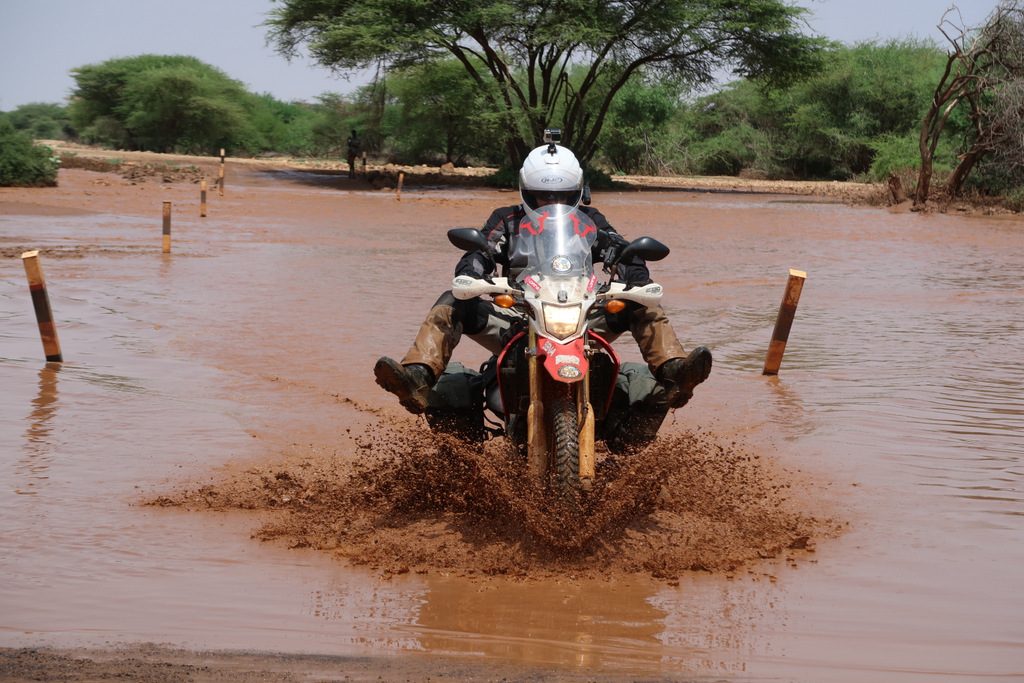
    Lake Turkana road with motorcycle

    We were on the border in the afternoon and it took only one hour for the border crossing. We don’t like to ride motorcycle in Africa when it is dark because of the roads, no lights and there are animals and humans crossing the roads or walking on the road. Therefore we stayed our first night in Moyale. Next day in the morning we were on the road to Konso.

    We heard a lot of stories about the Ethiopian roads, like it is so busy, no privacy, kids throw stones…etc. We decided to not stop so much on the road if it is not necessary. Also who was riding motorcycle in front of us they said that fuel was problem and black market price is crazy. We carried extra fuel with us from Kenya but we found easily just before Yabelo in the gas station.

    Easy to find petrol in omo valley, Ethiopia

    We arrived in Konso late afternoon. We stayed there because our plan was go to Low Omo Valley to see the ethnic groups there. We just enter Konso and we found a small pension with secure parking. So we didn’t think more just jump in. 🙂

    FInd cheap and secure parking pension or hotel on the road in Ethiopia

    We found a petrol station before the turn to Jinka and got our tanks full again. After pass some donkey roads we came to mountain roads. We didn’t think that the road could be beautiful like that. It was a tarmac road; of course you can see potholes sometimes, with nice landscape.
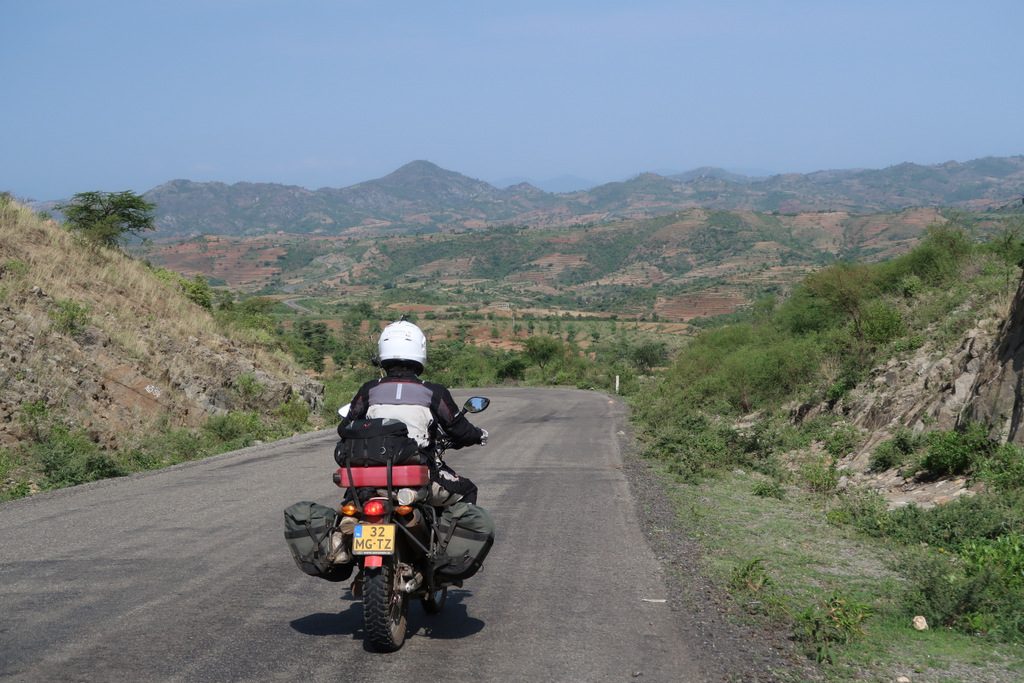
    How is Omo Valley road?

    We arrived in Jinka before afternoon. We found a pension and stayed in the city center. We stayed around 8-9 days in the Omo valley and visited Jinka, Key Afer, Turmi, Omoratte to see Ethnic groups of Kara, Hamer, Mursi, Ara, Dassenech and Banna. To be honest it was an incredible experience for us. Some way was nice but some way was feeling upset about their life. We wrote another two articles about the Omo Valley;

    1- About Omo Valley, where can you visit ethic groups?   2- How can you travel in Omo Valley by yourself? About roads, hotels, foods, village entry fees…etc all prices.    We hope you can enjoy when you read the articles and it can be helpful.
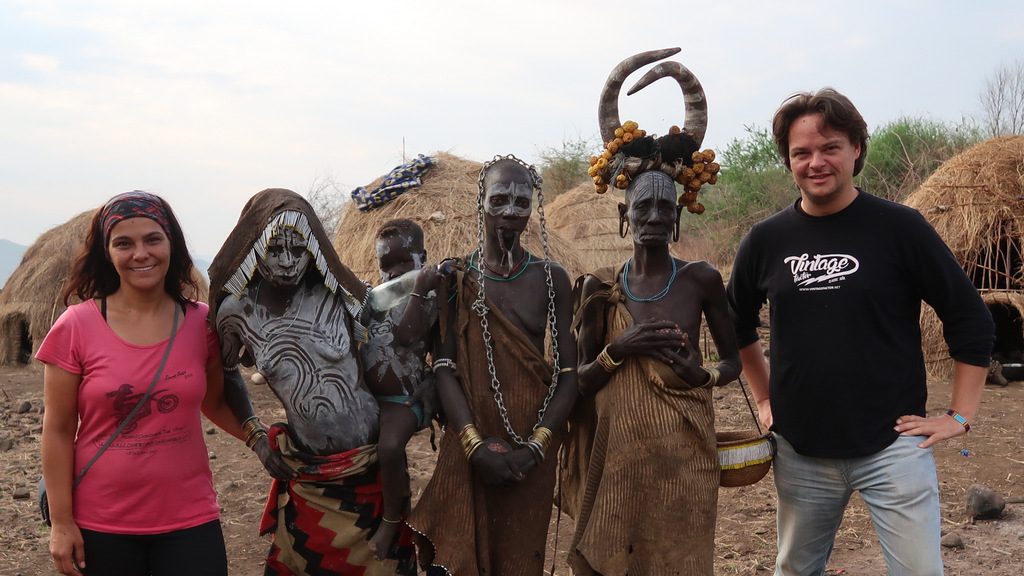
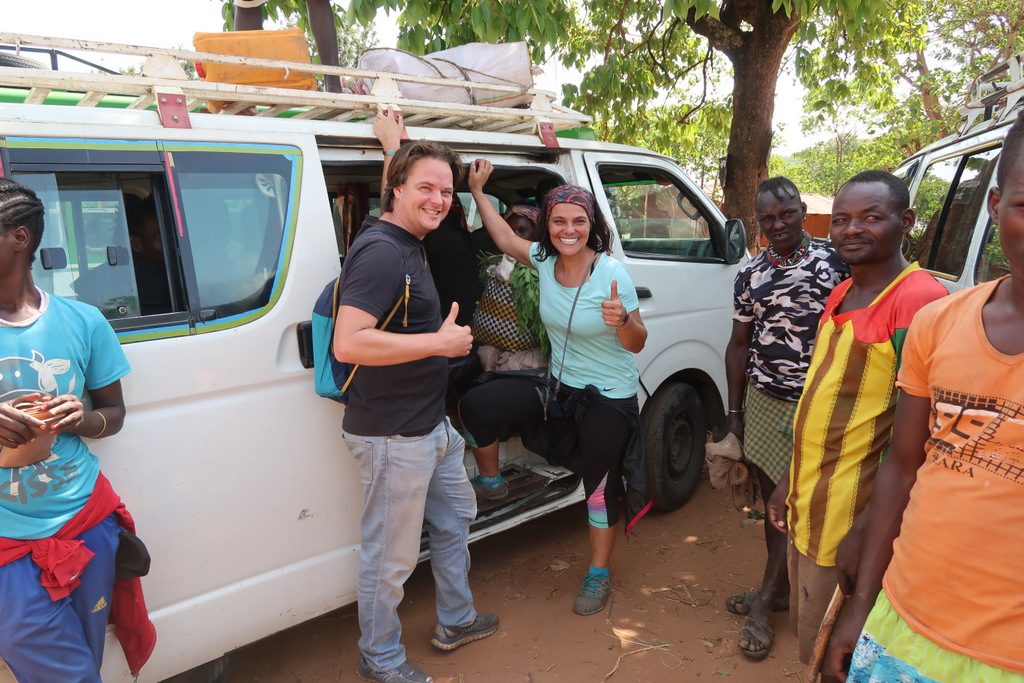
    backpack travel omo valley, ethiopia
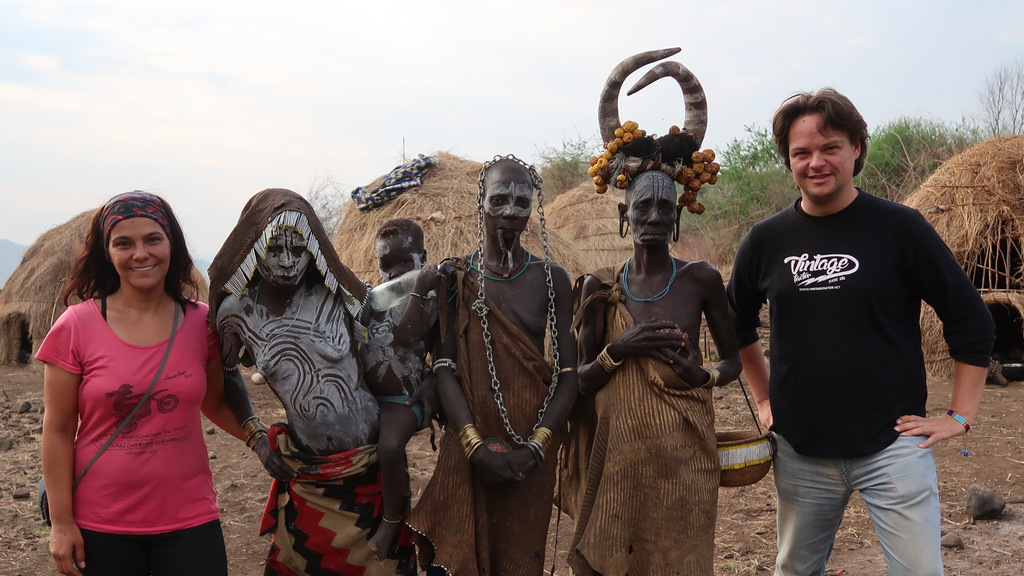
    Mursi Village, Mago National Park, Omo Valley

    After the Omo Valley we arrived in Arba Minch. Our plan was to visit the Dorze people village and see the Chencha market. But we couldn’t. 🙁 I was not feeling well and we got rest for two days in Arba Minch. Yes, sometimes what I really want to see I need to skip because to be healthy on the road is most important I think. Also, we were thinking to go to Hawassa and stay next to the lake, it didn’t happen as well. Because when we were going to Arba Minch we heard that Ethiopia has new primary minister. It could be celebration or possible protest we didn’t have any idea. We were thinking that it is a good opportunity for us to go to Addis Ababa as soon as possible and see what happening there. We made 500 km in a day with our 250 cc motorcycle and Ethiopian roads. 🙂 We arrived at the Holland house just before dark. It was very nice to meet some other riders after a while on the East coast of Africa.
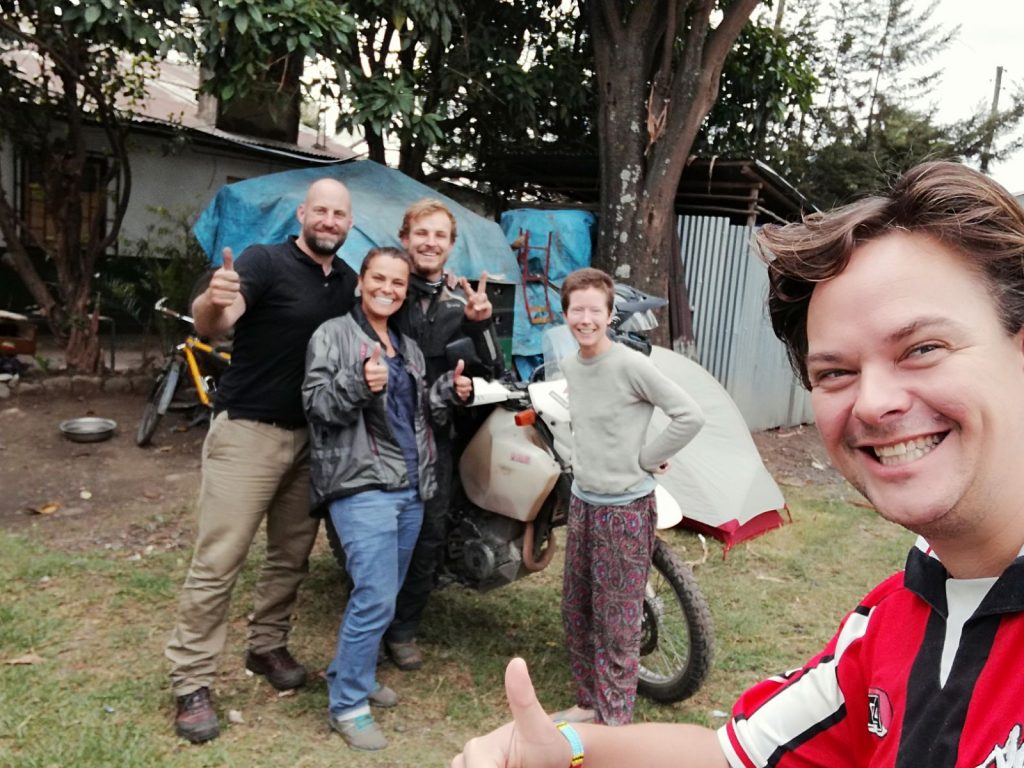
    We stayed 11 days there. We didn’t do that much we just got relax. We did have some interviews for a news channel and newspaper. Of course we enjoyed talking with our new and old friends. Also we apply Sudan visa in Addis Ababa, which was easier to get as what we were thinking.
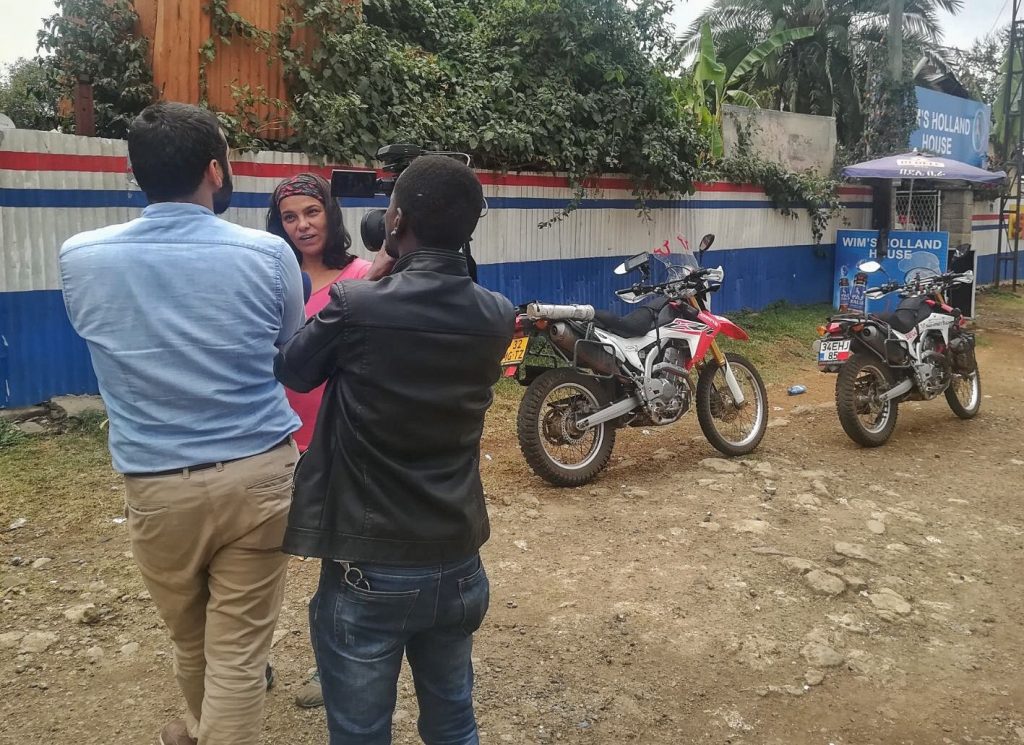
    Female so women rider in Africa

    I must tell one think about traffic in Addis Ababa. You should be careful when you ride motorcycle or car because anytime anywhere can be accident. Because, most people do not follows traffic rules or light!
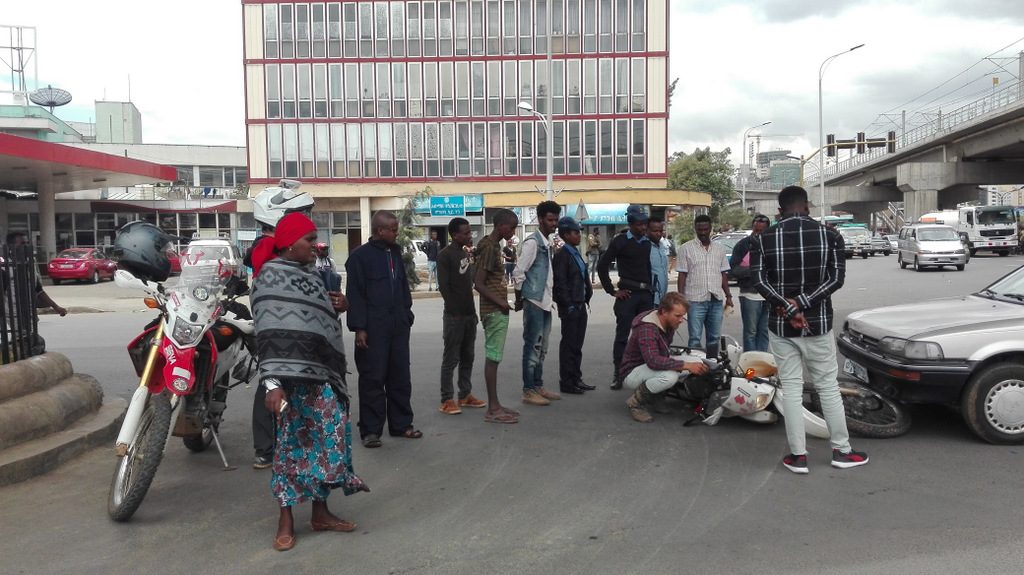
    Finally we got ready and hit the road again to Lalibela. The weather is crazy in Ethiopia. It was so hot in the Omo Valley and than we were sleeping with a blanket in Addis Ababa. When we were going to Lalibela some part of the road was so hot again. But suddenly it was getting cold again when we were going to top of the mountain. Of course don’t forget the rain. We couldn’t go to Weldiya. When we arrived Kombolcha it was already 5 pm and it was raining. We wanted to stay there but we couldn’t because the hotel we found they gave an extremely high price. We stayed max around 400 birr but there they were telling us 1000-1500 birr. We learned later if you check in with foreign passport price would be like that. Local people can pay 500 birr. 🙁

    Lets ride to Dessie, only 25 km far, and find more option. It was same but we had a person number from a company, Yapi Merkezi. We called Huseyin and ask him for help. He found the best hotel in the area, which is around 2000 birr they booked hotel for us and we paid only 700 birr. It was still out of our daily Africa budget but after got cold and wet it was great to stay in a five stars hotel. We have no idea when we stayed in a hotel like that before in our world trip 🙂 Next day we pass from Mersa and stop there for lunch and met Huseyin who helped us last night. We enjoyed the lunch and talked a lot for a couple of hours than we were on the road again.

    Sun set of Lalibela, Ethiopia

    When we arrived Dilb village where you can turn to the Lalibela road it was already 4:30 pm. Some people were complaining about the road how much bad. It was only 66 km but cannot be fun ride in the dark. We found one Tour Company’s car on the road and we asked the driver. He said that we could easily make it in two hours. The road is bad for car but easier for motorcycles. He was right. We arrived Lalibela in two hours. The road was so much fun to be honest and landscape was great. Only some kids wanted to throw stones 🙁

    Lalibela, Ethiopia

    We stayed in Lalibela three days. We visited old churches, walked in the historical place and saw the Lalibela market. It was nice to see area. But a couple days is enough.
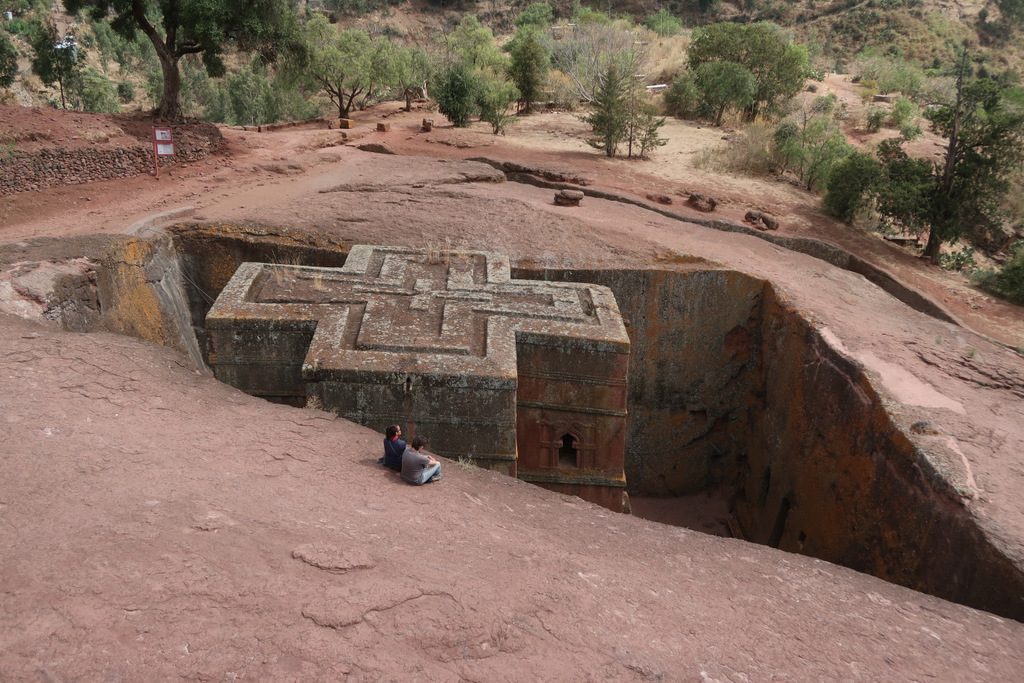
    Where is the big cross church in Ehtiopia, Africa
    St. George Church, Lalibela

    Our next stop was Mekele because we were so curios to see the Danakil Depression. We looked the map which road we could ride and we decided a more challenge one. 🙂 We don’t have GPS just maps.me and we got lost. 🙁 We were trying to look at the map where we are but no road on the map. We turned back and tried to find a way. After that we came a road, which is thinking a road because we don’t think so any vehicle passes there. But I made it to turn and pass from the mountain.
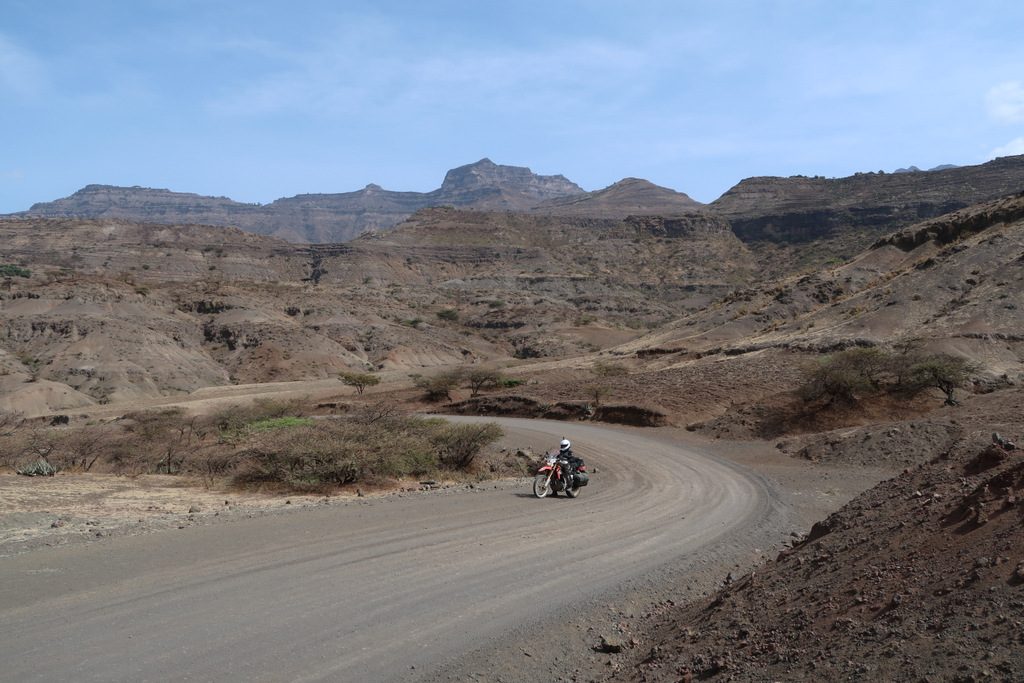
    Finally we were on the tarmac road on afternoon and 165 km on front of us to Mekele. We could still make it before dark. Do you think so? In ten minutes, the rain started it was worse than shower and the road got like a lake. No place to stop and hide our self, so we keep riding. We arrived in Mekele in the dark totally wet. But important thing was we made it! 🙂
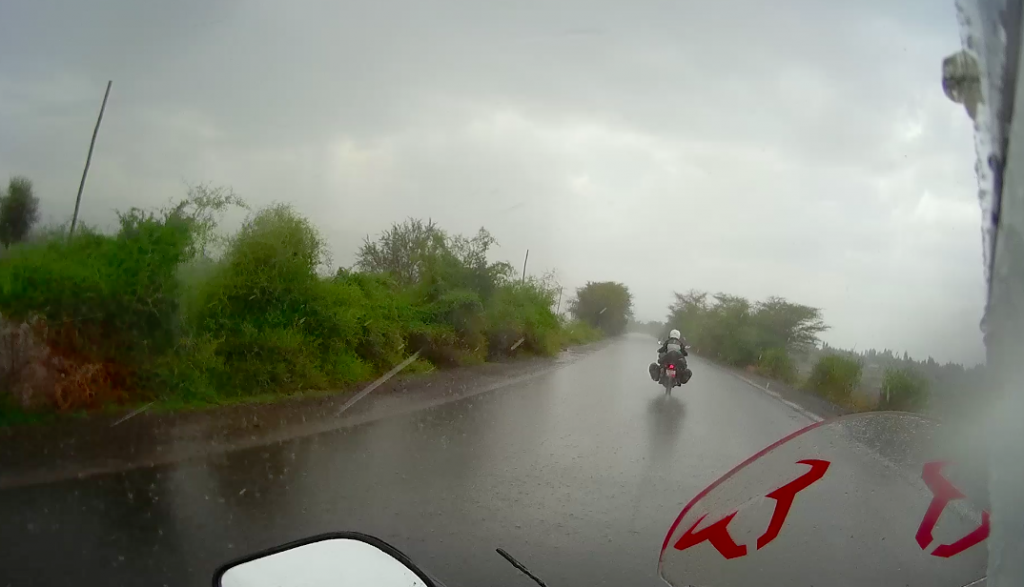
    You can imagine how much we were tired and slept like a baby almost until next day noon. We want to go Danakil therefore we must find a tour company to go there. We walked around Mekele and found some. We like one of them and decided to go with them four days Danakil Depression tour, which were going Erta Ale, Dallol. Sulphur spring, salt lake and canyon. You can find our Danakil journey and the place story in another our article.

    Salt Lake, Danakil

    When we turned back from the Danakil tour we were so tired. And we didn’t want to stay at the same hotel where we stayed before because they don’t have running water and we desperately needed a shower. But we had a small room there to put all our stuff in it and use security parking for our motorcycles. We just paid 130 birr for the room and parking. J We went there and said them we will keep the room one night more and than went to another room. We are so rich right? 🙂 Two different hotels two rooms one night we paid it. It was total 400 birr anyway…

    Our motorcycle bags room in Mekele 🙂

    Mekele is so different than other places we visited so far in Ethiopia. We were more relaxed and enjoying walking around in the city. Nobody disturb you on the road, we walked everywhere in the night, nobody cheating the price because we were tourist. We really like to be there. We can tell you if you go to Ethiopia you will see how much different people behavior is in different regions. Mekele is the capital city of Tigray Region.
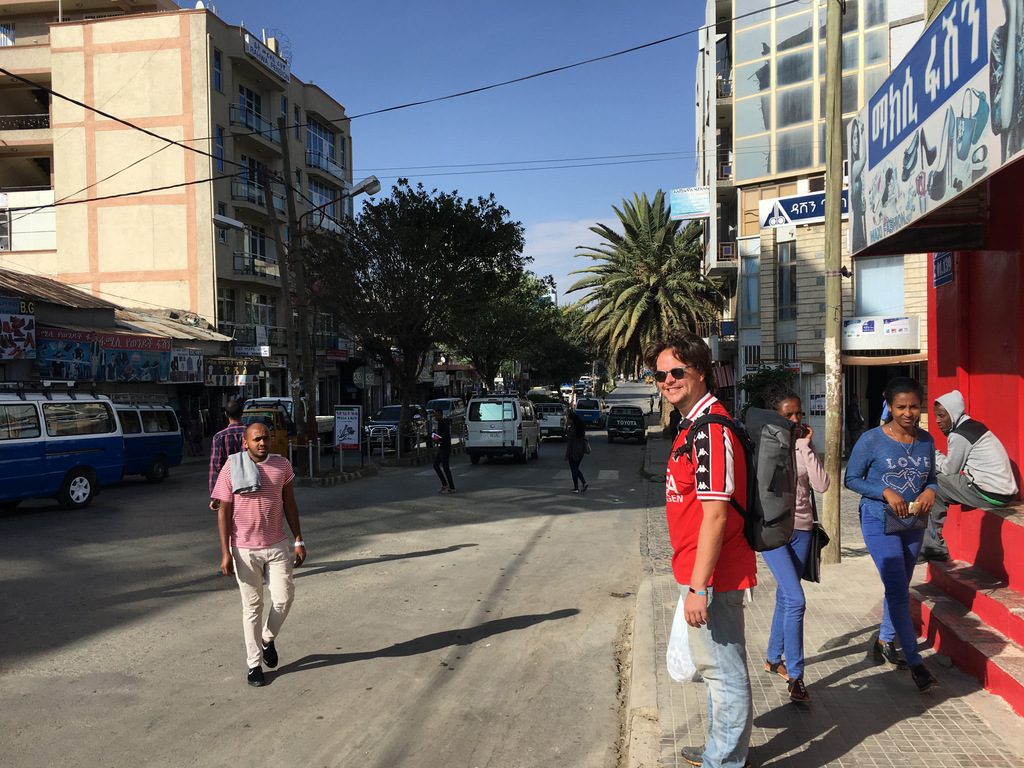
    After Mekele our next stop in Ethiopia was Axum, this city is still in the Tigray Region and we had the same feeling as in Mekele. We were planning to visit some churches and baths of Queen Sheba but we couldn’t because after change the weather a lot in Danakil and mountains road we got a little sick. Rest was the best option for us. You can get so much enjoy around Axum especially if you ride motorcycle in Ethiopia Mekele to Axum road is one of the nice mountain road in Ethiopia.
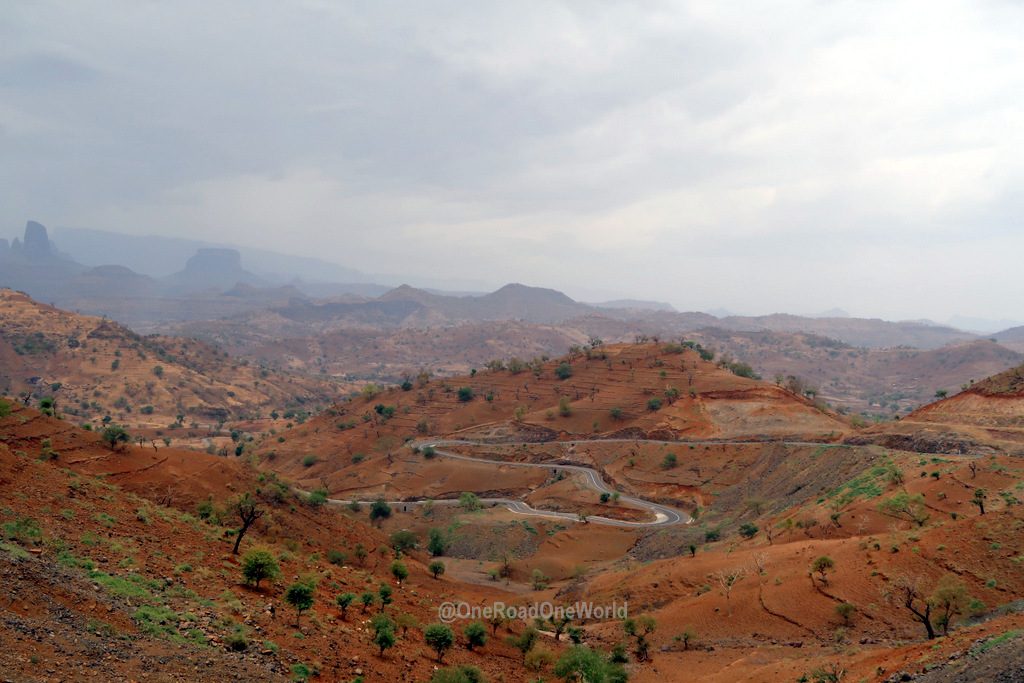
    After get rest three days in Axum we hit the road again towards Debark. We heard from many riders that the road to Debark is the best road in Ethiopia. We were so curious to ride motorcycles there. We can tell that it is on of the amazing road in Africa.

    The day started with fun but? He started to complain about his motorcycle when the motorcycle is climbing the mountains: ‘My motorcycles doesn’t want to go!’ The problem was look like clutch pad because he was complaining similar problem, which I did with my Honda CRF 250L in Malawi. L We arrived Debark almost in the dark. End of the day we had sometime hard time when we ride motorcycles but still we enjoyed with the landscape.

    Debark to Gondar is just a few km each other. So why did we plan to stay in Debark? Because we wanted to ride motorcycle in Simien Mountains National Park people say the Simian is on of the most beautiful ranges in Africa and it is on the world Unesco World Heritage list. Also, we could visit Gelada monkeys there. If you are lucky you can see Ethiopian wolfs, black and white colobus and Hamydra baboons as well in Simien Mountains.

    But we had to skip. 🙁 When one of the Honda CRF 250L had a clutch pad problem we didn’t want to ride in the park. Another option is hiking Simien for a couple of days. We were thinking that we are tired but at the same time we knew that we wont come back Africa for a while because we have a lot of road in front of us to ride motorcycle and discover the world. So, push our self to hiking.

    Gelada monkeys look like baboons…

    In the night, I was wearing my jeans to go out dinner I felt that my nail broke or something from to toe. No pain but feeling was weird. No way, you are kidding me! My nail took out totally from the skin, no pain no bleeding. I knew that I would have some problem with my toe and nail after Kilimanjaro because some part I couldn’t walk there with pain. What should I do? Ride motorcycle is another problem. We just closed the toe with antibiotic cream. Yeap, we didn’t have any alternative more to go Simien Mountain. No motorcycle clutch and no nail! 🙁

    After all, still we were lucky because we saw Gelada monkeys next to the road. We stopped and watch them a while. When we were riding to Gonder we were still smiling and happy to how much we were lucky when we had a lot of unlucky things in a week. 🙂

    Gelada Monkeys, Simian Mountain, Ethiopia

    We stayed a couple of days in Gonder to change clutch pad, engine oil and also make sure for my toe got better a little before go anywhere.
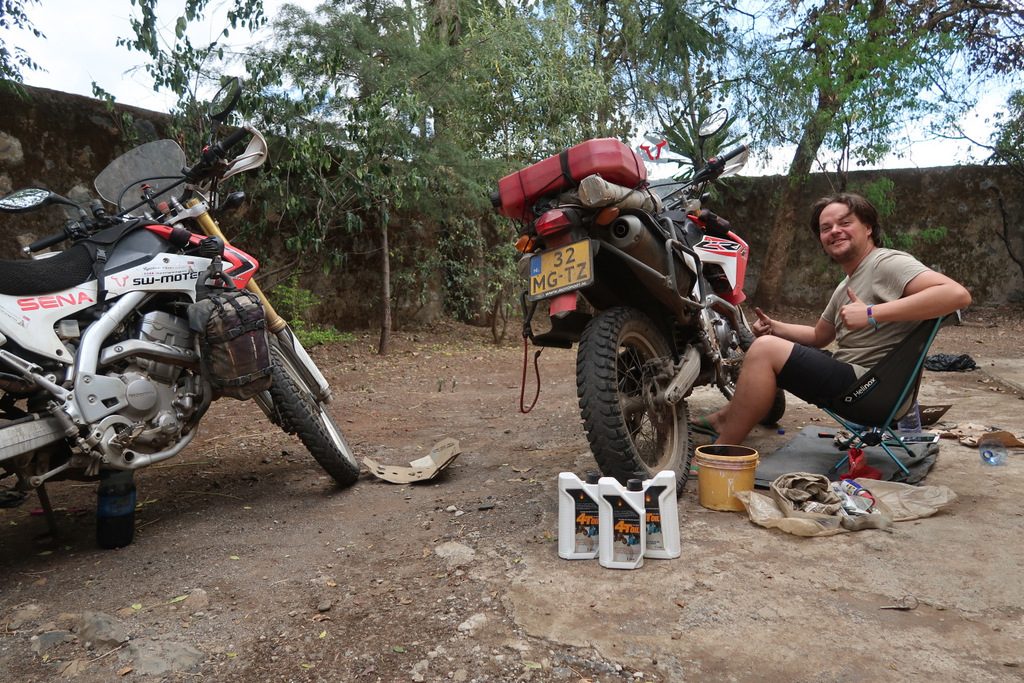
    Our last destination could be Lake Tana, Blue Nile falls and Awira Amiba. We started to talk about it to go or not go. We got our Sudan visa 15 days ago in Addis Ababa; we had no idea that we had only for 15 days more or when we are on the border they will give us again 30 days. My toe had problem when I was wearing the motorcycles boots. We were feeling tired after 1,5 years in Africa. Also, we didn’t know what was waiting us in Sudan because we knew that there is a fuel problem and it was getting more and more serious day by day. Yes, we started Ethiopian journey so lucky to spend time in Omo valley, Lalibela and Danakil. We didn’t miss any mountain roads to ride motorcycles. We suppose that it wasn’t the end of the world if we couldn’t see Simien Mountains and Lake Tana. At the same time, it could be a reason to come back Ethiopia again :). To be honest, we could come back here and spend three months because Ethiopia is an impressive country anyway….

    Gonder weeding car 🙂

    Our decision we are going to Sudan… After stayed three days in Gondar we tried to hit the road again to Sudan. 🙂 Woke up early morning, got ready and started to ride now we only need petrol. We wanted to carry how much fuel we could carry because we are not sure where we could find petrol in Sudan. After two hours search we could find petrol in Gondar. Lucky day! 🙁

    By the way, Gondar is capital city of Amhara Region. We really so much enjoy there as well like Mekele. Walk on the street day or nighttime; sit anywhere to drink or eat was so nice and comfortable.

    Gonder castle
    You need to know before go to Ethiopia;

    Ethiopia use their own calendar and time. They are 8 years behind us with local calendar. So, I was young when i was there. 🙂 One year is 13 months and last months is 5 or 6 days depend on February. Also, if you ask the hotel when the breakfast starts they could tell you 12. It means 6 am in the morning.

    It was April 2018 when we took the bill from the hotel.

    Hotel in Turmi, Omo Valley

    Ethiopian food is really nice. We can recommend to try local food especially meat.
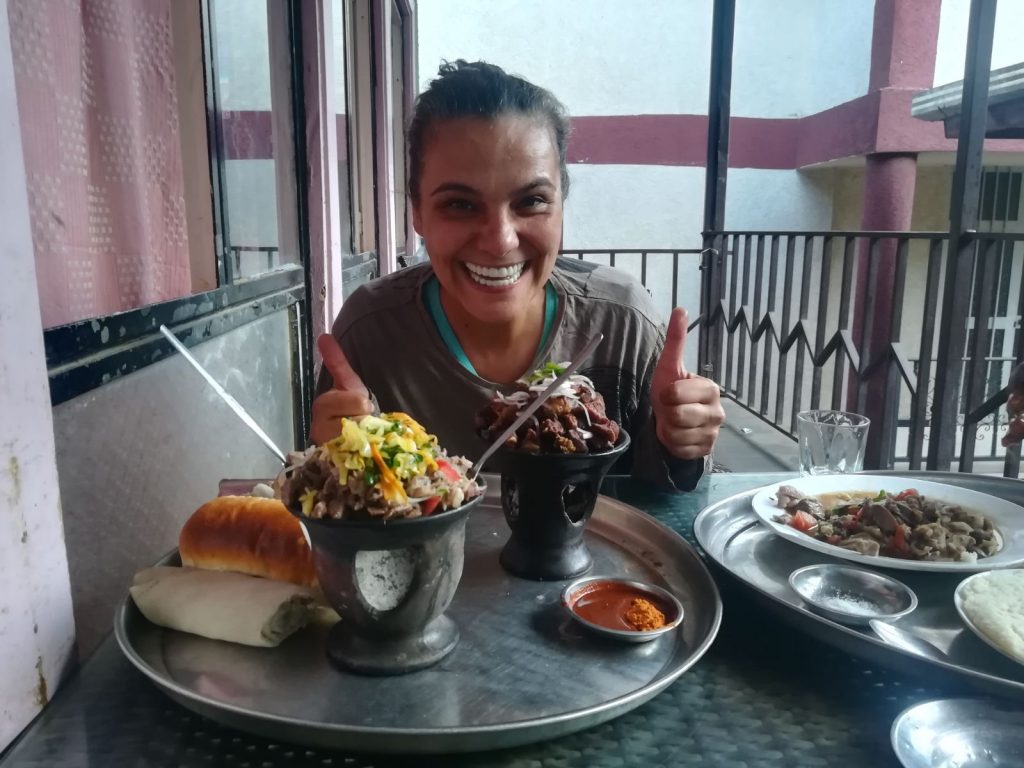
    Cheap and amazing Ethiopian food.
    Yeshekla Tibs with chicken and meat, Moyale

    Also, their juice are so nice when the weather is so hot or you need to fresh up. Juice are more smooth without ice. You can eat your juice. 🙂

    Avocado and mango juice with lemon, Axum

    Of course Do not miss to drink Ethiopian coffee. You know that Ethiopia is famous with coffee in Africa.
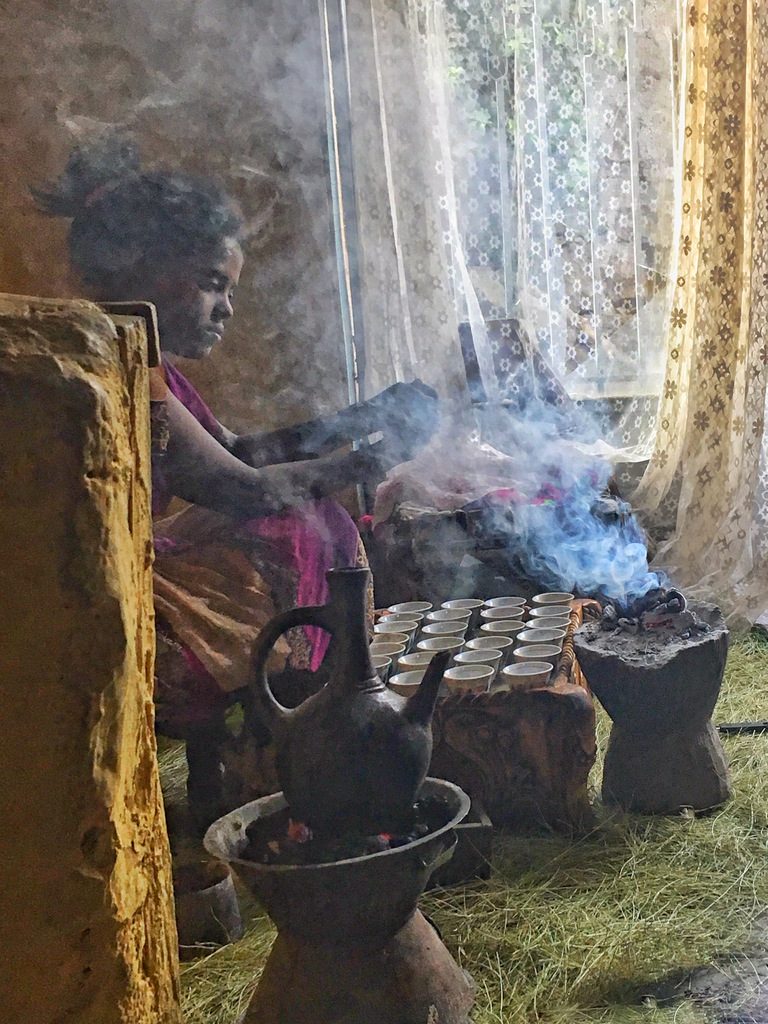
    Traditional Ethiopian coffee

    You always carry extra fuel with you in Ethiopia if you have small tank like our motorcycles Honda CRF 250L. Find petrol doesn’t so hard if they have electricity because the pump work with it. When we were there Ethiopia had electricity problem and cut off a lot. Possible to find on the black market but the cost will be high.

    GS

  • Hottest place on the earth : Dallol Ethiopia | Danakil Desert

    Hottest place on the earth : Dallol Ethiopia | Danakil Desert

    One of the hottest place on the earth is Hottest place on the earth : Dallol Ethiopia, which is most people call  Danakil depression or Danakil Desert. 🙂

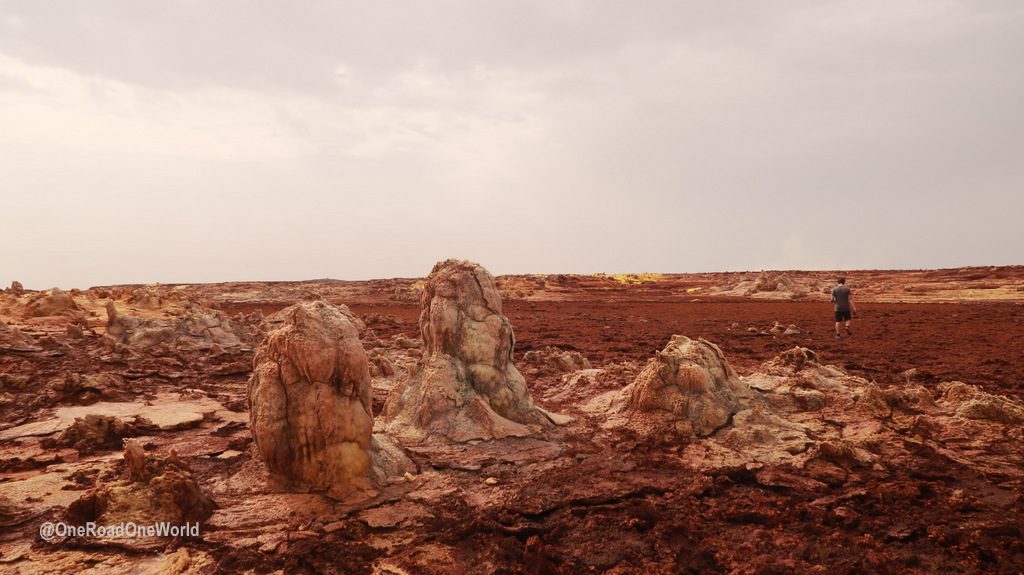
    I don’t know how I can explain Danakil Depression because it gives a feeling to you like you went another world, not belong to planet earth.

    Erta Ale Crater, Danakil Depression

    Hottest place on the earth : Dallol Ethiopia | Danakil Desert

    Dallol is in the North East of Ethiopia in the Afar Region. Do you know this is one of the driest, lowest and hottest places on the earth? Welcome to the Danakil Desert which is 100 meters below sea level and the temperature is almost the same all the year round, 45-55 degrees.

    Lowest point, 100 meters below sea level, Dalol, Ethiopia

    In one place there are more different things to see, which you can not see some where else in the same region or the only place on earth; Desert, active volcano – magma (lava lake), Slat flats and lakes, Dallol- sulfur lakes. All of them are so special in the world to see.

    Colorful sulphur spring, Danakil, Ethiopia

    Dallol Ethiopia : Let’ s start with Erta Ale (active volcano)

    It is 613 meters above sea level and one of the six active lave lakes in the world. It has more then one magma (lava) lake. It had erupted several times between 2005 and 2017. After the last eruption, the magma is lower inside the crater then before, therefore it gets so much foggy so you cannot see the magma very well now. And if it is so much windy you can have a hard time to breath because of the smell (the smoke is toxic and very unhealthy).

    After we visited the Nyiragongo volcano in Congo we decided to visit Erta Ale in Ethiopia as well because both of them are one of the incredible and dangerous volcanos.

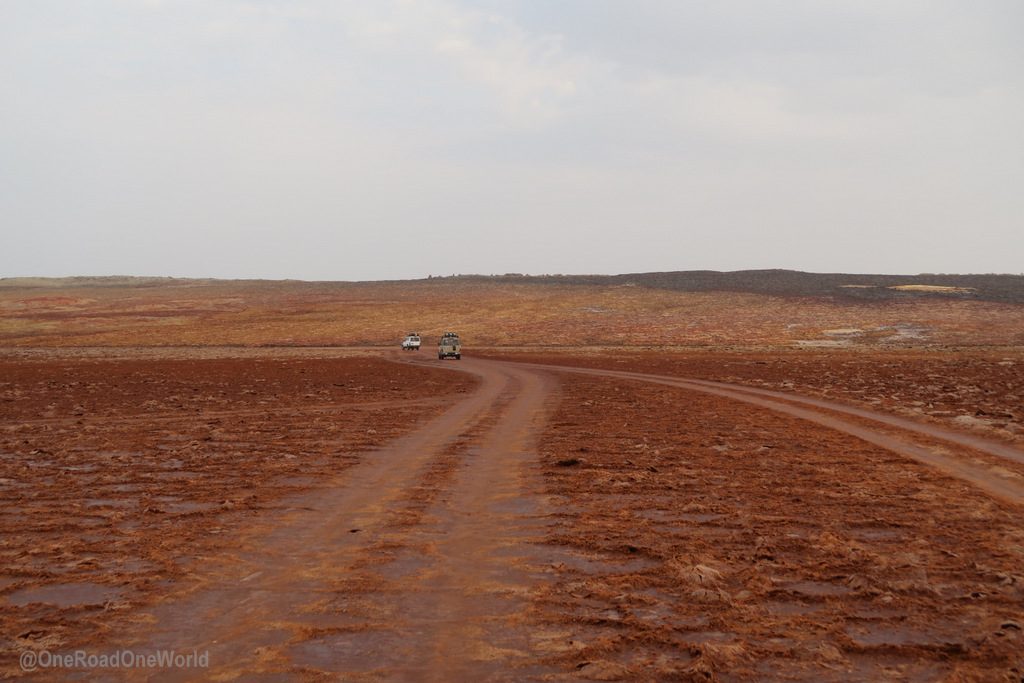
    After leave the Abala to Afdera road to go to the Erta Ale volcano, the nightmare could start because only 13 km drive to reach El Dom campsite but it took two hours. You must pass sandy and all lava stones road. Please, keep in your mind that you cannot go alone to the Erta Ale volcano!

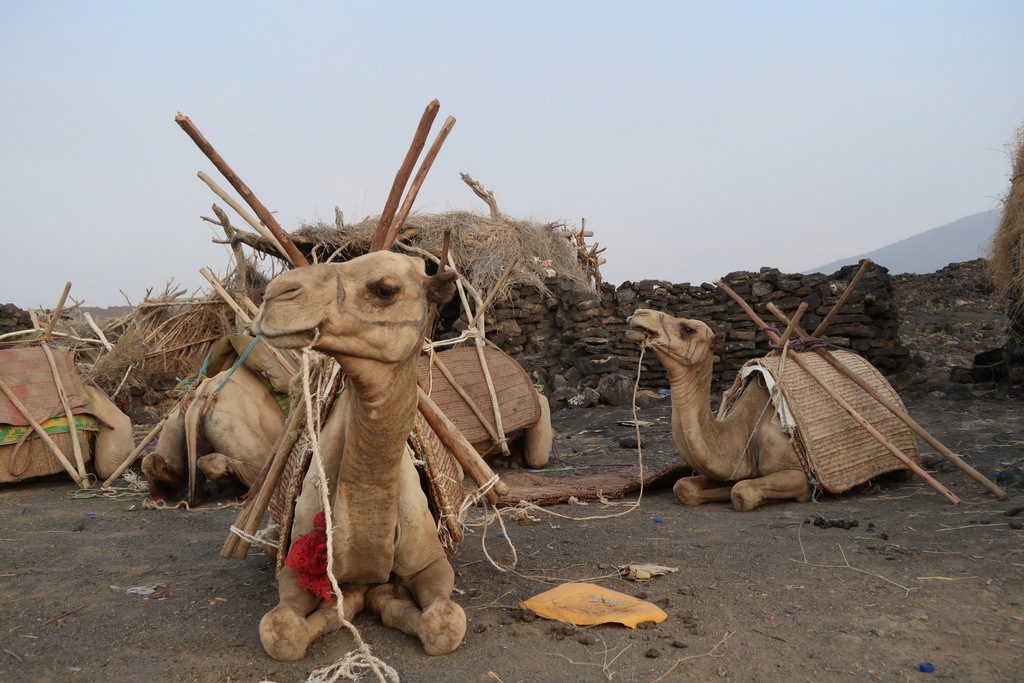
    We got a little rest in El Dom campsite and ate dinner. Our drivers and guides were getting ready to hike. They were taking beds and water from the car to make sure we have enough water and bed top of the Erta Ale volcano. Our camels were already ready to carry our water, bed, sleeping bags (in a case if the weather cold up there) Also, you can hire  camel if you don’t want to walk. Some people had their own camel. 🙂

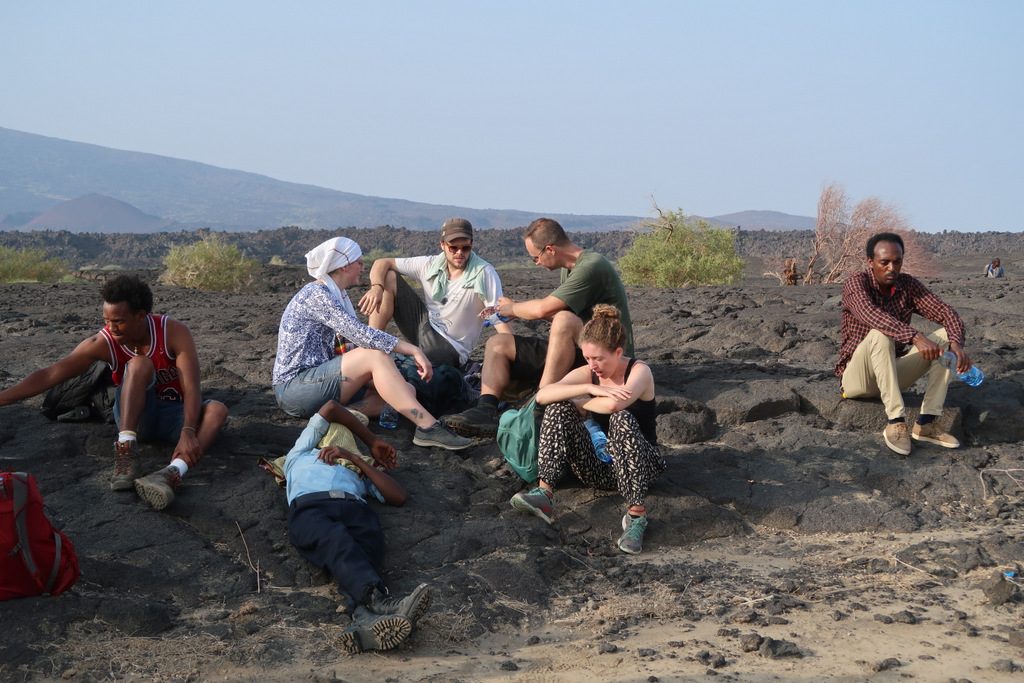
    In the night we started to walk to the Erta Ale crater. Why do you need to trek in the night to the volcano? Believe me you don’t want to walk under the sun, This is one of the hottest and driest place in the world. It is around 4-5 hours to walk. When we reached the top it was so much foggy and smelly. If the wind changes the direction it was so hard to breath.

    So, some people skipped to be on the top of the crater and look down to see the magma lake and they turned back the Erta Ale campsite. We walked all the way up so I was a little stubborn to see magma. Here it was, I didn’t want to give up!

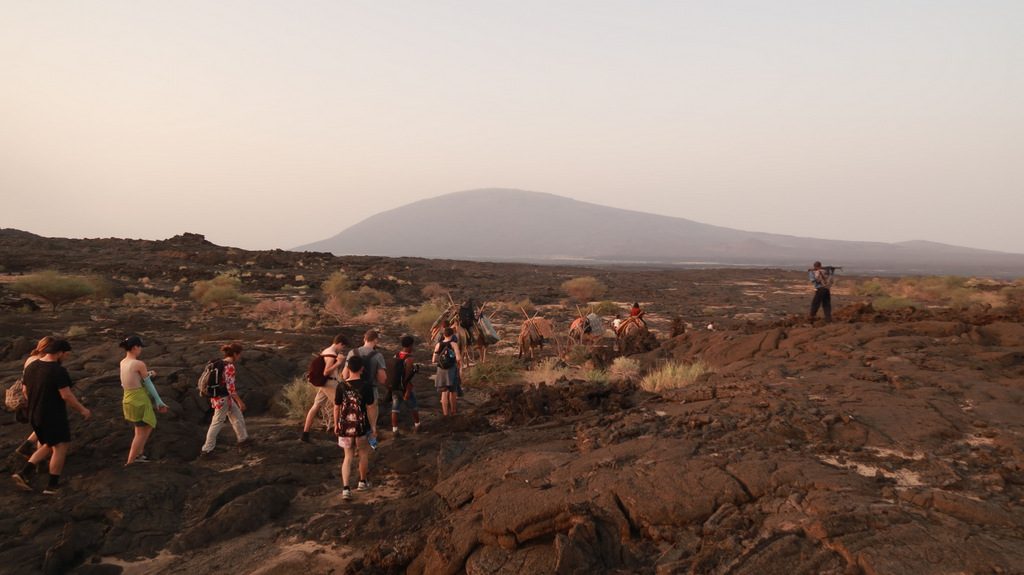
    Erta Ale magma/lava lake, Ethiopia

    See magma or not still the feeling was so strange because you can here something like strong waves from the ocean (like you are sitting top of the cliff and hear the waves smash into the reef. It was such so strange to hear). If it decides to erupt you don’t have any change to survive. I can hear that you thinking it is too dangerous. Maybe it was. Believe me, I can’t explain my feeling when I was there because there are no words to describe it.

    Erta Ale Campsite

    We slept next to the active volcano, just outside on the hot ground. The campsite was a little far from the crater but when the wind was strong still we could smell all sulfur/toxic so strong. We just sleep a couple of hour and we started walk again around 5 am. This time we were walking in daylight to see around.

    Erta Ale hiking route

    We watched sunrise on the road as well.When we had a break we could see each other how much tired because we didn’t sleep well in the night and very short… It is the way to see special things.

    We arrived El Dom campsite. After breakfast we said bye to the Erta Ale volcano and left to see other special places in the Afar region, Ethiopia.

    You can ride a camel to go Erta Ale Volcano

    Dallol Ethiopia :  The Camel Caravan, Salt Canyon, Flats and lake

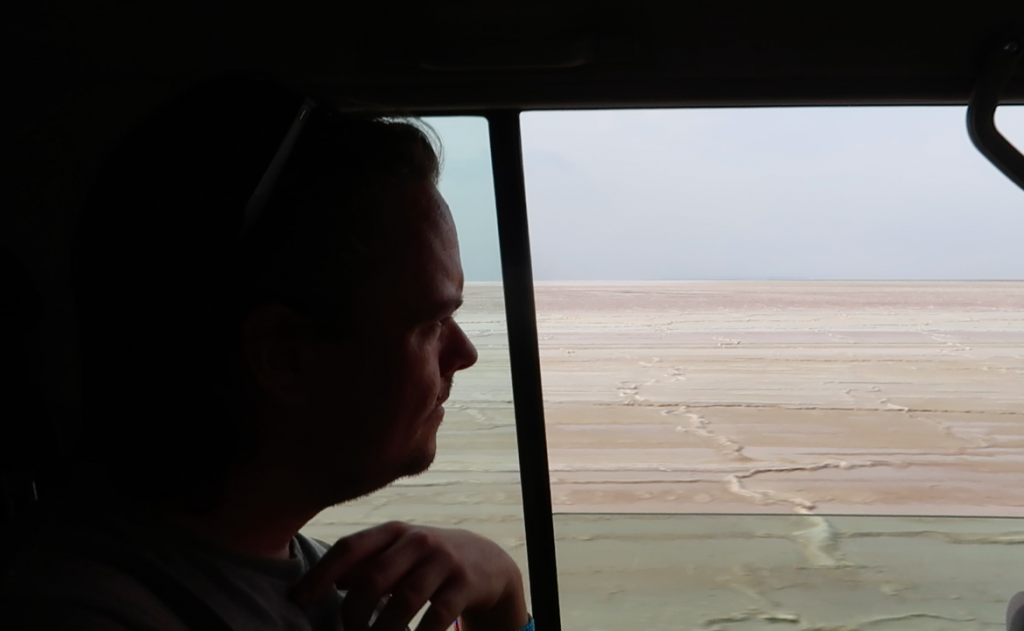
    This is one of the nice things to see in the Danakil Depression. When we were there it was cloudy so we where not lucky with the sunset and salt lake reflection. Still it was enjoyable. Feeling was a small version of Salar de Uyuni, Bolivia.

    Lake Afrera or Lake Karum (Salt lake), Danakil, Ethiopia

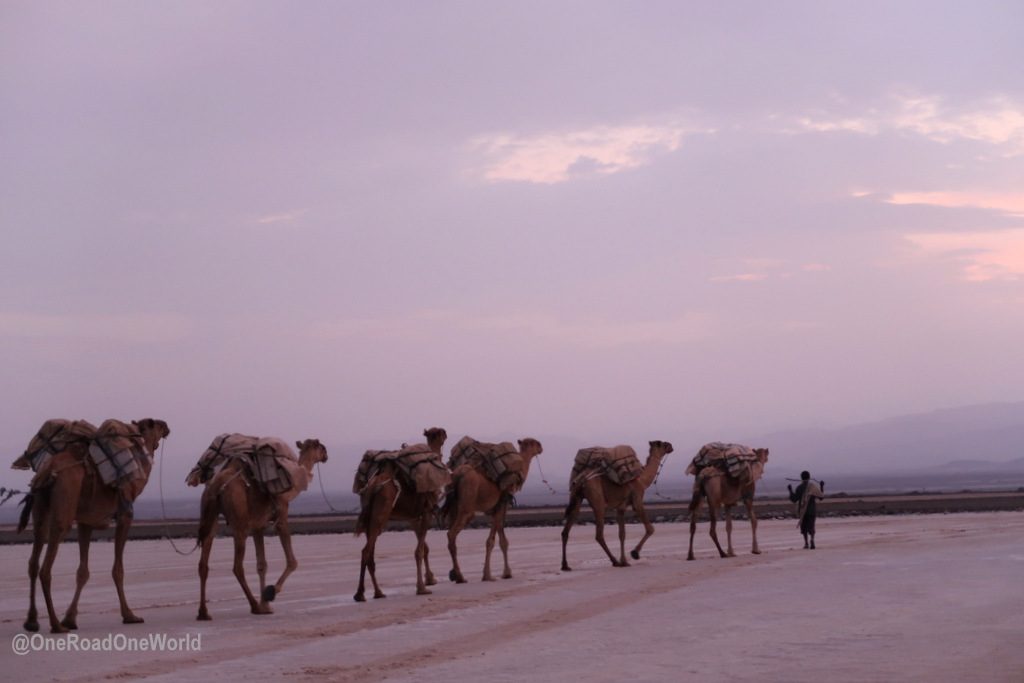
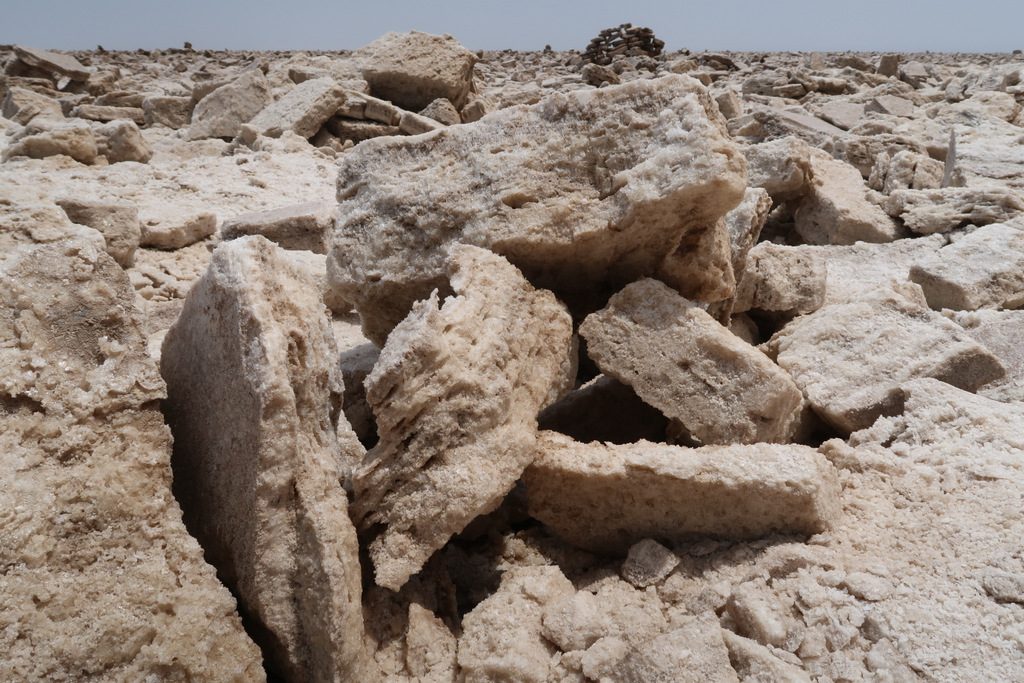
    The Afar people work on the salt flats. They break salt and make salt bricks; each is around 4 kilos. When the sunset comes they are loading the salt bricks to their camels. Each camel carries around thirty salt bricks. It will take two days or more to reach the nearest village where they can sell the salt. They can exchange salt with food or other supplies there or sell the salt bricks. On the road, they guard their camels from bandits when they are close to the Eritrea border.

    Salt flats, Hamedela, Danakil Depression

    Loading camels is an old tradition for some Afar people because by truck is easier to carry more salt bricks but most Afar people wants to keep continue their traditional; The Camel Caravan. This is also because they pass through the mountains by some remote villages who really need the support of the caravans for their supplies.

    Camel caravan, Hamedela, Dallol

    Our plan was to see the Afar people how they can cut salt but we arrived there on Thursday just before sunset. Friday is a holiday for them, they have only one day off in a week. That’s why we saw only the camel caravan during sunset.

    Salt mine, Dallol, Ethiopia

    Hottest place on the earth : Dallol sulfur lake (springs) is not belong the earth.

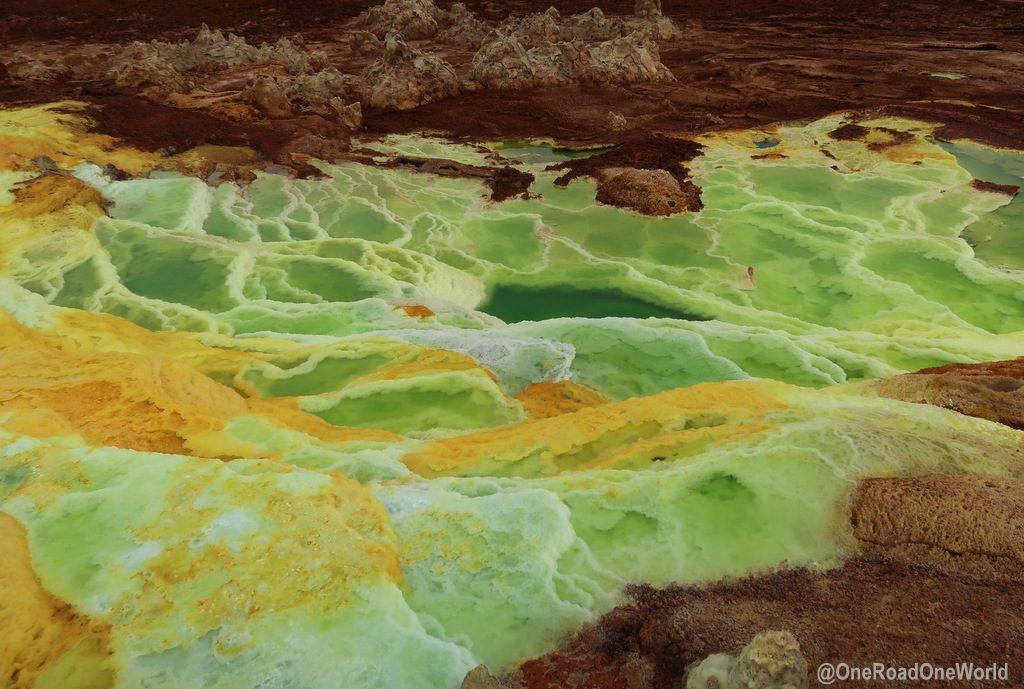
    It is really hard to describe Dallol. It is look like hot spring but it has acid liquid in. Believe me the feeling is so strange when walking on it because we know that it is so hot and acid. If anything breaks under your feed you don’t want it to touch your body. Therefore, you must listen your guide and don’t jump! Just walk slowly and enjoy it.

    Acidic liquid walking way on sulphur spring, Dallol

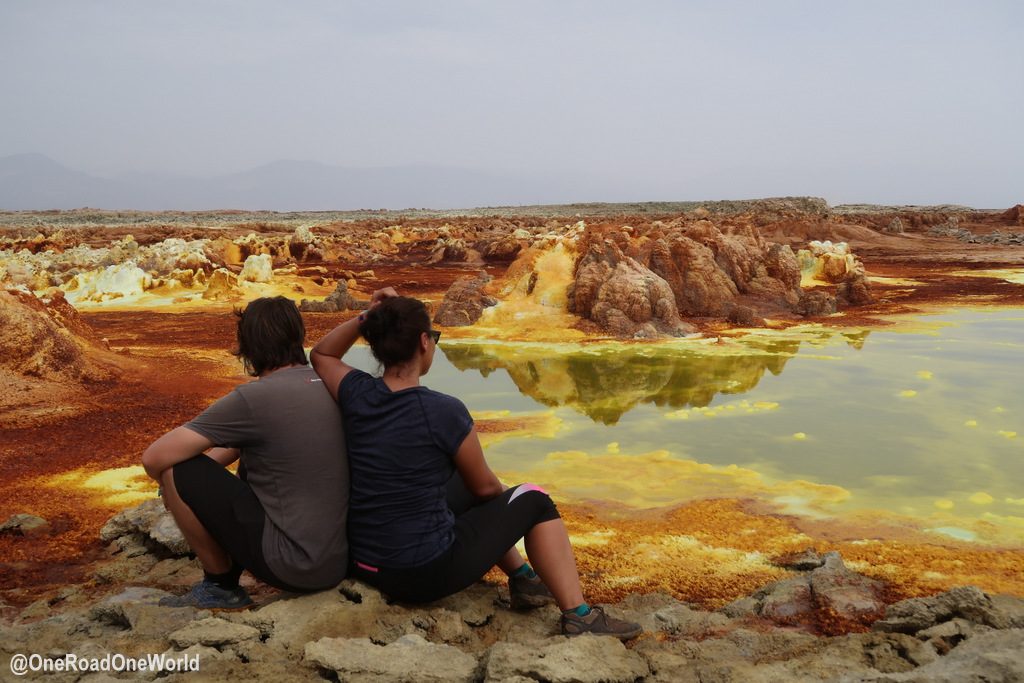
    How the color can be green, yellow or different brown in Dallol? The magma heats groundwater moves up towards the surface, it dissolves salt, sulphur, potash and other minerals and deposits them in the Dallol craters. So, the landscape is of green acid ponds and iron oxide, sulfur and salt desert plains.

    Sulphur spring, pond in Dalol, Ethiopia

    We sat a while and look the landscape, which was unbelievable. We can’t believe that we were watching sulfur pods and has acidic liquid around us. Please remember that, you can not visit Dallol alone like Erta Ale volcano! This is one of the most amazing places we have ever seen and this is the only place in the world to see this, there is no other place on earth with volcano activity on a salt mountain.

    Danakil Depression, Ethiopia

    We stayed Hamedala village to visited The camel caravan, slat flat and Dallol. We slept outside under the stars. Middle of the night it was still 40 degrees. We left from Hamedala around 5:30 am to visit Sulfur lake of Dallol, yellow pound and the canyon. Dallol is about 130 meters below sea level and therefore it is one of the hottest places on earth, there is nearly no humidity and it gets easily over 45 degrees celsius.

    Hamed Ela Campsite, Danakil
    If you want to visit Danakil you need to know before go what you take/carry with you; 

    You are going to one of the hottest places in the world. So, you need sun cream and a hat.

    You will sleep outside on the Erta Ale crater and in Hamedala or on the road you don’t have toilet. So, you need to carry your toilet paper, wet tissue and hand cleaner.

    The smell is really so strong in Erta Ale and sometime it’s hard to take a breath, it is toxic as well. We can highly recommend having a mask because; a buff or scarf wasn’t enough in Erta Ale Volcano.

    You will be hiking in the night after dinner and walk back early morning before breakfast. So, you should have some snacks with you and a headlight or torch.

    If you have any heart or blood pressure problems it’s not recommended to go to the Danakil Depression because of the hot!

    Don’t worry about water or food. The companies carry more than enough.

    One of the basic breakfast for 3 person 🙂

    Nice to have flip floppers with you to get rest your feed sometimes 🙂

    Carry small backpack with you! If you have plan to walk Erta Ale volcano you need to carry your personal stuff with you. The camels only carry bed, sleeping bag and water to use top of the crater.

    No electricity! You should carry external charge with you for your camera, phone…etc. because you cannot find a place all the time to charge and depend on how many days tours you have.

    Abala guess house, danakil, ethiopia

    We went four days tour with ETT Company. We slept first night on Erta Ale Volcano, second night Abala and last night in Hamedala. We met some backpackers during the tour and they told us they went with ETT tour in other cities and they help them for transport or other tours in Ethiopia. Also, we saw some other people who has their own tour like two days Erta Ale or only Dallol sulfur lake tour. We met a German couple on the motorcycle they had a private tour with ETT and went to the Danakil Depression by motorcycle with them.

    Yellow pond, Dallol, Ethiopia

    We ride to Mekele and started our tour from there. First time, we didn’t want to ride motorcycle because it was so hot 🙂 we wanted to enjoy with the landscape and area don’t fight with the hot. To be honest, it was such an interesting experience for us because after a while we were sitting in a car with ac and just looking around. 🙂 Also it is cheaper to go with a 4×4 tour then with your own motorcycle, we learned it is even possible to go by bicycle.

    Salf Flats, Danakil

    GS

  • Ethiopian Tribes : Omo Valley Ethiopia

    Ethiopian Tribes : Omo Valley Ethiopia

    When we were planning our trip around Africa by motorcycle the Omo valley, Ethiopia was in our top list to see in Africa. because We read a lot about Ethiopian tribes. We traveled in Africa more than 1.5 years to learn their culture, lifestyle, language…etc. So, you can imagine why we went to Omo valley. 🙂

    We stayed 10 days in the Omo Valley. We wanted to share what we saw and learn about tribes, how you can travel by yourself backpack, motorcycle, car…etc.

    Please, keep in your mind what we are writing about Ethic groups culture, lifestyle…etc., we learned in the region from local people or guides.

     Let’s start with the Omo Valley and tribes (ethnic groups) info and than how you can travel by bus or your own vehicle, how much money you need.

    Ethiopian Tribes : Omo Valley Ethiopia

    The biggest city in the Omo Valley is Jinka this is the capital city of the region. The Omo valley is a very famous area in Ethiopia and also well known in whole Africa. It is like another world what we know about life and culture because of the ethic groups. They have 16 different ethic groups in the Omo region. The biggest ethic group is the Ari with a population around 300.000, and smallest is Karo (Kara), with a population of 1.600, in the Southern Omo Valley. The most famous ethic groups are Mursi, Ari, Hammer, Kara(Karo), Banna, Thsemay, Bashada and Daasanach because they are the more reachable ethic groups (tribes) in the Low Omo Valley. Also, you can see or hear a lot about Nyangatom and Surmi(Surma) ethic groups (tribes) but it’s not so easy to find a tour or transport to reach them because they live close to the South Sudan border. After Jinka, more known cities are Key Afar, Dimeka, Turmi and Omorate.

    Ethiopian Tribes : Omo Valley Ethiopia

    Which ethic groups (tribes) do live close to which cities?

    Ari tribes is around Jinka

    Banna and Bashada  tribes (ethic groups) are around Jinka, Key Afar, Dimeka and Turmi

    Hamer tribes is around Key Afar, Dimeka and Turmi

    Daasanach (Dashech also called  Dasenech) tribes is around Omorate.

    Ethiopian Tribes
    Dashnech people

    Karo tribes is around Dimeka and Turmi. Easy to go from Turmi.

    Mursi tribes is in Mago National Park, Jinka

    Tsemay tribes is around Key Afar and Dimeka

    Nyangatom is around the Omo river, close to South Sudan.

    Surmi(Surma) is in the Omo National Park.

    Omo Valley Ethiopia
    Little Ari kid
    ARI TRIBES :

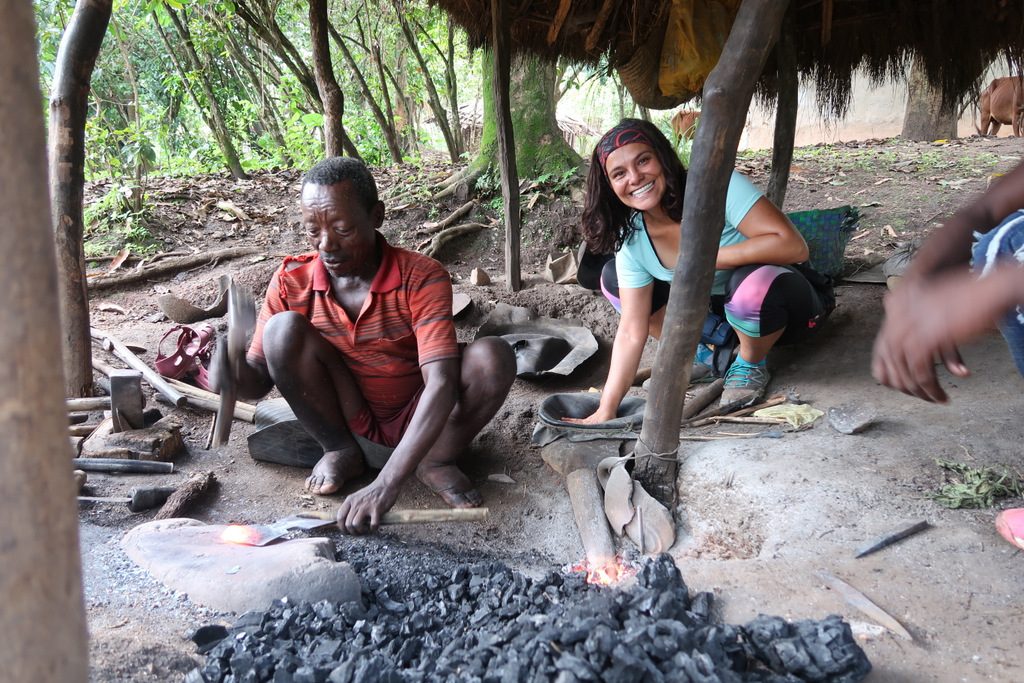
    They live around Jinka and their population is around 300.000. They wear their traditional clothes on special days, wedding, funeral… etc. They are hard working farmers. They grow mostly coffee and sorghum. It is look like they can grow everything on their land. The make honey and their own alcohol. Cattle are important as well. They make their hammer, knife, ax, shelf etc. from any metal. Some women make ceramic to use and sell.

     Omo Valley Ethiopia
    Ari tribes in Jinka

    We asked our guide about Ari people wedding celebrate and how they choose their wife. He told us that the beauty is not important. What does her ability? When they decided to married he (or his father who had money) must pay 30.000 birr and cattle. How many cattle’s they will pay depend on the family negotiation. And wedding time his family must give blankets as well to her family, grandfather and mother, aunt and uncle. Each blanket is around 2000 birr.

    Ethiopian Tribes
    Ari people are so friendly…

    Wedding day, the broom waits outside with a goat, families and the bride go inside. They can start to eat and enjoy the moment. After a while her father can go out to call the broom. He can give the goat to his father-in-law and than can go inside. They can eat and drink a lot, cut a lot of cattle’s to celebrate. They can get married more than one woman if they have enough money for it.

    Ethiopian Tribes
    He is making an ax, Ari village

    Also we wanted to learn about funeral ceremony if they have anything special. The body can wait maximum one year in the house for the ceremony. They cut a lot of cattle and cook food. How many people can go to ceremony they must have enough food for them, people need to be full to eat. So, they worked in their land until they have enough vegetable, sorghum…etc.

    ARI TRIBE
    They were showing how they make alcohol

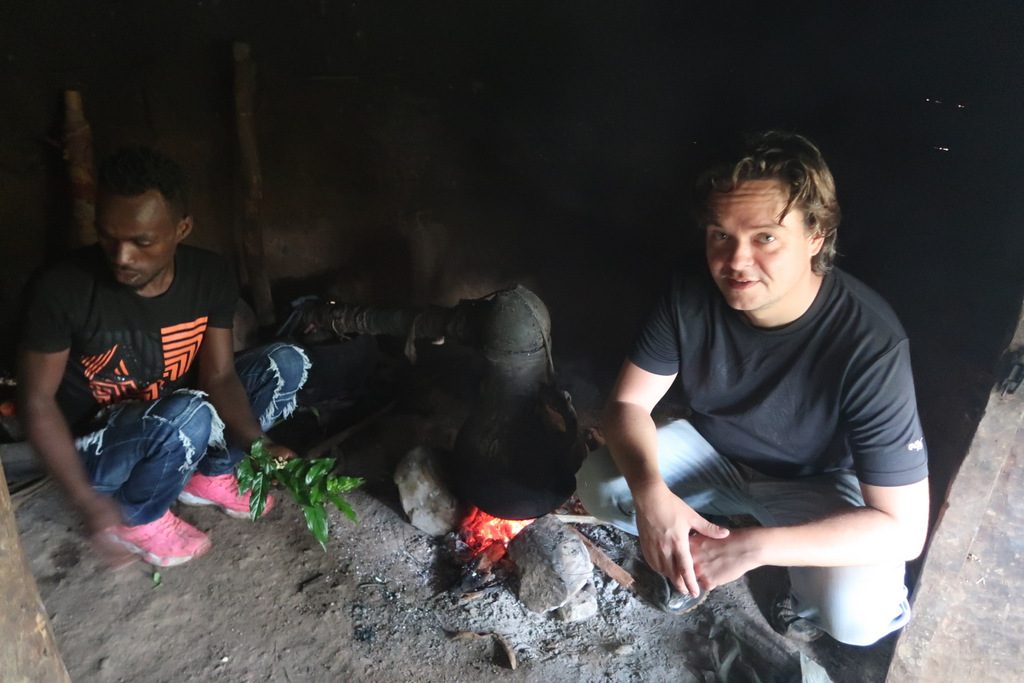
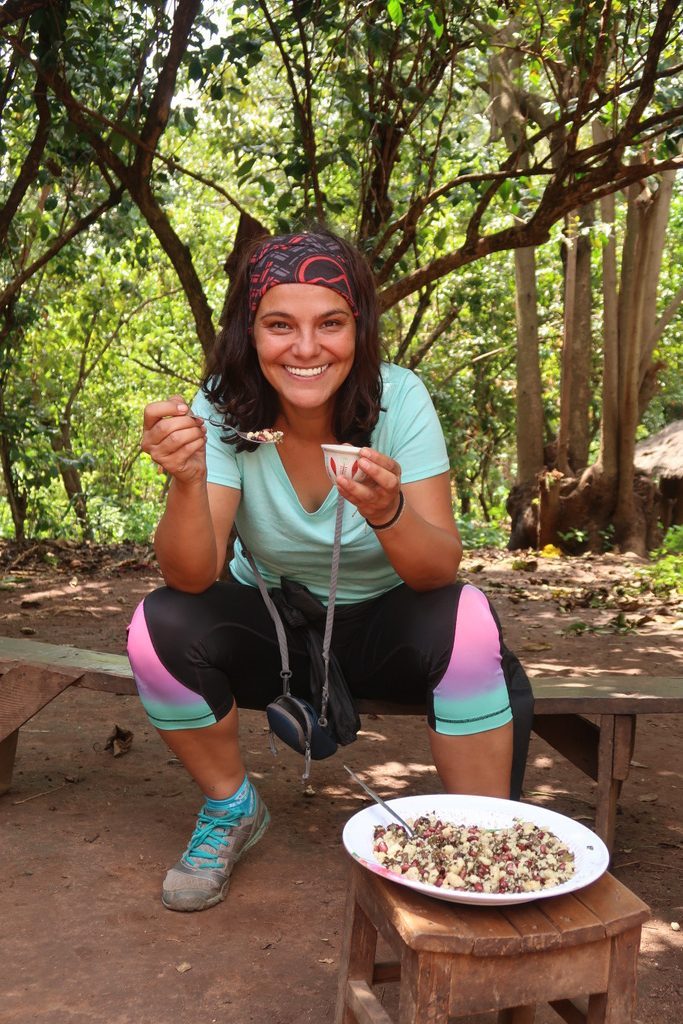
    One thing was so interest for us to drink “ Coffee soup” We visited one of the Ari house. She collected coffee leafs, boiled with some spices and garlic. The taste was really good. Also we tried the traditional foods.

    Trying coffee soup and local food

    They showed us how they make their alcohol and gave us to taste. I am not sure about the taste it was so strong for me.

    We also watched how they can make ceramic, tools and knifes. Their traditional house is a circle but now they have more square houses as well. Where we were Ari people were so friendly and welcome. We leaved from the village so happy.

    ARI TRIBE
    Ari tribes house
    MURSI TRIBES :

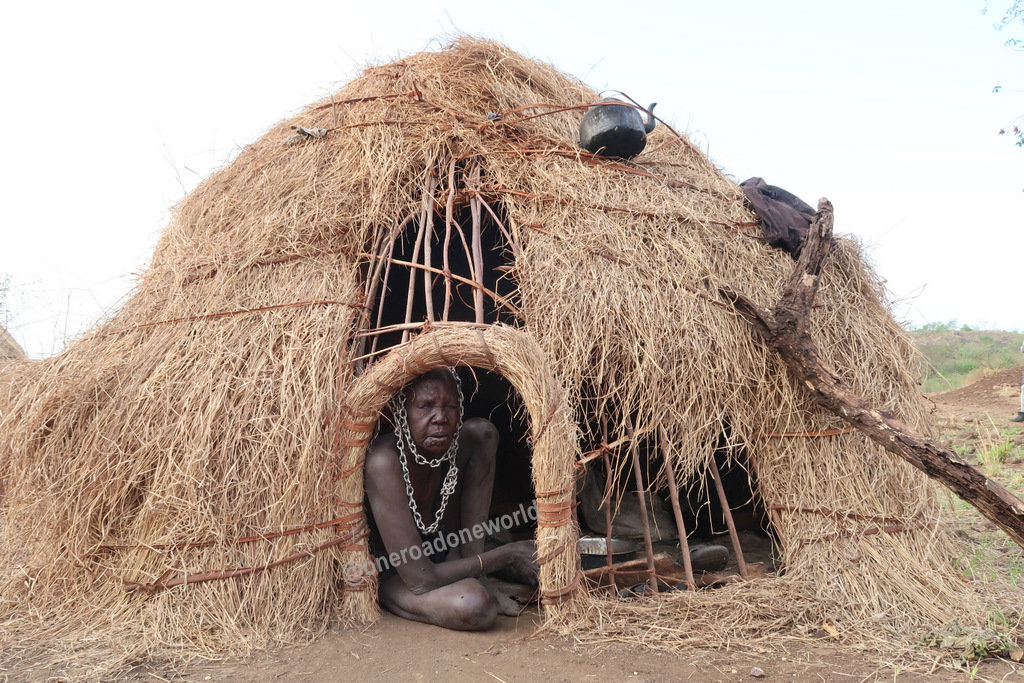
     Mursi people live in the Mago National Park and their population is round 8.000. They are not a farmer, raising cattle is most important for them. They make their clothes from cattle skin and sleep on it as well.

    Ethiopian Tribes : Omo Valley Ethiopia
    Mursi Tribe’s women

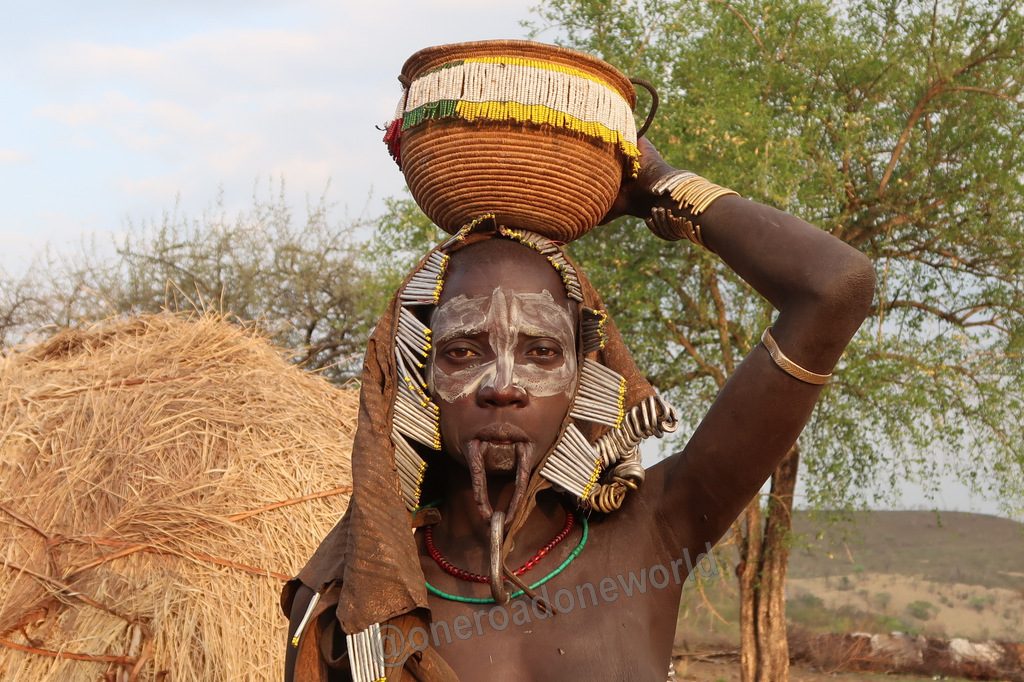
    Mursi people are most known for the lips-plate by the women. The girl cut a hole in her lower lips when she’s a mid-teenager (around 15-16 years old.) They put a little wooden stick in it to don’t close the hole. Than they make to hole bigger and bigger slowly. The hole can be around 12 cm. They also pull out their four lower front teeth to make the lower-lip hole big. They made their lips-plates and paint what they want. They use plates if it is necessary because it doesn’t easy to eat and they need to keep their lips and plate with their hands all time, lips cannot carry the plate.

    We are not sure still a tradition to have a large ear holes anymore because we saw some women has big ear hole some doesn’t. They cut a hole in the ear when they are five.

    mursi tribe
    Mursi women with plate on low lips

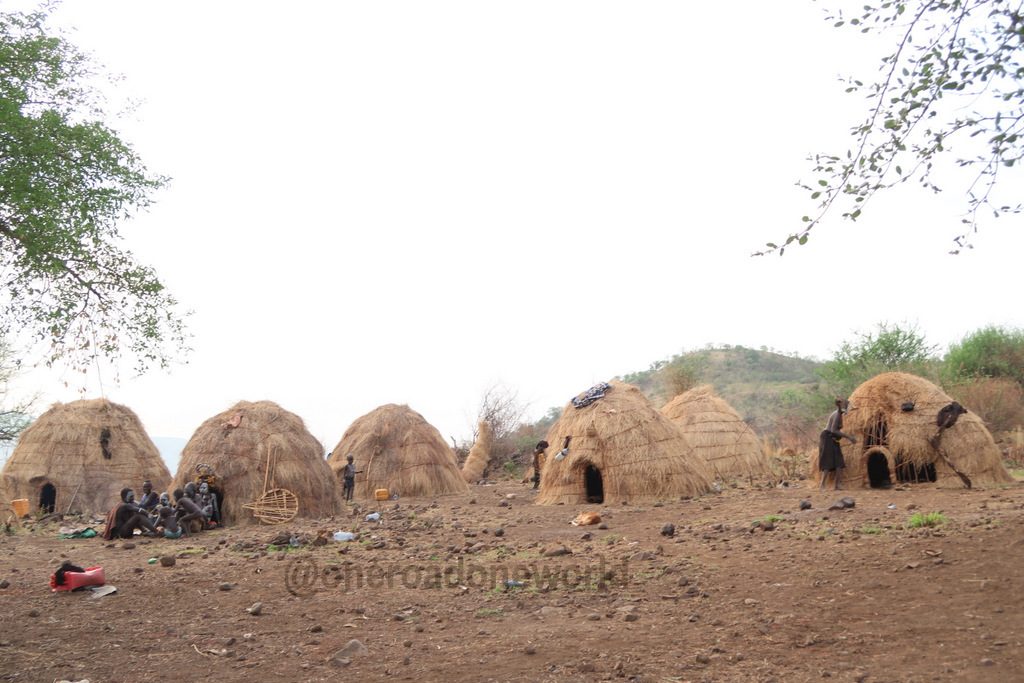
    They live in a small village. The house is small circle made of dry grass. Also, Mursi man tradition is (or was) stick-fighting. We are not sure if they still do because stick-fight is illegal now and they never do it in front of tourist anymore.

    Surmi (or some people is called Surma) tribes life style, culture and women tradition is almost the same. So hard to understand which woman is belong to which tribe. But Surmi people live in Omo National Park and their population around 45.000. And they also grow Sorghum and maize. They don’t try to survive only with cattle like Mursi.

    Ethiopian Tribes : Omo Valley Ethiopia
    Mursi village in Mago park
    HAMMER TRIBES :

    They lives around Turmi and Dimeka, their population is around 47.000. They grow sorghum and maize, also some vegetables, raising cattle. Make honey and tobacco is one of the important things in their life. They are more known for their hairstyle, dance and bull jumping ceremony.

    Ethiopian Tribes : Omo Valley Ethiopia
    Bull jumping ceromny

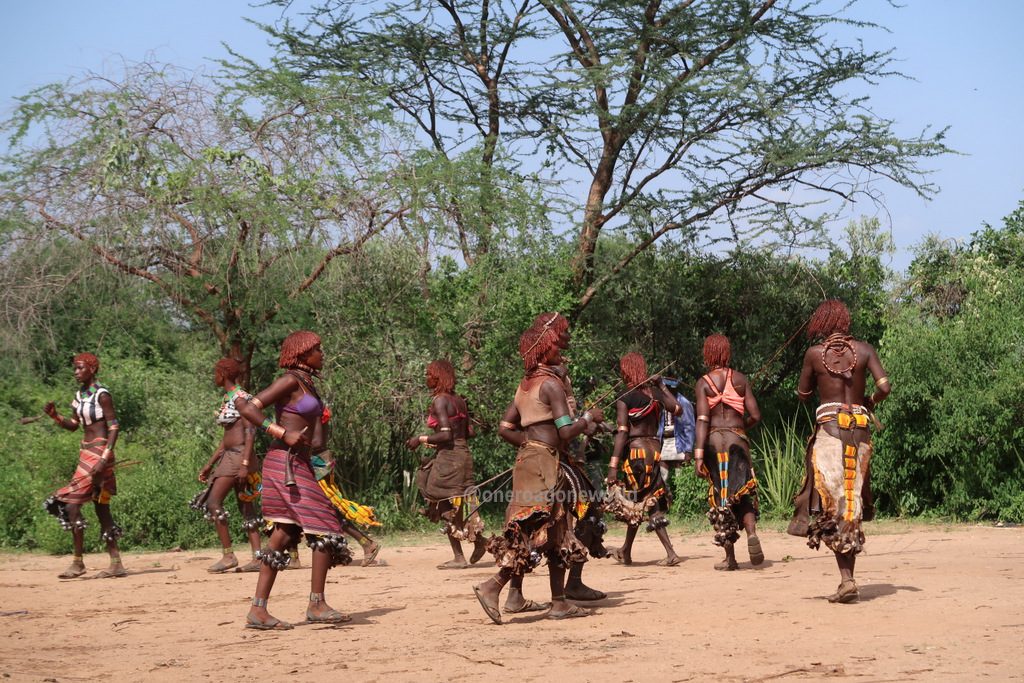
    Women mix ochre, water and a binding resin (like Himba women in Namibia) and than put into their hair. They wear leader, made from cattle.

    Ethiopian Tribes : Omo Valley Ethiopia
    Hammer tribes women
    Ethiopian Tribes : Omo Valley Ethiopia
    Women dance before bull jump

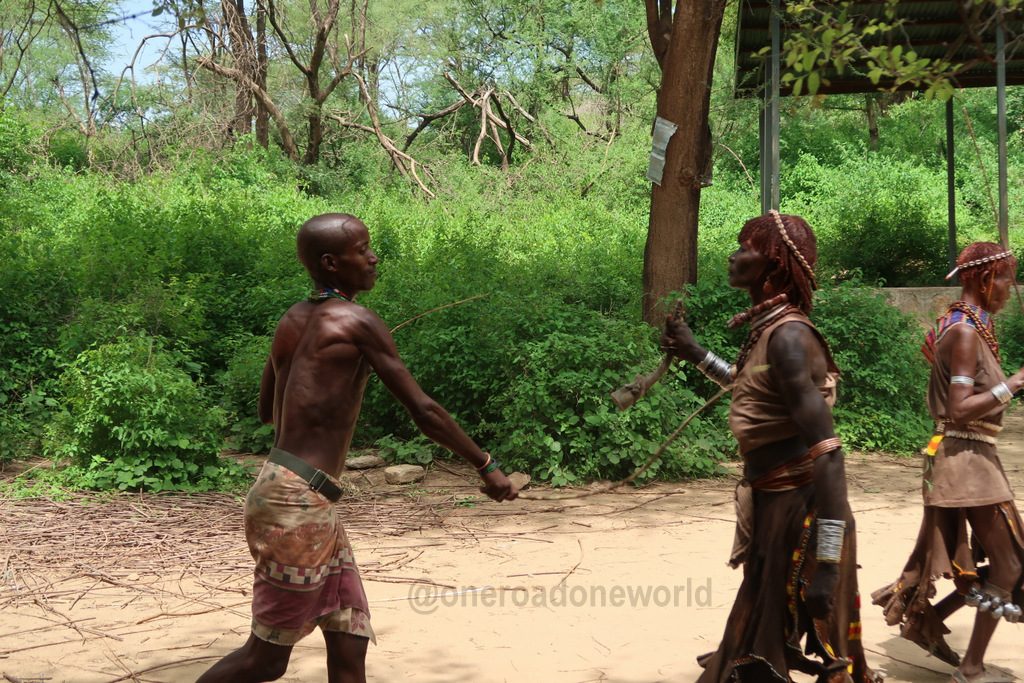
    One of the important ceremonies is “Bull Jumping”. If a man doesn’t jump over the line of bulls he cannot become a man and can’t get married. The family decides when their son jumps. The boy can go to the ceremony when he is 13 to 30. Also, the family decides which son goes to “Bull Jumping” first. The ceremony starts with women dance.

    And than men hit women (who relative with bull-jumping boy) back with stick. How bigger the scar is deep and bleeding it means to show how much they love their boy.

    Hammer tribeAnd than who support him when he jumps to the bulls. They paint their face. After that the bull-jumping boy gets totally naked and they pray together before the jump.
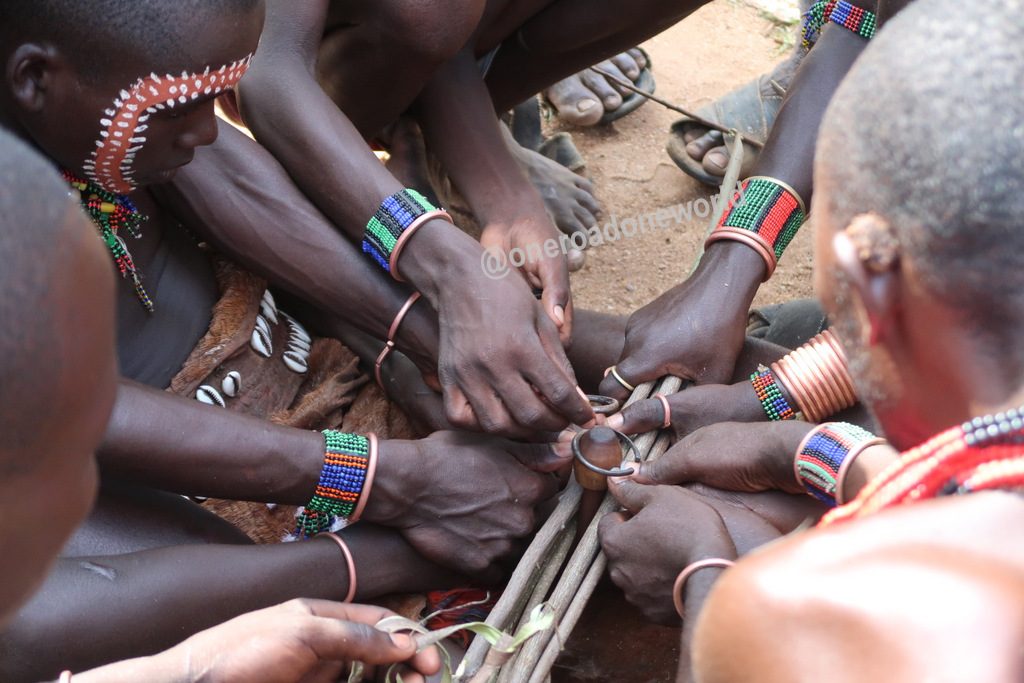
    Ethiopian Tribes : Omo Valley Ethiopia

    A lot of bulls come to the area and they can choose 8 to 15 bulls. The boy has to jump/run over all of them in one time. If he falls down they call him half-men (something like that) and he never have second bull-jumping ceremony. If he succeeds to pass all the bulls the first time he must turn around and do same thing four times.

    Ethiopian Tribes : Omo Valley Ethiopia
    Bull jumping time

    We asked about Hammer tradition married how it is and how can choose their wife or husband. Unfortunately, the boy or girl cannot choose anything for the first marriage. His family chooses the wife for him. Also, the family pays everything for the wedding. If two families agree about the marriage his family gives 5 cows and around 30 cattle, goat and sheep. Also they pay for all the food and what they need for the wedding ceremony. Hammer tribes man can have two or three wife if he has money. He chooses the second and third wife but he needs to ask the first wife if she is agree about the next wife.

    To be a first wife is an honor. When the women get married she started to carry some kind of special necklace to show she is the first.

    Ethiopian Tribes : Omo Valley Ethiopia
    First woman is first wife

    The second and third woman has a necklace also but just metal one.

    Banna and Hammer tribe lifestyle and tradition are so close each other. What do we know about the difference; Banna women can wear blue color but Hammer women don’t. Hammer like more dark color, not so much colorful. Also, Hammer Ethnic groups make a bull-jumping ceremony close to the river. Banna ethnic group make the ceremony in their village.

    Hamer Tribe

    DAASANAC (DASHNECH) Tribe

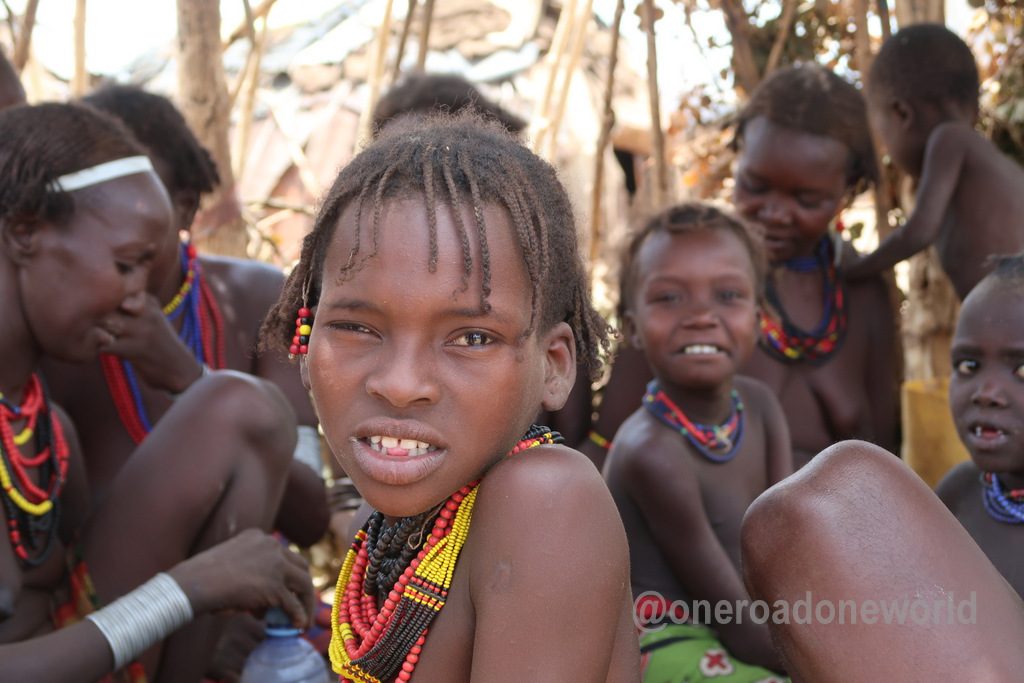
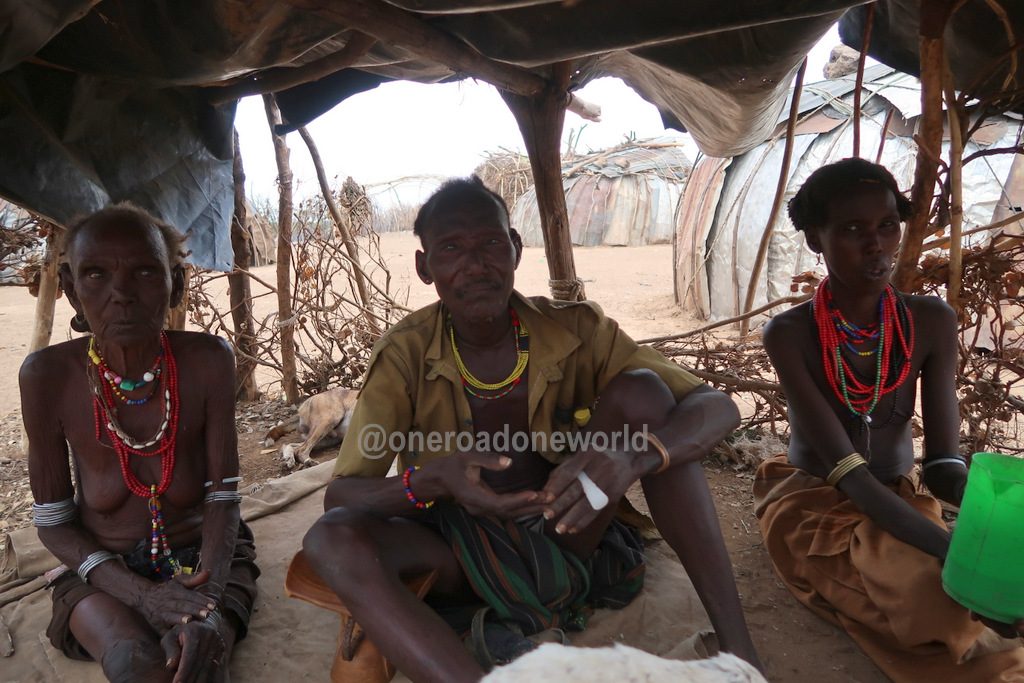
    Daasanach people live around the Omo River, between Omorate and Lake Turkana, the population is around 45.000 and they are the poorest Ethnic group in the valley and the government helps them. They grow the same as other tribes, maize and sorghum. Also Dashnech (Dasenech) tribe people like tobacco so much and grow it. But their main thing is a cattle.

    Ethiopian Tribes : Omo Valley Ethiopia
    Dashnech(Daasanach) people

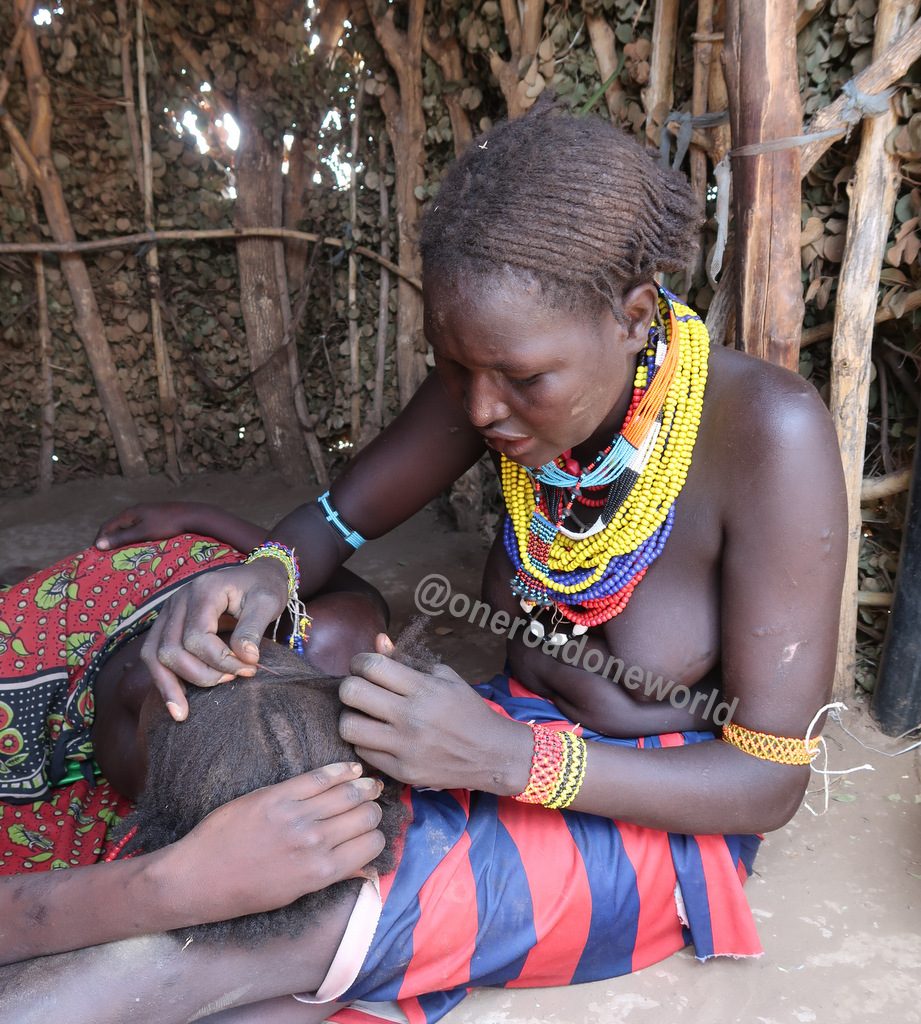
    Dasenech women like colorful necklace so much and they change their hair style when they are single, married or pregnant.

    Ethiopian Tribes : Omo Valley Ethiopia
    She is getting married and changing hair style

    Also they make necklace from plastic or bottle tops (caps) for their kids. If a man kills one of their enemies to protect the village or his cattle he becomes a hero and his sister makes a tattoo on her shoulder.

    Ethiopian Tribes
    She is sister of Hero, Dasenech tribe

    It was look like they love alcohol so much. We were there in the morning and almost everybody was drinking in the village include little kids and baby goats. But they don’t make their own alcohol they just buy from other tribes.

    Daasanach; Dashech;Dasenech tribe
    Daasanach (Dashech also called  Dasenech) village, Omorate
    KARO (KARA) TRIBE :

    Karo people live northwest of Turmi. Their population is around 1500 and they have three villages, which are Gorcho, Dus and La Bok. Karo tribe tradition is to paint their body with white color. Some women can use different color for their face. They also grow sorghum and maize, the cattle are important for their life.

    Omo Valley Ethiopia
    Karo people village

    We went to Gorcho to visit them but we didn’t like the people behavior. 3-4 guys were sitting in front of the village door and drinking beer in the morning. They wanted double than other villages to enter. We didn’t sure that the money will go to their beer or the village. Already all women and kids came to the door when we were talking guides. We decided to don’t enter and turn back. We couldn’t take any photo but we already saw the village and people.

    Kara tribe village
    Gorcho village entry
    OMO VALLEY MARKETS:

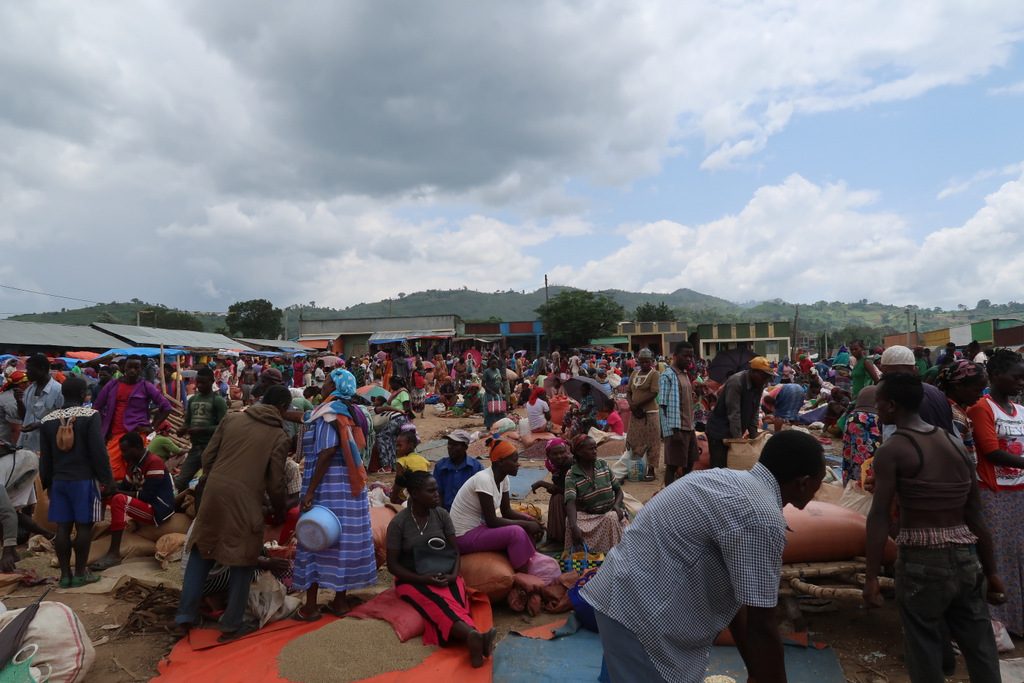
    Almost all towns have markets days. They are so colorful and possibility to see some tribes there if you don’t want to go each village and pay it can be good opportunity to see them in one place.

    Omo valley market
    Jinka Market

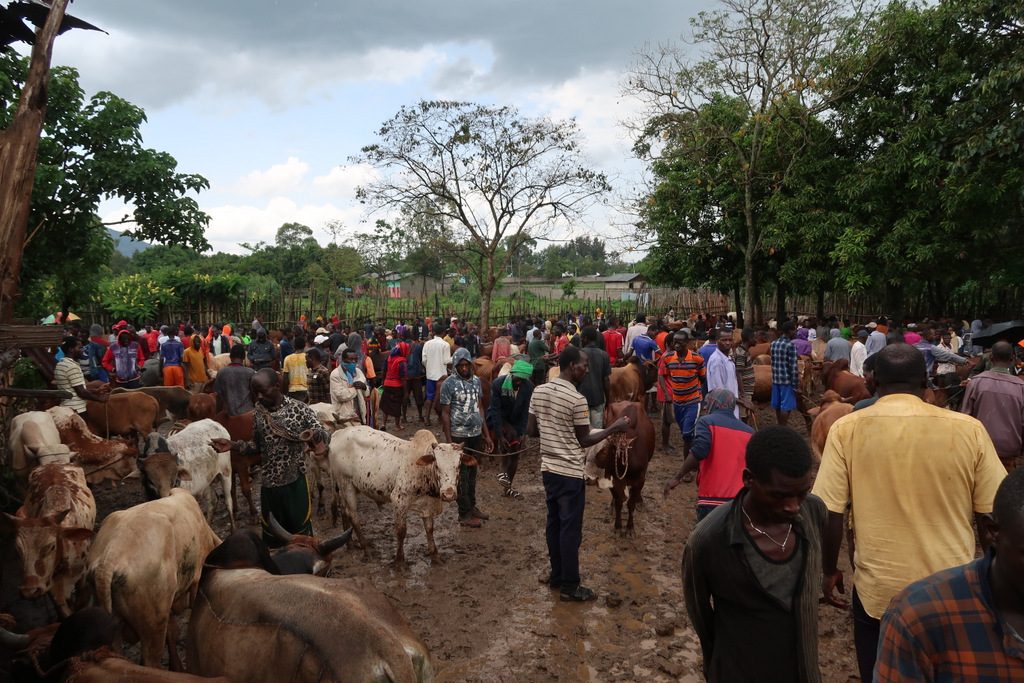
    Jinka Market is on Tuesday and Saturday. Saturday is the biggest market. You can find all fruits, vegetables…etc. Of course, most of them are Ari people. In the cattle area, you can see Mursi people because they come to the market to sell their cattle.

    Jinka market, omo valley ethiopia

    Key Afar Market is on Thursday. It is not rich like the Jinka market about fruit and vegetables. They sell more sorghum, maize, cattle also clothes and accessories. But it is chance to see Tsemay, Banna and Hammer tribes there and take a photo. Because some of them go to the market with traditional clothes for photos and make money.

    Key Afar Market, omo valley ethiopia
    Thsemay men, Key Afar Market

    Dimeka Market is on Tuesday and Saturday. Most colorful market is on Saturday because Tsemay, Banna, Hammer, Bashada and Karo people go to the market. So, it can be a chance to see Karo people there. To be honest, we didn’t go to Dimeka market after saw everything.

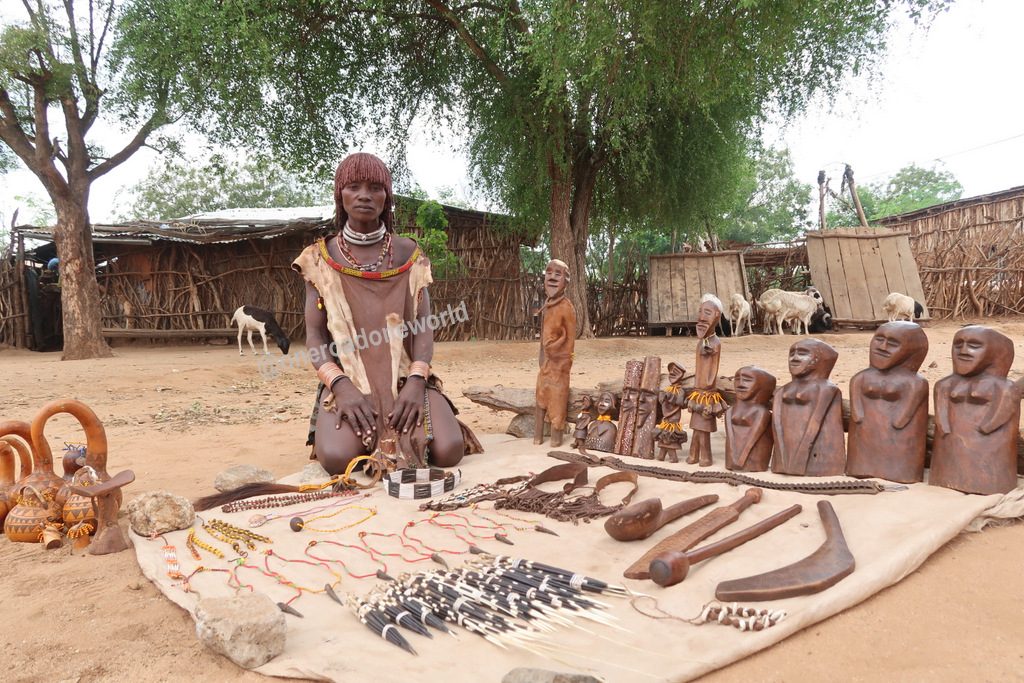
    Turmi Market (Hammer Market) day is Monday and Thursday. It is Hammer market but possible to Bashada people as well. They sell cattle, maize, sorghum, tobacco and honey, also a lot of accessories. If you are not interest to go to a Hammer village you can see Hammer people anytime in Turmi, especially in the market and take photos.

    Hamer tribe market
    Hammer market, Turmi

    Omorate Market (Daasanach – Dashnech); they told us Daasanach people has Omorate Market on Tuseday and Saturday. We were there on Tuesday and asked everywhere include guides but nobody knows about the market.

    Also Arbore, Giyo, Kangaten, Kako, Weyto and Hana Mursi towns (or village) have their own markets. But we didn’t go there so we have no idea about details. 🙁

    If you are interest to visit Ethiopian tribes, it is the link you can find all detail to travel yourself

    GS

  • How to visit Omo Valley: without tour on a budget

    How to visit Omo Valley: without tour on a budget

    When we were going to Omo valley Ethiopia, of course we had a lot of questions in our mind; Is the Omo Valley dangerous? Can you travel without a tour company? Is there any cheap way to visit Omo valley? How can I find a guide? How are the road conditions in the Omo valley? Is it safe to ride motorcycle? Does is possible and easy to travel Low Omo Valley by public transporter?

    After spending 10 days in the Omo region we wanted to write an article and try to answer all questions what we had in our mind. You can find info about Omo valley roads, how to travel between villages, where to stay in Omo valley also where can you eat, how much to visit tribes of Ethiopia…. So,

                           How to visit  Omo Valley without tour on a budget. 

    How to visit Omo Valley: without tour on a budget
    Bull Jumping Ceremony, Turmi, Omo Valley

    We can recommend you to read our an other article to have more info about Ethiopian tribes in Omo Valley.

    How is Omo Valley roads? What about fuel? Can you find petrol easy?

    When you leave from Konso and turn to the Omo Valley road the region says hello to you with an amazing landscape and nice mountain roads. 

     Omo Valley road
    Key Afar road from Konso

    Key Afar is 112 km from Konso and all the way is tar road; you just need to be careful for potholes and the local busses.

    Jinka is 40 km far from Key Afar. It is a tar road with some potholes.

    Turmi is 83 km far from Key Afar. Dimeka is the first village on the road, which is 56 km far and than Turmi is only 27 km from Dimeka. Road is still under constriction therefore it is a gravel road with some corrugation. Still the road to Dimeka and Turmi has some problems in the rain season. 🙁

    Omo valley Ethiopia road
    Karo Tirbes, Gorcho village road

    Gorcho (One of the Karo ethic groups village) is 50 km far from Turmi. First 30 km is gravel road with some corrugation after that hard sand road, sometimes soft sand. But it is impossible to reach the Gorcho on the rain season. Dus is 19 km far from Gorcho and most of the road is soft sand.

    Omorate is 71 km far from Turmi and it is a brand new tar road (2018).

    Where to find fuel in Omo Valley?  It was one of the big question in our mind when we were going there. We bought petrol in Konso, it is look like only one petrol station sells petrol which was 22 birr.  Another option Jinka to find petrol. One petrol station is so much busy because they have petrol, which was 19 birr. We didn’t see petrol station Key AfarTurmi or Omorate but they have many motorcycles there. So, if you ask one of them they can help to find petrol but price will be more high between 30 to 50 birr. When we were leaving Jinka we calculate how many kilometers we ride and took extra petrol with us.

    How to find fuel in Omo valley

    Where to stay Jinka, Key Afar, Dimeka, Turmi and Omorate in the Omo Valley? Safe, cheap, clean hotel, motel, pension…

    We can highly recommend staying in Jinka and Turmi because you can find a lot of option to stay.

    Key Afar has two-three pensions. We didn’t stay in Key Afar because we know that people complain about cleanliness and security. Dimeka has the same problem. You can visit Key Afar and Dimeka at the market day. Easy to go with public transport and turn back. We went to Omorate for a day and we couldn’t see nice place to stay around, only some basic pension.

    Normally, we have been staying in tent in our journey but we skipped to do it in Ethiopia. We have many reasons for it; it is rain season now. Each day, we have rain maybe half an hour but everywhere getting mud and roads can be like a river. Also, we have a lot of electronic with us. We don’t want to leave them in the tent when we go to visit Ethic groups. In Omo Valley, people like to touch everything a lot. It is not maybe because of they want to steal something; maybe they are only curious. But we don’t feel comfortable to stay with all our bags on the motorcycle. Other reason was price; some camping sites are more expensive than basic rooms. Also, they can be far from the city center. We don’t want to walk 3-4 km under the sun everyday to find food in the city center.

    You can find a hotel for yourself, which you like. We wanted to share with you what we know.

    where to stay in Jinka, Omo Valley, Ethiopia
    Orit Hotel, Jinka (basic room site)

    Jinka Pension & Hotels

    Who went to Jinka before us they recommend three different hotel/pension to us. Nardos Pension , Goh Hotel and Orit Hotel & Pension. Three of them are clean and close to each other in city center. Nardos and Orit have Wi-Fi (some times good sometimes slow, depend how many people use at the same time.) You should remember that you can always negotiate the prices especially if they are not crowded.

    Nardos Pension has a room with private shower and toilet but don’t have many rooms so can be full fast. The rooms with share bathroom are more available. We went there but they didn’t have a room with private bathroom. The room price is 300 birr. They asked 250 birr for a room with shared bathroom room.

    Goh Hotel has many rooms and the price starts 350 birr. It was look like ok. We went there only for lunch and we didn’t like the food.

    Orit Hotel and Pension has many room because they are famous place for tour operators. They made new building with high quality room (when you compare to Ethiopian standards). We asked the room price and they said 740 birr. We stayed in the cheaper rooms, this is an old building with simple rooms but including shower and toilet and it was clean. They said that they have water problem therefore only bucket shower. (We are not sure that the water ever works J) They said 300 birr but we paid 250 birr. They have bar and restaurant. Food was ok.

    Turmi Pension & Hotels

    Turmi has many options to stay but its not like Jinka. The prices are higher and the quality is less compared to Jinka.

    We stayed in the Green Hotel. They were thinking two guys on the motorcycle and said that 700 birr a room. After they learned that we are couple the price was 500 birr. After negotiated we paid 400 birr for the room, which has a double bed, clean and has running water. It is in the center of the village. (We went to Gosho and Omorate from Turmi and turn back the same day.) Green hotel is so much noisy place. L Because they have TV and local bar, therefore people drink and watch TV almost until midnight.

    Tourist Hotel is next door of Green Hotel. We asked the price to them when we were staying in Green hotel, which said that directly 400 birr to double room with private bathroom. They have share bathroom room as well, 100 birr. I suppose it’s similar to the Green Hotel.

    We asked price to Kizo Lodge. They wanted 35 USD For the room. It was looking good but it was too expensive for us. They allow camping there. They want 10 USD but you can get 5 USD per night. When we were there they didn’t have internet but local people said that we can use WIFI there. It is in center of the village.

    Another option is Mango (Kaske Campsite). Their price for camping 150 birr and basic room is 300 birr but if it is not busy easily you can get price to camping 100 birr and to room 200 birr. It is 4 km far from the center. So, if you want to go shopping or restaurant to eat you must walk.

    If you want to go Omo Valley to really discover you can stay in the ethic groups villages as well. This is possible with the Hammer tribes. Of course you need to pay for this. 🙂 When we asked the price they said that 300 birr, per person, for village camping. Also, you can stay Dassenech (Dashnech) village as well but you need to organize with guide where you can find them.

    What can you eat or find in Jinka, Turmi or Omorate? What is the price for a meal? Restaurants and markets in Omo Valley…

     They have a lot of restaurants in Jinka. We ate sometimes in Orit Hotel. Food price starts 50 birr. Small coffee 5 birr, soft drinks 12 birr and beer 16 birr. We can also recommend Besha Gojo Restaurant. Prices are almost the same as Orit hotel. They have a lot of options in the menu but the quality is better. They have different prices for local and tourist, which is almost double for tourists. For example, our guide ate FirFir 40 birr and we ate 70 birr. He drunk beer 14 birr we paid 23 birr. 🙂 (Some market prices; an avocado 5 birr, local orange 1 birr, a banana 2 birr, a tomato 2 birr and 2 liters water is 15 birr, a sandwich bread is 3 birr)

    You can find small markets around to buy drinks, cookies, fruits etc. If you plan to see the Jinka market on Saturday you should wait to buy fruits and vegetables there because it’s so cheap.

    Where can eat in Omo valley
    Jinka Market

    Unfortunately, we cannot say the same thing for Turmi. They have some local restaurants to eat local food. Or hotels have food but they don’t have many options. In Green hotel, local food prices were around 50-70 birr for tourist. We ate only one time there and than we cooked our self most of the time.

    You can find easily small markets to buy water and soft drinks. But you can’t find a lot of fruit or vegetables around. Tomato, cabbage, onion, bread and eggs are easy to find. Market day, we found avocado and banana as well. (Some market prices; a small avocado 5 birr, 3 eggs are 10 birr, small cabbage is 5 birr and 2 liters water is 15 birr, soft drinks 500 ml is 20 birr, a sandwich bread is 3 birr).

    Two nights we went to Evangadi Lodge to dinner. Local food was 35-40 birr, pizza was 80 birr (you need to order in the day time to dinner) and meat was around 100 birr.

    You can try local food; Injera is some kind of bread. You will like or not, nothing between. Shiro is the sauce; you make it with garlic, ginger, tomato and spices. Tips fir-fir is injera with mince meet.

    What to eat in Ethiopia
    In front: Tips firfir. Behind: Injera with shiro
    How much to hire a guide, village enter fee, rent a car, national park enter fee…? Do you need a guide in Omo Valley to explore?

     Around Jinka

    They don’t have any fix price for hire a guide in Jinka. But most of them want to 500 birr to go to the Mursi Villages. To visit the Ari Village is around 200-300 birr. If you want to visit the Jinka market with a guide (which is not necessary) you can find them on the road when you walk. They can say 150-200 birr you can pay less after negotiate. J Villages enter fee is 200 birr per person. If you want you can hire a guide in a day to visit the Mursi and Ari village also to market. Just you need to negotiate for the price. 🙂

    How much did we pay to visit a Mursi village?

    • 500 birr for the guide
    • 270 birr is Mago National Park enter fee per person
    • 54 birr is Mago National Park enter fee per car
    • 200 birr village enter fee per person
    • 150 birr is the ranger price. They don’t allow to you to go the village without ranger. When we were entering the park they didn’t have any scout there. We were in the park at 7 am and looked like they were sleeping. When we were turning back they ask how we enter without anybody. Our guide said that you didn’t there. Answer was “It doesn’t matter you must pay 150 birr” Yes, they didn’t come or do nothing but took the money. So this did not feel good for us!
    • 2000 birr is rent a car. Our guide booked it from “Travel to Tribe”
    Where to find rent a car in Omo Valley
    Mursi Village

    You can go to Key Afer alone by local bus we can recommend to have a guide there because life is more easy to take a photo, shopping, info etc. When you walk to the market they will come for a guide to you. You can negotiate for it. Price can be 100 birr. Or you can have a guide from Jinka who is your guide to visit the villages you can ask in the beginning when barging for the price. Don’t forget, most likely they want to charge you full price.

    Around Turmi

    I suppose that Turmi has only fix price to hire a guide. They have a Evangati Youth Association in the village and they fix the price; village enter fee is 200 birr, guide is 300 birr, bull jumping is 600 birr, dance performance 400 birr and village camping is also 300 birr. You can walk around the market by yourself. When we were there the market day and bull jumping was at the same day. Therefore, we went to the Hammer market with our guide and ask a lot of questions to him (without extra costs).:)

    We went to Omorate to visit Dashnech (Daasanach) tribes. Sometimes we really think about where the money goes because it is look like some people do some kind of business 🙁 If you don’t have any vehicle you can rent a motorcycle or hire one. I suppose the price can be around 300 birr.

    How much did we pay to visit Daasanach (Dashnech) tribes?

    • 150 birr each person to the village enter fee
    • 400 birr to guide (for group or a person same price)
    • 100 birr for photos. We gave it when we were in the village. You are free how much you want to take photo after pay.
    • 150 birr per person for canoe. They are next to the bridge and easily you can walk to the village. They told us we can walk and pass bridge but we still have to pay for the canoe. Which kind of business it is we are really curios like Mago national park security. You just have to pay!
    Visit tribes in Omo Valley by yourself
    Daasanach (Dashnech) tribes, Omorate

    Visiting Karo village this is a bit far away from Turmi, you can rent a local motorcycle for 400 birr to make the trip. First village Gorcho is about 50 km single way. They wanted 600 birr each person to enter the village. 3-4 guys were sitting in front of the village and drinking beer. It was before 11 am. We didn’t like their behavior and we didn’t sure to our money is going where. Therefore, we didn’t enter the village and turned back. We were enough upset and a little angry about all cost, it felt that we were paying money for somebody get rich or drunk! (To be honest, we were so much disappointed each village about money. Because we are not sure all money going village or somebody making money from their lifestyle.)

    How much to visit tribes in omo valley
    Gorcho Karo Village entry

    Don’t forget! If you want to take a photo from a person they will charge you. One photo is 5 birr. Sometimes, they can calculate the clicks, so every click is 5 birr. Only in Key Afer market one girl did it. Other times we just paid 5 birr. And most of the time old people want 10 birr for the photo. If you take a general photo from the village or market it is fine, nobody says something for it. When you go to a village you pay enter fee but this doesn’t mean that you don’t need to pay for the photos. Still you must pay for the photo if you want to take it from a person.

    When we were visiting the Ari village we took photos how much we wanted. Nobody ask for the money because it is free after pay for the village.

    How can I find a local bus (public transporter) to reach the cities?

    You can find local busses to travel between the cities easily especially around the market days in the Omo valley. We have been traveling by motorcycle but we used the bus in the Omo valley as well to visit small cities.

    Go to Jinka from Addis Adaba:

    You can get a bus from Addis Adaba to Arba Minch. They have a daily bus between the two cities. It’s about a 10 hours journey and the price is around 250 birr. You can find ticket office next to the stadium (National Museum) for “Selam bus”. If you look more cheap bus you can take public bus from Merkato  but we can recommend to use private bus for safety and comfort.

    From Arba Minch (in Sikella bus station, everyday) to Jinka is about 6 hours and costs 120 birr. Generally, buses leave when they are full so there is no schedule and they will stop many times that’s why it’s so hard to say how long it will take.

    Also, they have a lot of busses from Konso to Jinka every day.

    Go to Key Afar from Jinka:

    You can find a lot of mini busses that will go from Key Afar to Jinka. They leave when they are full. It cost 40 birr and takes about 45 minutes. Especially on Thursday day have many buses to Key Afar from Jinka as its market day in Key Afar. Other days, you can wait long to bus get full.

    public transporter, bus to travel omo valley
    Key Afar to Jinka

    Go to Turmi from Jinka:

    It is easy to find a bus on Tuesday and Saturday from Jinka to Turmi. It takes around 3 hours and costs 100 birr.

    Go to Dimeka:

    You can reach Dimeka from Jinka, Key Afar or Turmi on Tuesday and Saturday. The price is between 30-80 birr.

    Go to Omorate:

    It is not so easy to find public transport to go to Omorate. A bus is leaving from Jinka on Tuesday and Saturday to Omorate from via Turmi. It is 110 birr and takes around 4 hours. The bus turns back from Omorate the next day. You can get the bus from Turmi as well it takes about one hour and costs 40 birr.

    Note: Other days you can find trucks to travel, which local people always take. But we don’t know about the price or safety part. It’s easy to get to Jinka. Therefore when you are making a plan to visit the Omo Valley you should get all bus details in Jinka. Just remember that you can find a bus to go Key Afar, Dimeka, Turmi and Omorate when they have market.

    GS