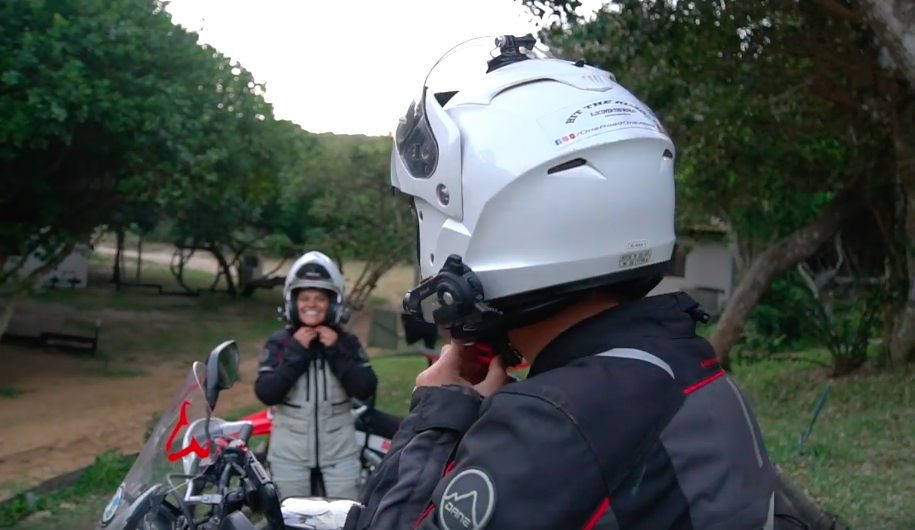
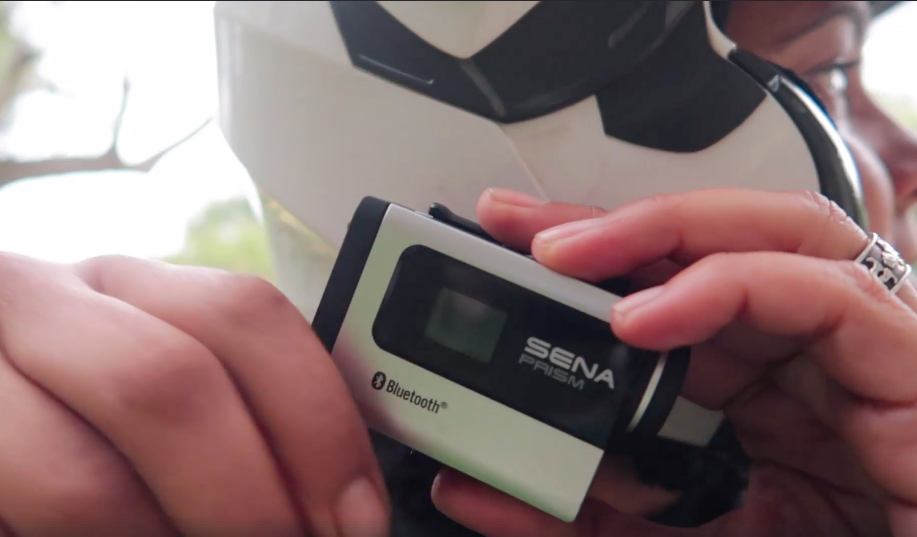
We have Sena 10C intercom to communicate, Prism helmet camera and Sena Gp10, bluetooth gopro pack. We are on the road almost two years and I suppose we have three years more. When we ride motorcycle most of the time we keep continue all day. Therefore, talk each other is so important because the roads are long also if we have any problem we can communicate with each other. Means, we need an intercom. 😉
When we choose a intercom we want to have a camera as well. We have a action camera to use up the helmet or on motorcycle but we had a lot of problem in some African countries. If police or military stop us on a checkpoint we always need explain to them that the camera is not on… etc. We knew that if we have a intercom with camera we don’t have this kind of problem. We were right. After start to use Sena 10C nobody bother any more because it is just a intercom to talk. 😉
A short video from our adventure with gears :
Sena 10C
I would like to explain all detail about 10C but that’s impossible because it is so much functional, I need to write many pages for it. I want to give basic details what we use a lot. Still we have been learning day-by-day more function to use. It is crazy how you can put all of them in it.
First of all intercom system; Before Sena, we were using one basic intercom but we hate it because we never hear each other well also if it was raining it was out of order until it get dry again.
– We are happy to have 10C because we can hear each other very clear now. We don’t have any problem with any weather. Of course, sometimes we can forget to ride together when we enjoy so much mountain roads with corners and we can be far away from each other of course that moment we can lose connection we have 5 km minimum between us, corners and mountains. 🙂
– Charge is no problem. When Sena said I have low battery I can take a cable and I can charge it while riding and use it at the same time.
– We can easily connect to our phone to don’t miss calls but when we are riding we don’t want to do that, just enjoy ride and view. 😉
– Listen music sometimes so nice.
– We love the camera as well. It’s easy to use when ride. Anytime, we can make a video or take a photo at the same time. This is really good option because I want to record the moment to edit videos for our journey but I also want to have a photo for our articles 😉
– We have been using them almost a year but every-time we can learn new things as well. One thing is so cool the video part; we can record only our sounds clear or we can choose to mode to record outside sound and our voice.
We saw on their website 10C Evo which is coming soon. It is similar with 10C but smaller. It is look like no way to see it has a camera. Maybe we can have 10C Evo for the future.
Sena Prism, Helmet action camera
Sena prism action camera
It is small action camera. When you compare the price it is cheaper than other action cameras and more than enough to use on motorcycles or trekking, hiking… etc.
We have GoPro more than 4 years and I’m so much use to it. After that we have prism. We really like the quality from photo and videos. It’s easy to use. Colors tell you what you are going to do. 😉
It can connect to the intercom and when we recording with prism it can still record our talking.
Maybe you don’t need a remote control to use Sena Prism for outdoor but we can highly recommend to have one for the motorcycles. Video, tags, photos… etc will be easy to use with one finger when you ride.
Sena GP10 bluetooth gopro pack:
Two riders and one prism therefore one of us still use gopro with Sena gp10 bluetooth pack. We can record all our conversation from Sena 10C. It is easy to use. If you have sena intercom and want to use gopro also like to video editing like us we can recommend to have bluetooth pack.
When we were planning our trip around Africa by motorcycle the Omo valley, Ethiopia was in our top list to see in Africa. because We read a lot about Ethiopian tribes. We traveled in Africa more than 1.5 years to learn their culture, lifestyle, language…etc. So, you can imagine why we went to Omo valley. 🙂
We stayed 10 days in the Omo Valley. We wanted to share what we saw and learn about tribes, how you can travel by yourself backpack, motorcycle, car…etc.
Please, keep in your mind what we are writing about Ethic groups culture, lifestyle…etc., we learned in the region from local people or guides.
Let’s start with the Omo Valley and tribes (ethnic groups) info and than how you can travel by bus or your own vehicle, how much money you need.
Ethiopian Tribes : Omo Valley Ethiopia
The biggest city in the Omo Valley is Jinka this is the capital city of the region. The Omo valley is a very famous area in Ethiopia and also well known in whole Africa. It is like another world what we know about life and culture because of the ethic groups. They have 16 different ethic groups in the Omo region. The biggest ethic group is the Ari with a population around 300.000, and smallest is Karo (Kara), with a population of 1.600, in the Southern Omo Valley. The most famous ethic groups are Mursi, Ari, Hammer, Kara(Karo), Banna, Thsemay, Bashada and Daasanach because they are the more reachable ethic groups (tribes) in the Low Omo Valley. Also, you can see or hear a lot about Nyangatom and Surmi(Surma) ethic groups (tribes) but it’s not so easy to find a tour or transport to reach them because they live close to the South Sudan border. After Jinka, more known cities are Key Afar, Dimeka, Turmi and Omorate.
Which ethic groups (tribes) do live close to which cities?
Ari tribes is around Jinka
Banna and Bashada tribes (ethic groups) are around Jinka, Key Afar, Dimeka and Turmi
Hamer tribes is around Key Afar, Dimeka and Turmi
Daasanach (Dashech also called Dasenech) tribes is around Omorate.
Dashnech people
Karo tribes is around Dimeka and Turmi. Easy to go from Turmi.
Mursi tribes is in Mago National Park, Jinka
Tsemay tribes is around Key Afar and Dimeka
Nyangatom is around the Omo river, close to South Sudan.
Surmi(Surma) is in the Omo National Park.
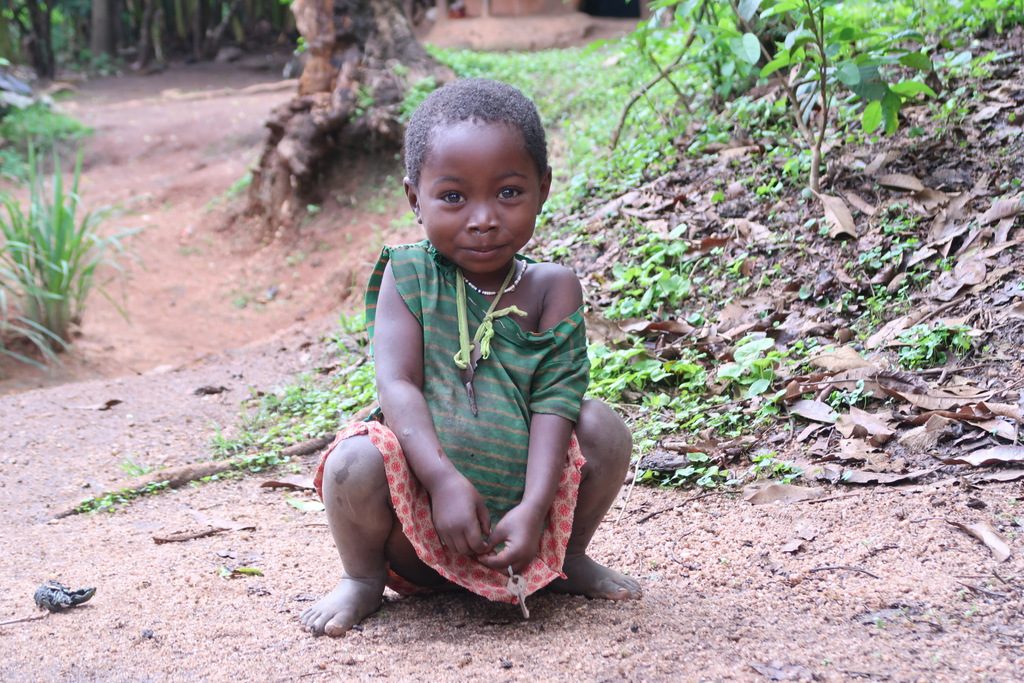
Little Ari kid
ARI TRIBES :
They live around Jinka and their population is around 300.000. They wear their traditional clothes on special days, wedding, funeral… etc. They are hard working farmers. They grow mostly coffee and sorghum. It is look like they can grow everything on their land. The make honey and their own alcohol. Cattle are important as well. They make their hammer, knife, ax, shelf etc. from any metal. Some women make ceramic to use and sell.
Ari tribes in Jinka
We asked our guide about Ari people wedding celebrate and how they choose their wife. He told us that the beauty is not important. What does her ability? When they decided to married he (or his father who had money) must pay 30.000 birr and cattle. How many cattle’s they will pay depend on the family negotiation. And wedding time his family must give blankets as well to her family, grandfather and mother, aunt and uncle. Each blanket is around 2000 birr.
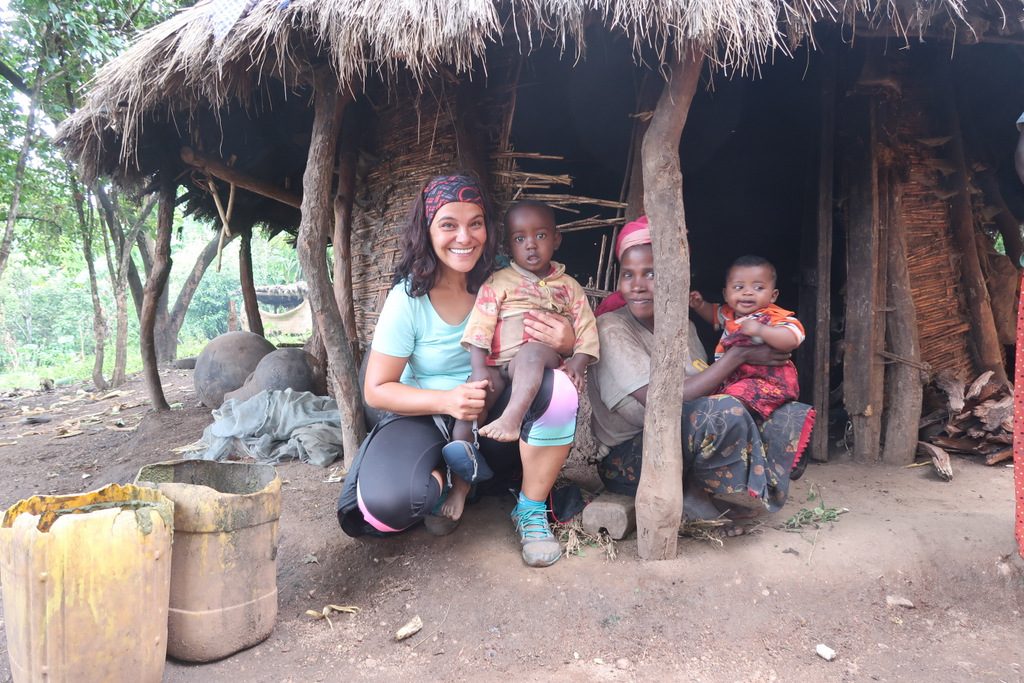
Ari people are so friendly…
Wedding day, the broom waits outside with a goat, families and the bride go inside. They can start to eat and enjoy the moment. After a while her father can go out to call the broom. He can give the goat to his father-in-law and than can go inside. They can eat and drink a lot, cut a lot of cattle’s to celebrate. They can get married more than one woman if they have enough money for it.
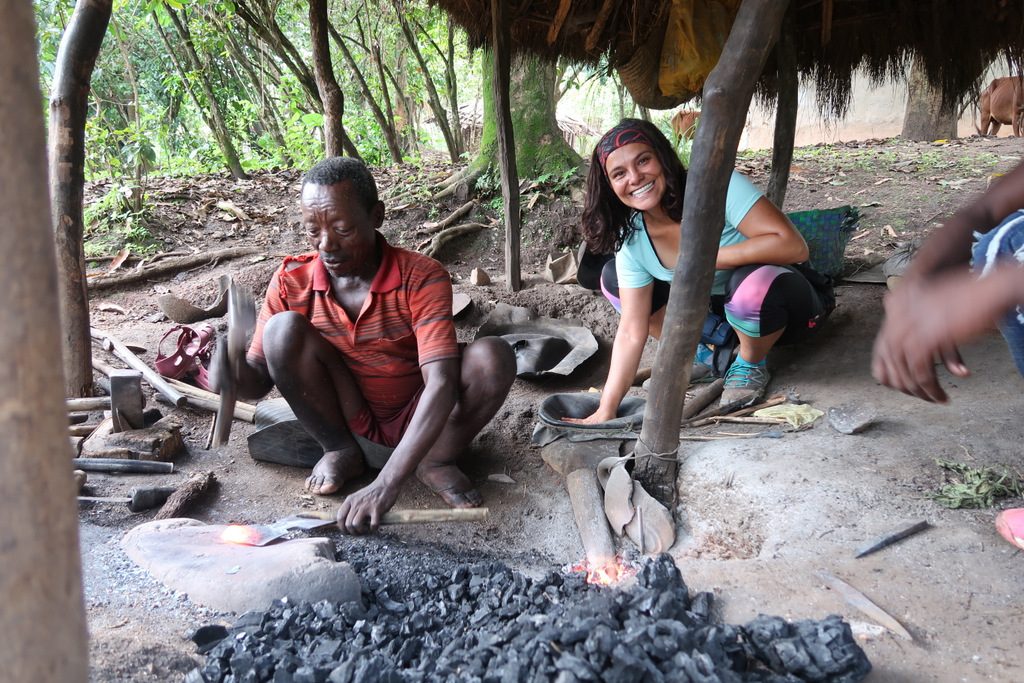
He is making an ax, Ari village
Also we wanted to learn about funeralceremony if they have anything special. The body can wait maximum one year in the house for the ceremony. They cut a lot of cattle and cook food. How many people can go to ceremony they must have enough food for them, people need to be full to eat. So, they worked in their land until they have enough vegetable, sorghum…etc.
They were showing how they make alcohol
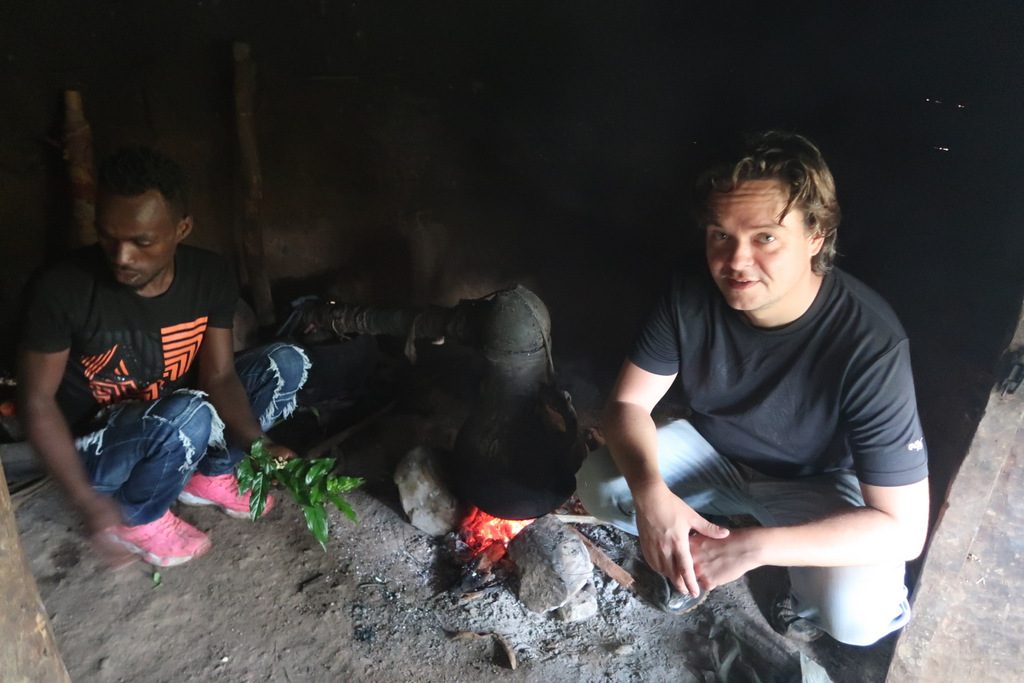
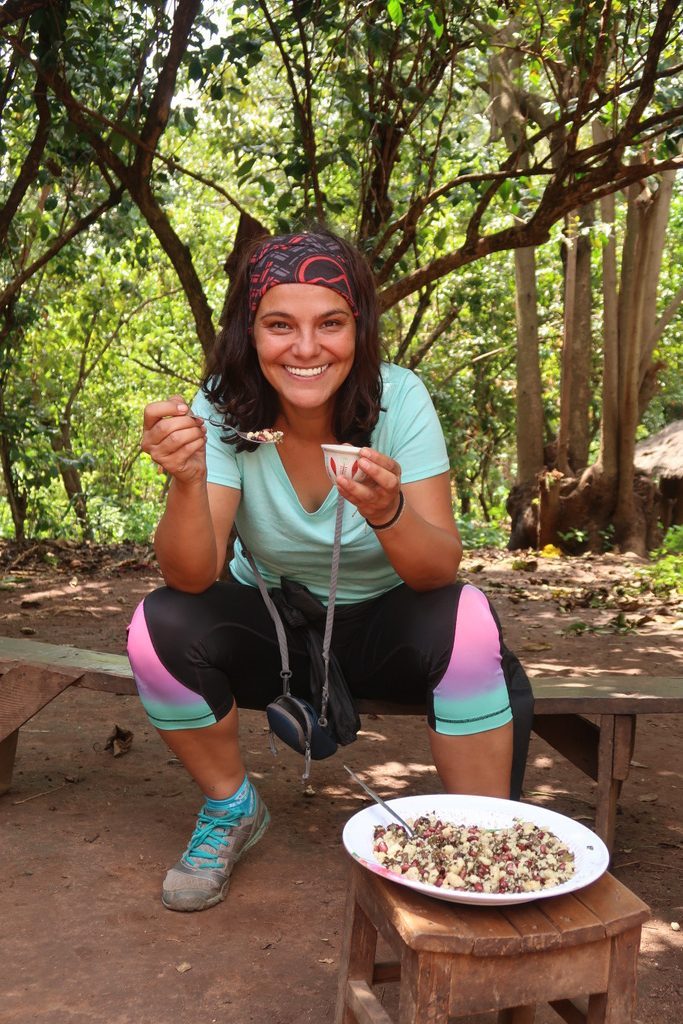
One thing was so interest for us to drink “ Coffee soup” We visited one of the Ari house. She collected coffee leafs, boiled with some spices and garlic. The taste was really good. Also we tried the traditional foods.
Trying coffee soup and local food
They showed us how they make their alcohol and gave us to taste. I am not sure about the taste it was so strong for me.
We also watched how they can make ceramic, tools and knifes. Their traditional house is a circle but now they have more square houses as well. Where we were Ari people were so friendly and welcome. We leaved from the village so happy.
Ari tribes house
MURSI TRIBES :
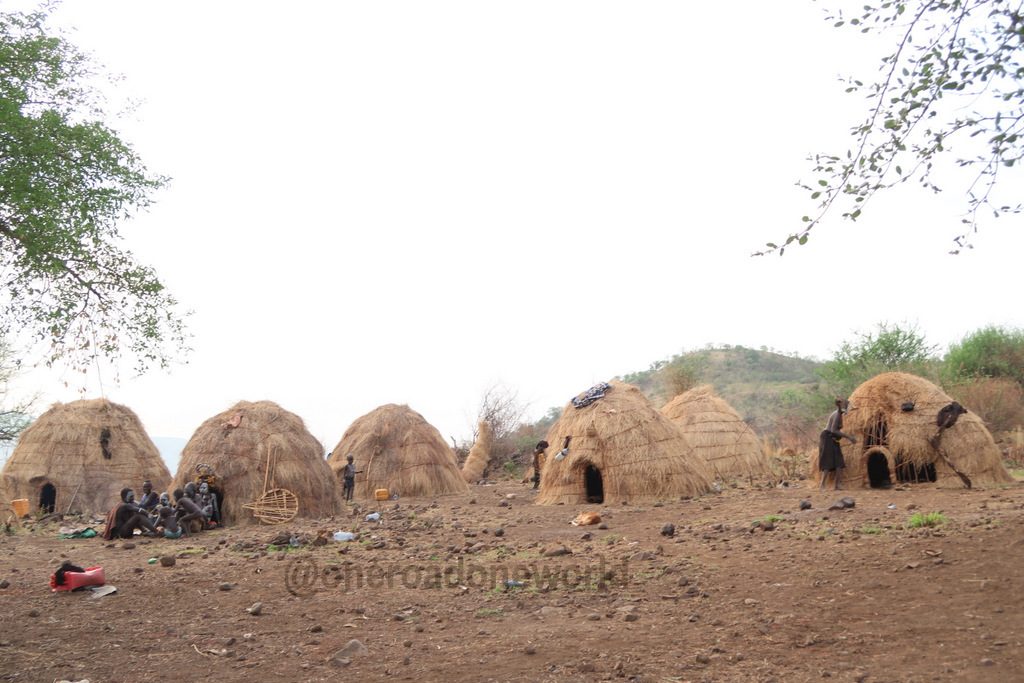
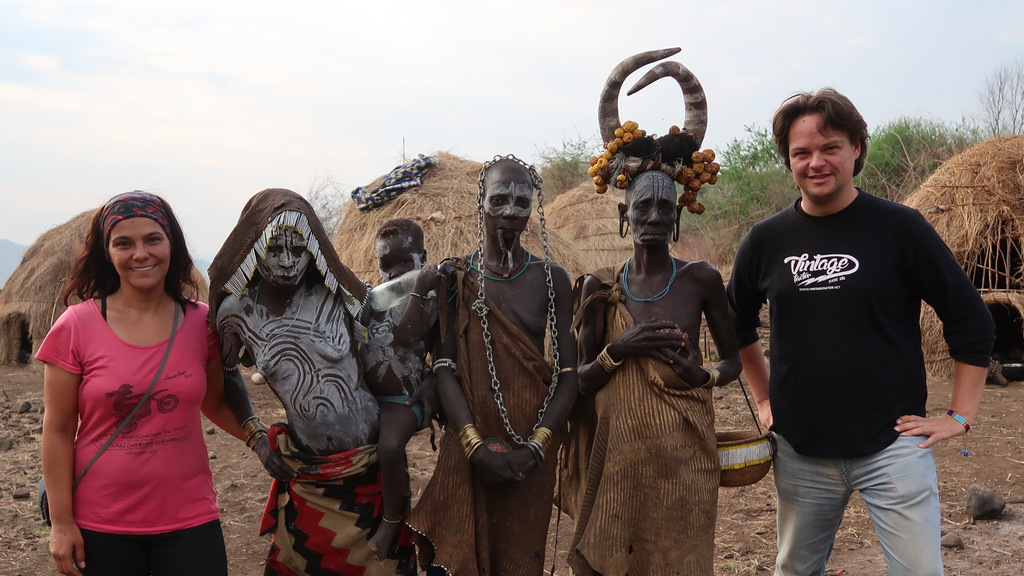
Mursi people live in the Mago National Park and their population is round 8.000. They are not a farmer, raising cattle is most important for them. They make their clothes from cattle skin and sleep on it as well.
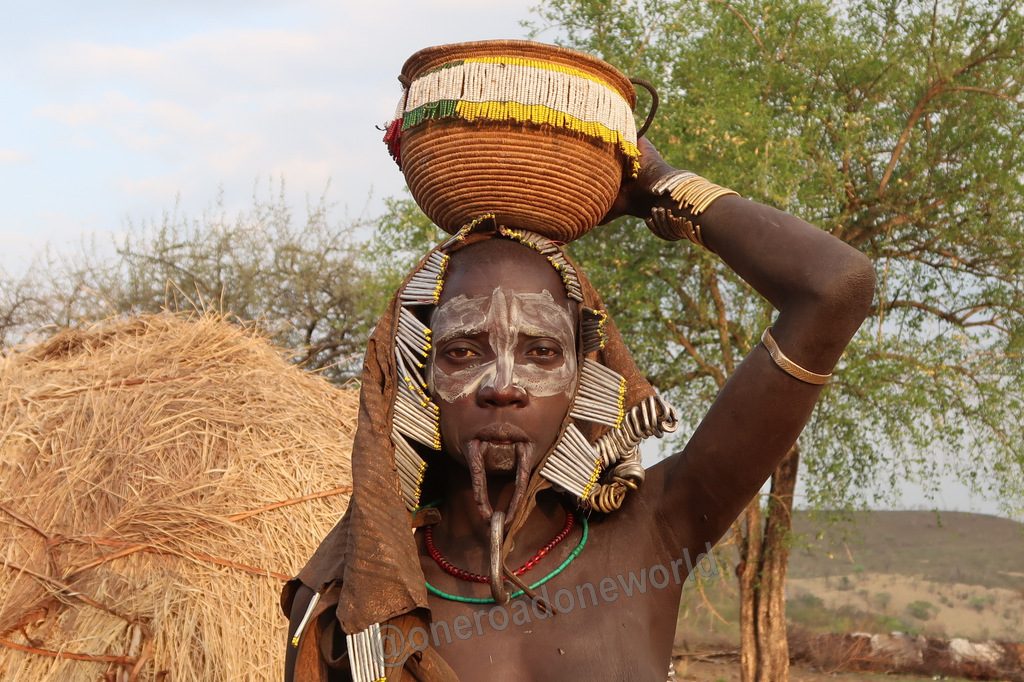
Mursi Tribe’s women
Mursi people are most known for the lips-plate by the women. The girl cut a hole in her lower lips when she’s a mid-teenager (around 15-16 years old.) They put a little wooden stick in it to don’t close the hole. Than they make to hole bigger and bigger slowly. The hole can be around 12 cm. They also pull out their four lower front teeth to make the lower-lip hole big. They made their lips-plates and paint what they want. They use plates if it is necessary because it doesn’t easy to eat and they need to keep their lips and plate with their hands all time, lips cannot carry the plate.
We are not sure still a tradition to have a large ear holes anymore because we saw some women has big ear hole some doesn’t. They cut a hole in the ear when they are five.
Mursi women with plate on low lips
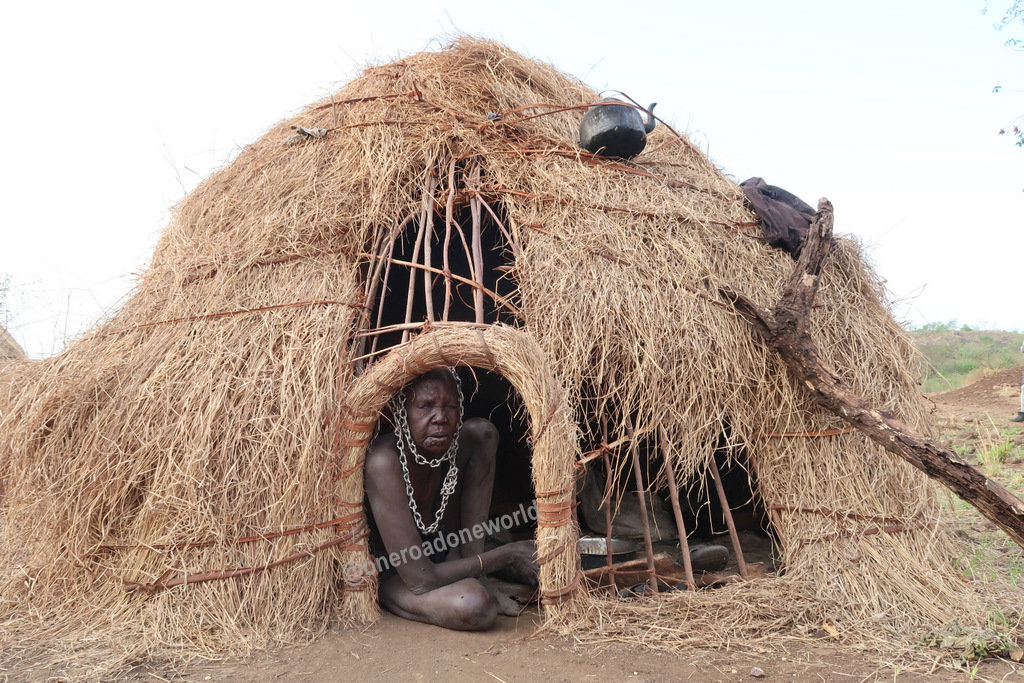
They live in a small village. The house is small circle made of dry grass. Also, Mursi man tradition is (or was) stick-fighting. We are not sure if they still do because stick-fight is illegal now and they never do it in front of tourist anymore.
Surmi (or some people is called Surma) tribeslife style, culture and women tradition is almost the same. So hard to understand which woman is belong to which tribe. But Surmi people live in Omo National Park and their population around 45.000. And they also grow Sorghum and maize. They don’t try to survive only with cattle like Mursi.
Mursi village in Mago park
HAMMER TRIBES :
They lives around Turmi and Dimeka, their population is around 47.000. They grow sorghum and maize, also some vegetables, raising cattle. Make honey and tobacco is one of the important things in their life. They are more known for their hairstyle, dance and bull jumping ceremony.
Bull jumping ceromny
Women mix ochre, water and a binding resin (like Himba women in Namibia) and than put into their hair. They wear leader, made from cattle.
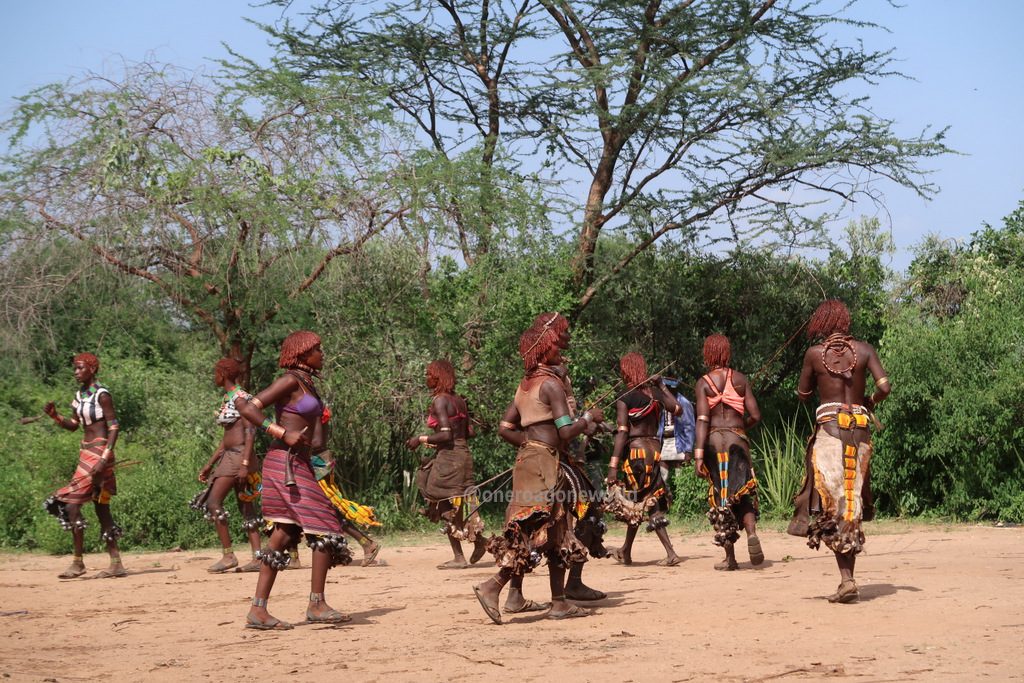
Hammer tribes womenWomen dance before bull jump
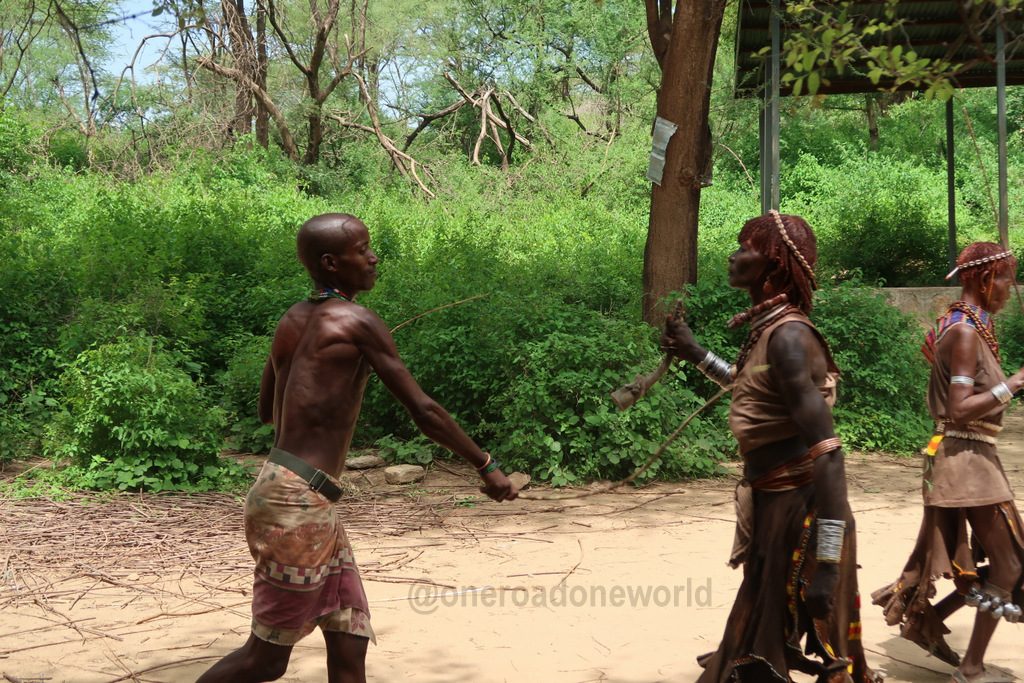
One of the important ceremonies is “Bull Jumping”. If a man doesn’t jump over the line of bulls he cannot become a man and can’t get married. The family decides when their son jumps. The boy can go to the ceremony when he is 13 to 30. Also, the family decides which son goes to “Bull Jumping” first. The ceremony starts with women dance.
And than men hit women (who relative with bull-jumping boy) back with stick. How bigger the scar is deep and bleeding it means to show how much they love their boy.
And than who support him when he jumps to the bulls. They paint their face. After that the bull-jumping boy gets totally naked and they pray together before the jump.
A lot of bulls come to the area and they can choose 8 to 15 bulls. The boy has to jump/run over all of them in one time. If he falls down they call him half-men (something like that) and he never have second bull-jumping ceremony. If he succeeds to pass all the bulls the first time he must turn around and do same thing four times.
Bull jumping time
We asked about Hammer tradition married how it is and how can choose their wife or husband. Unfortunately, the boy or girl cannot choose anything for the first marriage. His family chooses the wife for him. Also, the family pays everything for the wedding. If two families agree about the marriage his family gives 5 cows and around 30 cattle, goat and sheep. Also they pay for all the food and what they need for the wedding ceremony. Hammer tribes man can have two or three wife if he has money. He chooses the second and third wife but he needs to ask the first wife if she is agree about the next wife.
To be a first wife is an honor. When the women get married she started to carry some kind of special necklace to show she is the first.
First woman is first wife
The second and third woman has a necklace also but just metal one.
Banna and Hammer tribe lifestyle and tradition are so close each other. What do we know about the difference; Banna women can wear blue color but Hammer women don’t. Hammer like more dark color, not so much colorful. Also, Hammer Ethnic groups make a bull-jumping ceremony close to the river. Banna ethnic group make the ceremony in their village.
DAASANAC (DASHNECH) Tribe
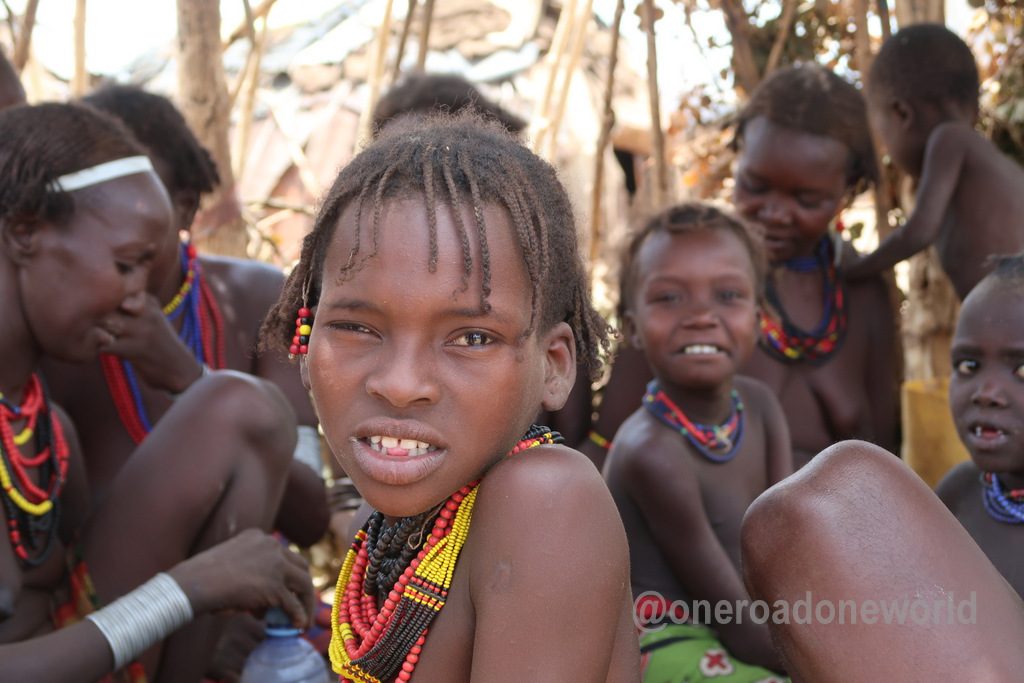
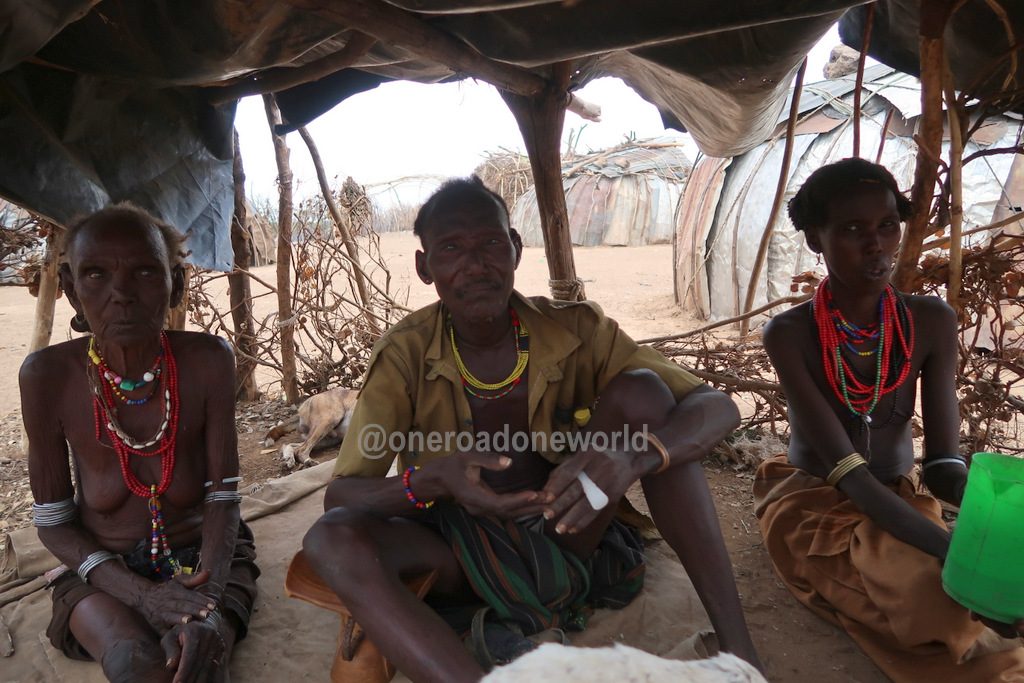
Daasanach people live around the Omo River, between Omorate and Lake Turkana, the population is around 45.000 and they are the poorest Ethnic group in the valley and the government helps them. They grow the same as other tribes, maize and sorghum. Also Dashnech (Dasenech) tribe people like tobacco so much and grow it. But their main thing is a cattle.
Dashnech(Daasanach) people
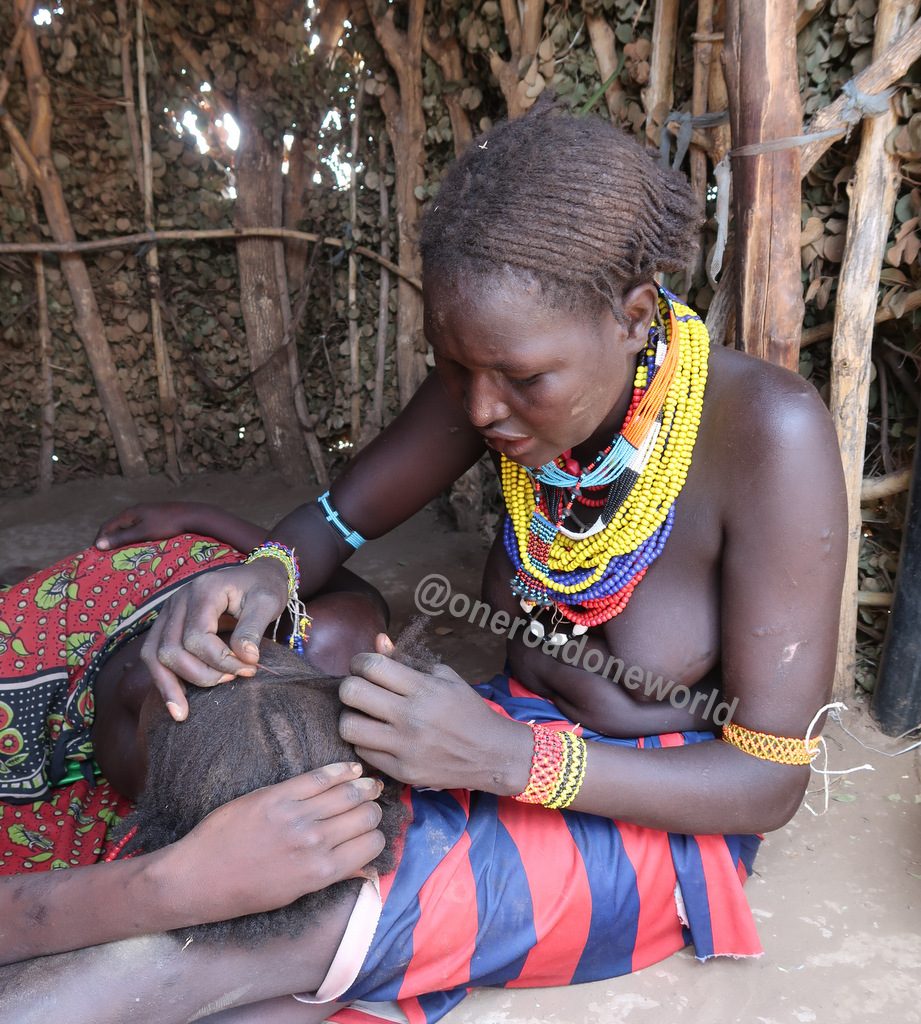
Dasenech women like colorful necklace so much and they change their hair style when they are single, married or pregnant.
She is getting married and changing hair style
Also they make necklace from plastic or bottle tops (caps) for their kids. If a man kills one of their enemies to protect the village or his cattle he becomes a hero and his sister makes a tattoo on her shoulder.
She is sister of Hero, Dasenech tribe
It was look like they love alcohol so much. We were there in the morning and almost everybody was drinking in the village include little kids and baby goats. But they don’t make their own alcohol they just buy from other tribes.
Daasanach (Dashech also called Dasenech) village, Omorate
KARO (KARA) TRIBE :
Karo people live northwest of Turmi. Their population is around 1500 and they have three villages, which are Gorcho, Dus and La Bok. Karo tribe tradition is to paint their body with white color. Some women can use different color for their face. They also grow sorghum and maize, the cattle are important for their life.
Karo people village
We went to Gorcho to visit them but we didn’t like the people behavior. 3-4 guys were sitting in front of the village door and drinking beer in the morning. They wanted double than other villages to enter. We didn’t sure that the money will go to their beer or the village. Already all women and kids came to the door when we were talking guides. We decided to don’t enter and turn back. We couldn’t take any photo but we already saw the village and people.
Gorcho village entry
OMO VALLEY MARKETS:
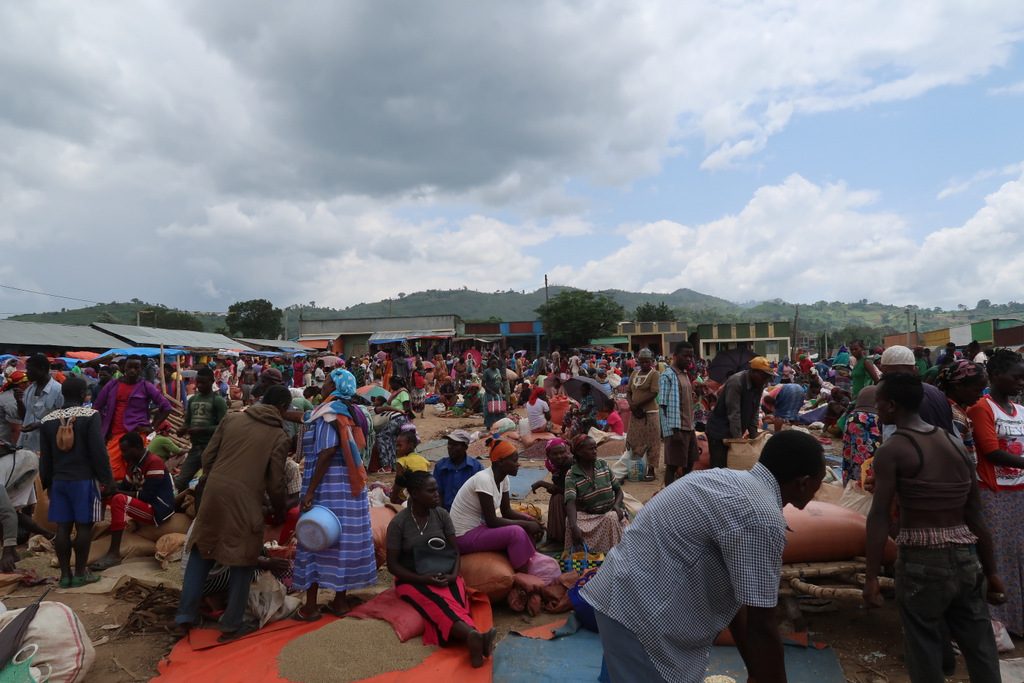
Almost all towns have markets days. They are so colorful and possibility to see some tribes there if you don’t want to go each village and pay it can be good opportunity to see them in one place.
Jinka Market
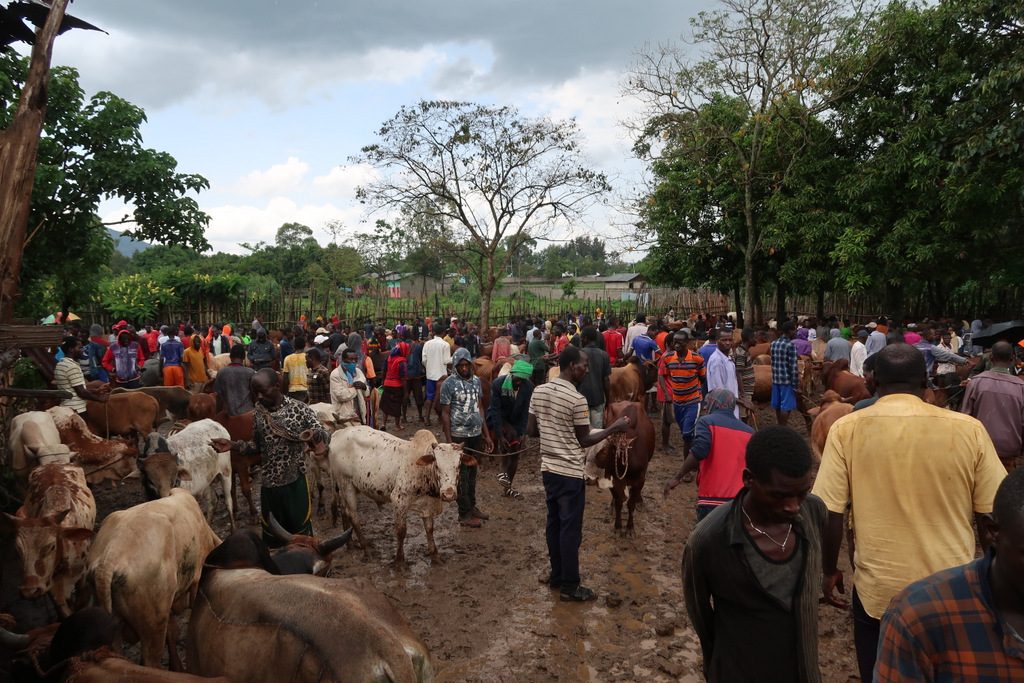
Jinka Market is on Tuesday and Saturday. Saturday is the biggest market. You can find all fruits, vegetables…etc. Of course, most of them are Ari people. In the cattle area, you can see Mursi people because they come to the market to sell their cattle.
Key Afar Market is on Thursday. It is not rich like the Jinka market about fruit and vegetables. They sell more sorghum, maize, cattle also clothes and accessories. But it is chance to see Tsemay, Banna and Hammer tribes there and take a photo. Because some of them go to the market with traditional clothes for photos and make money.
Thsemay men, Key Afar Market
Dimeka Market is on Tuesday and Saturday. Most colorful market is on Saturday because Tsemay, Banna, Hammer, Bashada and Karo people go to the market. So, it can be a chance to see Karo people there. To be honest, we didn’t go to Dimeka market after saw everything.
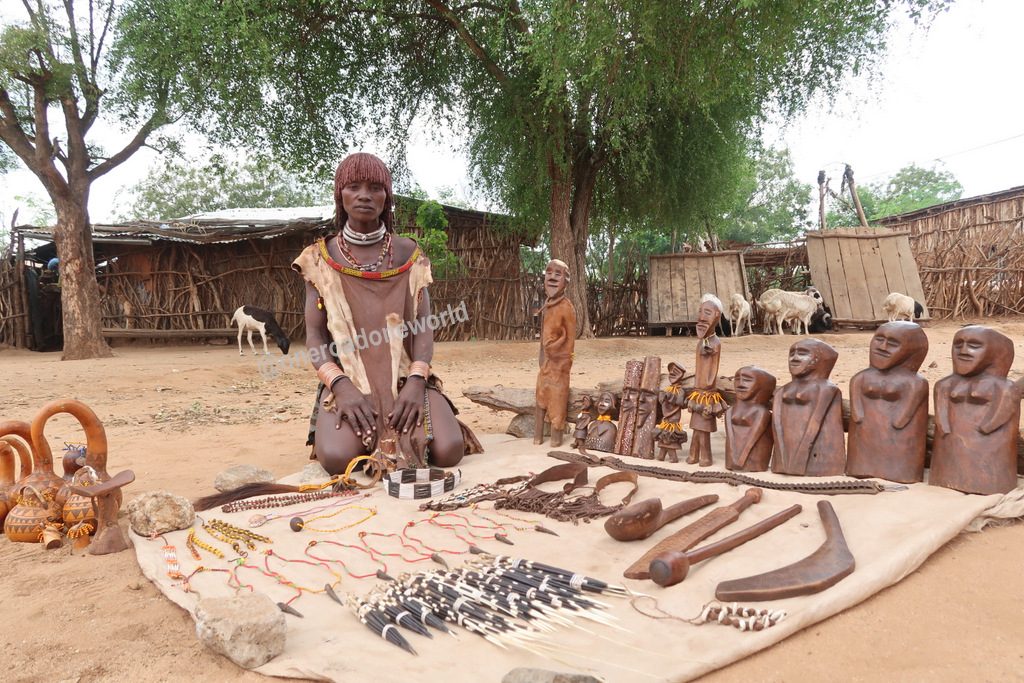
Turmi Market (Hammer Market) day is Monday and Thursday. It is Hammer market but possible to Bashada people as well. They sell cattle, maize, sorghum, tobacco and honey, also a lot of accessories. If you are not interest to go to a Hammer village you can see Hammer people anytime in Turmi, especially in the market and take photos.
Hammer market, Turmi
Omorate Market (Daasanach – Dashnech); they told us Daasanach people has Omorate Market on Tuseday and Saturday. We were there on Tuesday and asked everywhere include guides but nobody knows about the market.
Also Arbore, Giyo, Kangaten, Kako, Weyto and Hana Mursi towns (or village) have their own markets. But we didn’t go there so we have no idea about details. 🙁
When we were going to Omo valley Ethiopia, of course we had a lot of questions in our mind; Is the Omo Valley dangerous? Can you travel without a tour company? Is there any cheap way to visit Omo valley? How can I find a guide? How are the road conditions in the Omo valley? Is it safe to ride motorcycle? Does is possible and easy to travel Low Omo Valley by public transporter?
After spending 10 days in the Omo region we wanted to write an article and try to answer all questions what we had in our mind. You can find info about Omo valley roads, how to travel between villages, where to stay in Omo valley also where can you eat, how much to visit tribes of Ethiopia…. So,
How is Omo Valley roads? What about fuel? Can you find petrol easy?
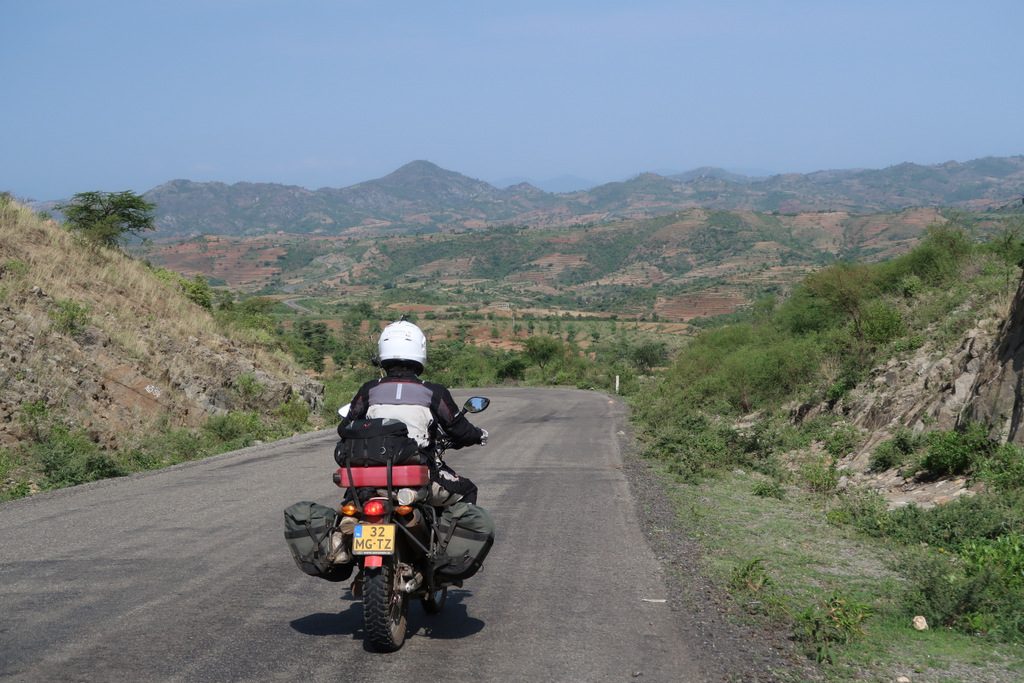
When you leave from Konso and turn to the Omo Valley road the region says hello to you with an amazing landscape and nice mountain roads.
Key Afar road from Konso
Key Afar is 112 km from Konso and all the way is tar road; you just need to be careful for potholes and the local busses.
Jinka is 40 km far from Key Afar. It is a tar road with some potholes.
Turmi is 83 km far from Key Afar. Dimeka is the first village on the road, which is 56 km far and than Turmi is only 27 km from Dimeka. Road is still under constriction therefore it is a gravel road with some corrugation. Still the road to Dimeka and Turmi has some problems in the rain season. 🙁
Karo Tirbes, Gorcho village road
Gorcho (One of the Karo ethic groups village) is 50 km far from Turmi. First 30 km is gravel road with some corrugation after that hard sand road, sometimes soft sand. But it is impossible to reach the Gorcho on the rain season. Dus is 19 km far from Gorcho and most of the road is soft sand.
Omorate is 71 km far from Turmi and it is a brand new tar road (2018).
Where to find fuel in Omo Valley? It was one of the big question in our mind when we were going there. We bought petrol in Konso, it is look like only one petrol station sells petrol which was 22 birr. Another option Jinka to find petrol. One petrol station is so much busy because they have petrol, which was 19 birr. We didn’t see petrol station Key Afar, Turmi or Omorate but they have many motorcycles there. So, if you ask one of them they can help to find petrol but price will be more high between 30 to 50 birr. When we were leaving Jinka we calculate how many kilometers we ride and took extra petrol with us.
Where to stay Jinka, Key Afar, Dimeka, Turmi and Omorate in the Omo Valley? Safe, cheap, clean hotel, motel, pension…
We can highly recommend staying in Jinka and Turmi because you can find a lot of option to stay.
Key Afar has two-three pensions. We didn’t stay in Key Afar because we know that people complain about cleanliness and security. Dimeka has the same problem. You can visit Key Afar and Dimeka at the market day. Easy to go with public transport and turn back. We went to Omorate for a day and we couldn’t see nice place to stay around, only some basic pension.
Normally, we have been staying in tent in our journey but we skipped to do it in Ethiopia. We have many reasons for it; it is rain season now. Each day, we have rain maybe half an hour but everywhere getting mud and roads can be like a river. Also, we have a lot of electronic with us. We don’t want to leave them in the tent when we go to visit Ethic groups. In Omo Valley, people like to touch everything a lot. It is not maybe because of they want to steal something; maybe they are only curious. But we don’t feel comfortable to stay with all our bags on the motorcycle. Other reason was price; some camping sites are more expensive than basic rooms. Also, they can be far from the city center. We don’t want to walk 3-4 km under the sun everyday to find food in the city center.
You can find a hotel for yourself, which you like. We wanted to share with you what we know.
Orit Hotel, Jinka (basic room site)
Jinka Pension & Hotels
Who went to Jinka before us they recommend three different hotel/pension to us. Nardos Pension , Goh Hotel and Orit Hotel & Pension. Three of them are clean and close to each other in city center. Nardos and Orit have Wi-Fi (some times good sometimes slow, depend how many people use at the same time.) You should remember that you can always negotiate the prices especially if they are not crowded.
Nardos Pension has a room with private shower and toilet but don’t have many rooms so can be full fast. The rooms with share bathroom are more available. We went there but they didn’t have a room with private bathroom. The room price is 300 birr. They asked 250 birr for a room with shared bathroom room.
Goh Hotel has many rooms and the price starts 350 birr. It was look like ok. We went there only for lunch and we didn’t like the food.
Orit Hotel and Pension has many room because they are famous place for tour operators. They made new building with high quality room (when you compare to Ethiopian standards). We asked the room price and they said 740 birr. We stayed in the cheaper rooms, this is an old building with simple rooms but including shower and toilet and it was clean. They said that they have water problem therefore only bucket shower. (We are not sure that the water ever works J) They said 300 birr but we paid 250 birr. They have bar and restaurant. Food was ok.
Turmi Pension & Hotels
Turmi has many options to stay but its not like Jinka. The prices are higher and the quality is less compared to Jinka.
We stayed in the Green Hotel. They were thinking two guys on the motorcycle and said that 700 birr a room. After they learned that we are couple the price was 500 birr. After negotiated we paid 400 birr for the room, which has a double bed, clean and has running water. It is in the center of the village. (We went to Gosho and Omorate from Turmi and turn back the same day.) Green hotel is so much noisy place. L Because they have TV and local bar, therefore people drink and watch TV almost until midnight.
Tourist Hotel is next door of Green Hotel. We asked the price to them when we were staying in Green hotel, which said that directly 400 birr to double room with private bathroom. They have share bathroom room as well, 100 birr. I suppose it’s similar to the Green Hotel.
We asked price to Kizo Lodge. They wanted 35 USD For the room. It was looking good but it was too expensive for us. They allow camping there. They want 10 USD but you can get 5 USD per night. When we were there they didn’t have internet but local people said that we can use WIFI there. It is in center of the village.
Another option is Mango (Kaske Campsite). Their price for camping 150 birr and basic room is 300 birr but if it is not busy easily you can get price to camping 100 birr and to room 200 birr. It is 4 km far from the center. So, if you want to go shopping or restaurant to eat you must walk.
If you want to go Omo Valley to really discover you can stay in the ethic groups villages as well. This is possible with the Hammer tribes. Of course you need to pay for this. 🙂 When we asked the price they said that 300 birr, per person, for village camping. Also, you can stay Dassenech (Dashnech) village as well but you need to organize with guide where you can find them.
What can you eat or find in Jinka, Turmi or Omorate? What is the price for a meal? Restaurants and markets in Omo Valley…
They have a lot of restaurants in Jinka. We ate sometimes in Orit Hotel. Food price starts 50 birr. Small coffee 5 birr, soft drinks 12 birr and beer 16 birr. We can also recommend Besha Gojo Restaurant. Prices are almost the same as Orit hotel. They have a lot of options in the menu but the quality is better. They have different prices for local and tourist, which is almost double for tourists. For example, our guide ate FirFir 40 birr and we ate 70 birr. He drunk beer 14 birr we paid 23 birr. 🙂 (Some market prices; an avocado 5 birr, local orange 1 birr, a banana 2 birr, a tomato 2 birr and 2 liters water is 15 birr, a sandwich bread is 3 birr)
You can find small markets around to buy drinks, cookies, fruits etc. If you plan to see the Jinka market on Saturday you should wait to buy fruits and vegetables there because it’s so cheap.
Jinka Market
Unfortunately, we cannot say the same thing for Turmi. They have some local restaurants to eat local food. Or hotels have food but they don’t have many options. In Green hotel, local food prices were around 50-70 birr for tourist. We ate only one time there and than we cooked our self most of the time.
You can find easily small markets to buy water and soft drinks. But you can’t find a lot of fruit or vegetables around. Tomato, cabbage, onion, bread and eggs are easy to find. Market day, we found avocado and banana as well. (Some market prices; a small avocado 5 birr, 3 eggs are 10 birr, small cabbage is 5 birr and 2 liters water is 15 birr, soft drinks 500 ml is 20 birr, a sandwich bread is 3 birr).
Two nights we went to Evangadi Lodge to dinner. Local food was 35-40 birr, pizza was 80 birr (you need to order in the day time to dinner) and meat was around 100 birr.
You can try local food; Injera is some kind of bread. You will like or not, nothing between. Shiro is the sauce; you make it with garlic, ginger, tomato and spices. Tips fir-fir is injera with mince meet.
In front: Tips firfir. Behind: Injera with shiro
How much to hire a guide, village enter fee, rent a car, national park enter fee…? Do you need a guide in Omo Valley to explore?
Around Jinka
They don’t have any fix price for hire a guide in Jinka. But most of them want to 500 birr to go to the Mursi Villages. To visit the Ari Village is around 200-300 birr. If you want to visit the Jinka market with a guide (which is not necessary) you can find them on the road when you walk. They can say 150-200 birr you can pay less after negotiate. J Villages enter fee is 200 birr per person. If you want you can hire a guide in a day to visit the Mursi and Ari village also to market. Just you need to negotiate for the price. 🙂
How much did we pay to visit a Mursi village?
500 birr for the guide
270 birr is Mago National Park enter fee per person
54 birr is Mago National Park enter fee per car
200 birr village enter fee per person
150 birr is the ranger price. They don’t allow to you to go the village without ranger. When we were entering the park they didn’t have any scout there. We were in the park at 7 am and looked like they were sleeping. When we were turning back they ask how we enter without anybody. Our guide said that you didn’t there. Answer was “It doesn’t matter you must pay 150 birr” Yes, they didn’t come or do nothing but took the money. So this did not feel good for us!
2000 birr is rent a car. Our guide booked it from “Travel to Tribe”
Mursi Village
You can go to Key Afer alone by local bus we can recommend to have a guide there because life is more easy to take a photo, shopping, info etc. When you walk to the market they will come for a guide to you. You can negotiate for it. Price can be 100 birr. Or you can have a guide from Jinka who is your guide to visit the villages you can ask in the beginning when barging for the price. Don’t forget, most likely they want to charge you full price.
Around Turmi
I suppose that Turmi has only fix price to hire a guide. They have a Evangati Youth Association in the village and they fix the price; village enter fee is 200 birr, guide is 300 birr, bull jumping is 600 birr, dance performance 400 birr and village camping is also 300 birr. You can walk around the market by yourself. When we were there the market day and bull jumping was at the same day. Therefore, we went to the Hammer market with our guide and ask a lot of questions to him (without extra costs).:)
We went to Omorate to visit Dashnech (Daasanach) tribes. Sometimes we really think about where the money goes because it is look like some people do some kind of business 🙁 If you don’t have any vehicle you can rent a motorcycle or hire one. I suppose the price can be around 300 birr.
How much did we pay to visit Daasanach (Dashnech) tribes?
150 birr each person to the village enter fee
400 birr to guide (for group or a person same price)
100 birr for photos. We gave it when we were in the village. You are free how much you want to take photo after pay.
150 birr per person for canoe. They are next to the bridge and easily you can walk to the village. They told us we can walk and pass bridge but we still have to pay for the canoe. Which kind of business it is we are really curios like Mago national park security. You just have to pay!
Daasanach (Dashnech) tribes, Omorate
Visiting Karo village this is a bit far away from Turmi, you can rent a local motorcycle for 400 birr to make the trip. First village Gorcho is about 50 km single way. They wanted 600 birr each person to enter the village. 3-4 guys were sitting in front of the village and drinking beer. It was before 11 am. We didn’t like their behavior and we didn’t sure to our money is going where. Therefore, we didn’t enter the village and turned back. We were enough upset and a little angry about all cost, it felt that we were paying money for somebody get rich or drunk! (To be honest, we were so much disappointed each village about money. Because we are not sure all money going village or somebody making money from their lifestyle.)
Gorcho Karo Village entry
Don’t forget! If you want to take a photo from a person they will charge you. One photo is 5 birr. Sometimes, they can calculate the clicks, so every click is 5 birr. Only in Key Afer market one girl did it. Other times we just paid 5 birr. And most of the time old people want 10 birr for the photo. If you take a general photo from the village or market it is fine, nobody says something for it. When you go to a village you pay enter fee but this doesn’t mean that you don’t need to pay for the photos. Still you must pay for the photo if you want to take it from a person.
When we were visiting the Ari village we took photos how much we wanted. Nobody ask for the money because it is free after pay for the village.
How can I find a local bus (public transporter) to reach the cities?
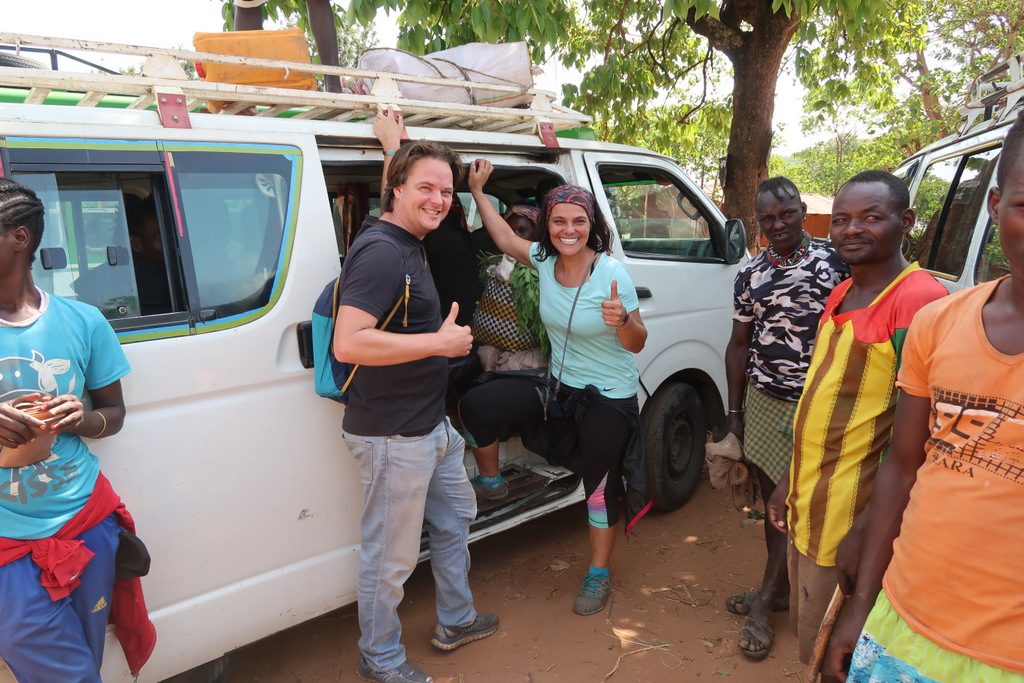
You can find local busses to travel between the cities easily especially around the market days in the Omo valley. We have been traveling by motorcycle but we used the bus in the Omo valley as well to visit small cities.
Go to Jinka from Addis Adaba:
You can get a bus from Addis AdabatoArba Minch. They have a daily bus between the two cities. It’s about a 10 hours journey and the price is around 250 birr. You can find ticket office next to the stadium (National Museum) for “Selam bus”. If you look more cheap bus you can take public bus from Merkato but we can recommend to use private bus for safety and comfort.
From Arba Minch (in Sikella bus station, everyday) to Jinka is about 6 hours and costs 120 birr. Generally, buses leave when they are full so there is no schedule and they will stop many times that’s why it’s so hard to say how long it will take.
Also, they have a lot of busses from Konso to Jinka every day.
Go to Key Afar from Jinka:
You can find a lot of mini busses that will go from Key AfartoJinka. They leave when they are full. It cost 40 birr and takes about 45 minutes. Especially on Thursday day have many buses to Key Afar from Jinka as its market day in Key Afar. Other days, you can wait long to bus get full.
Key Afar to Jinka
Go to Turmi from Jinka:
It is easy to find a bus on Tuesday and Saturday from Jinka to Turmi. It takes around 3 hours and costs 100 birr.
Go to Dimeka:
You can reach Dimeka from Jinka, Key Afar or Turmi on Tuesday and Saturday. The price is between 30-80 birr.
Go to Omorate:
It is not so easy to find public transport to go to Omorate. A bus is leaving from Jinka on Tuesday and Saturday to Omorate from via Turmi. It is 110 birr and takes around 4 hours. The bus turns back from Omorate the next day. You can get the bus from Turmi as well it takes about one hour and costs 40 birr.
Note:Other days you can find trucks to travel, which local people always take. But we don’t know about the price or safety part. It’s easy to get to Jinka. Therefore when you are making a plan to visit the Omo Valley you should get all bus details in Jinka. Just remember that you can find a bus to go Key Afar, Dimeka, Turmi and Omorate when they have market.
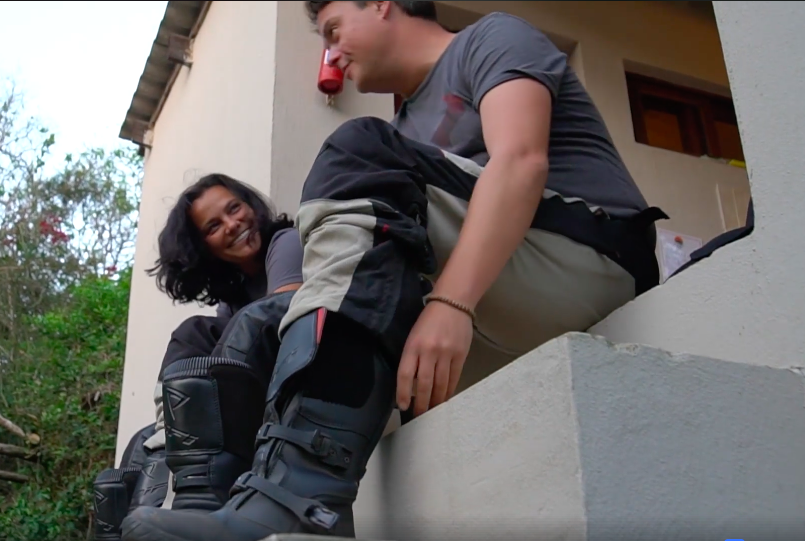
We have been using Difi enduro, dirt biking boots, which is wind and waterproof. We know that Africa is so hot but ride motorcycle is a challenge as well. We are on desert, mud, gravel, river…etc. We decided that hot is not important but to protect our ankles and legs if we fall down is more important. Therefore we have Difi Negev Aerotex enduro boots.
Short video about our gears :
Difi Negev Aerotex is good for it. Also we like the clips because our old boots were with zip and a couple of mounts later the zips broke I suppose because of sand and mud. On the other hand when the weather is so hot our legs and also feet swell. We can feel our boots is getting small. That’s why clips work well because we can get them big to have more comfort.
I fell down many times and few times I get stuck under my side-bags. Nothing happened because of the boots.
The boot is waterproof, not like Gore-Tex. We are fine with short or light rain but if we have heavy rain and need to ride all day our socks can get wet. I suppose all waterproof boots can have the same problem. When we were talking some riders on the road they told us they had same problem even if they have Gore-Tex boots.
We are happy to have the Difi Negev boots. We can recommend it if you have a plan to do a trip like us. It is worth it.
We have been using Difi dirt bike boots in a year now and we made 25.000 km with them. Actually, we didn’t use our dirt bike riding boots only to ride He climbed Kilimanjaro with Difi boots as well, It was to cold up there. 🙂
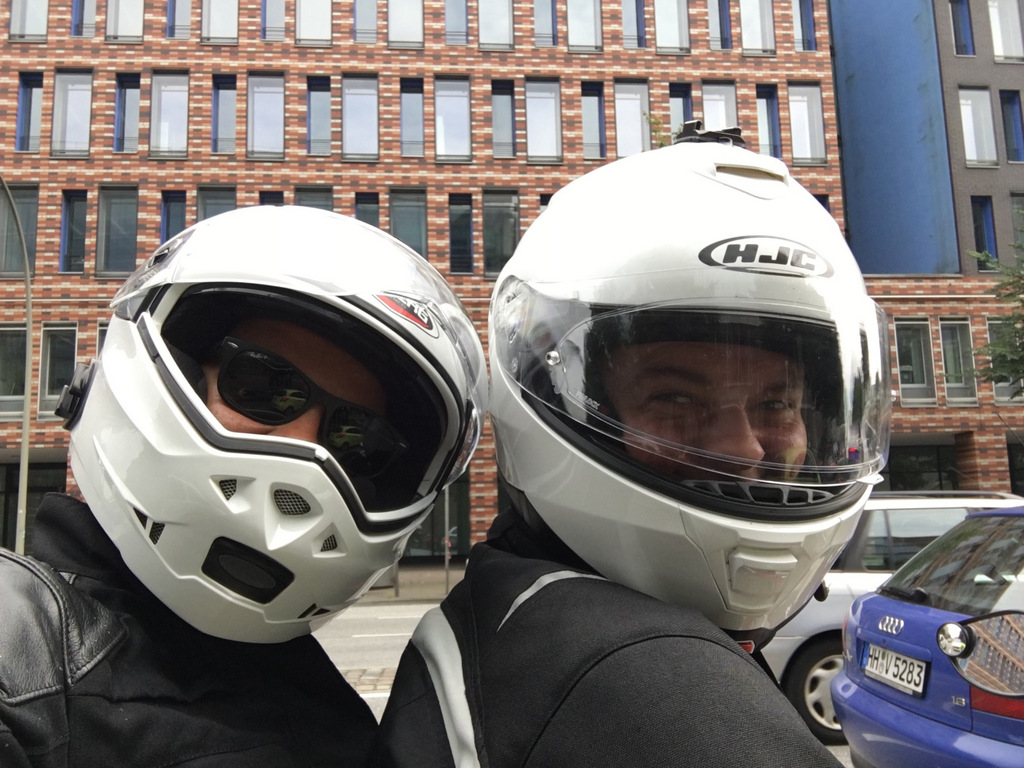
We have been riding motorcycle around the world with Caberg Duke 2 and HJC Is-Max 2 flip up helmets.
Yes, we have two different brands helmets. He was going to have for the first time a helmet and our budget was limited. He searched and decided to buy HJC Is-Max 2. I had two different helmets before and I knew what I wanted to have but price was important as well. So, I bought Caberg Duke 2.
We have been using them since July 2016. (20 months and 62.000 km.) Our opinion is both of them are good helmets when compare the price who is looking for budget.
Caberg Duke 2
Caberg Duke 2 is on the road two years, made 65.000 km.
I always use flip-up helmet. Which kind of journey we have been doing people say that we need full-face helmet. But I am not sure I can skip flip-up.
A lot of time, I need to talk people, soldiers or police and I don’t want to take off my helmet all the time. They want to hear me well and see my face. Easy to open flip-up and show your face.
When it is so hot, short break, I just open the flip-up for fresh air. I can say a lot of things like that why not full-face helmet. 😉
I want to write something about Caberg Duke II. Design is looking good. When I use I can feel that my head is safe 😉 because giving the feeling. Visor is wider so, I can see that I am looking from my window. 😉 It is ready for a intercom system, which we have been using.
I have a problem with the pin-up. Because it is fit in the beginning after a while we can’t stuck it to the visor anymore. We already change two times and I have again same problem with third one now. And I can hear outside sound so much.
Short video about our helmets :
GS
HJC Is Max 2
HJC Is Max 2 is on the road two years, made 70.000 km.
For me this is my first helmet so I cannot compare, but I will tell you my experiences with this helmet as I’ve been wearing it now for over 60.000 km.
She told me it’s very nice to have a flip-up helmet and I can agree on that, I really do not want a full-face helmet. It’s so easy to open it and talk to someone with a helmet like this so this is the best solution for me.
Comfort, a helmet needs to feel perfect on your head, it need to stuck nut not hurt you, this is one of the reasons my choice was the HJC helmet. It feels safe and comfortable, you need this when you ride every day and long days.
Sound, of course it’s important unfortunately this is a bit hard for me to tell about, as I never wear another helmet. I do wear earplugs most of the time so I don’t really have a problem with the sound and I’m used to it.
The pin lock is also a very important thing in the helmet; we ride in all weather circumstances. Especially in the rain we need it otherwise the helmet is getting foggy and you can’t see anything. Unfortunately this is also very sensitive and not working a 100% correct but it’s doing the job okay.
End conclusion is that I’m pretty satisfied about HJC Is Max 2 helmet. Also it’s not a really expensive one.
Welcome to most popular and touristic part of Africa, East African Countries. Zambia and Malawi are still ok for price but when passed to Tanzania we started to feel that we are just US dollars walking on the street, walking dollar machine. We are tired to barging for everything. Also, everything is so expensive for tourist like national parks enter fee, climb mountains…etc. It is look like if you rich welcome East Africa to stay in hotel, visit wildlife (Serengeti or Masai Mara National Park) and climb Kilimanjaro.
Anyway, it is look like we stayed inour daily budget limitin Eastern Africa as well because a lot of people invite us their house to stay or food and some people sent money to said that “we have been living in their dream and wanted to sent money to help a little for our dream.” Therefore, We could climb Kilimanjaro.
We spent 168 days in Eastern Africa and spent daily 47.25 USD, everything include for two people and motorcycles. We were planning to finish our ‘travel around Africa by motorcycle’ trip in Egypt but Turkey passport had problem to get visa that moment. That’s why we stopped our journey in Sudan and paid for air cargo (Airfreight)also fly ticket Sudan to Turkey. Take motorcycles from the cargo in Turkey was an other cost of course. All cost is inside Sudan cost, so nice to see we are still in the budget for us. 🙂
We applied EAVT visa to Uganda. We wrote to the form when we would enter the country but we wanted to go earlier than the date. No problem… After approval the visa it doesn’t matter date for the East African visa. We entered Uganda from Gatuna / Katuna border. Just one thing keep in your mind everything is negotiable in Uganda 🙂
First stop Lake Bunyonyi
They told us Lake Bunyonyi is most beautiful lake in Uganda also in Africa. Listen people, go there and see with your eyes.
We found a nice place next to the lake. Negotiate started for camping 10 USD, 8 USD, 7 USD…etc we paid 5 USD pppn. J The lake is so big and has a lot of little islands in it. We went on boat tour but if you want to see how beautiful the lake is you need to go up the hill to the see landscape. We don’t know if Lake Bunyonyi is best lake in Africa but it is really amazing.
The village has little local market, some shops and restaurant as well but all price you need to ask first. How much “chapatti”? One says 1000 other says 500. Depend on who is selling. Some people think we are tourist we can pay more. So ask first the price!
We finished the day in a Police Station!
After staying two days next to the lake we hit the road again but not for Kampala. We would like to see local life, villages, mountain roads and landscape. We started to ride almost noon there for when we arrived to Kanungu it was already getting late and the rain was on the door because there where just black clouds around.
The road condition is not good for the rain therefore we started to look a hotel to spend the night in Kanungu but we couldn’t find anything with secure parking. We were just following the signs to find something one motorcycle was behind me and trying to stop me. I didn’t want to because I had no idea who he was. He passed me and blocked my road. That moment Ferry was already around the corner so no option to see me what was happening. I told him from intercom “Don’t go so far, somebody blocking my road.” And than I saw he has a uniform, which was look like military uniform. After that I saw his motorcycle, which was writing ‘police’. I told him “Don’t panic, he is a police.”
The police was asking where we are going because which road we took dead end. We told him to looking a place to stay tonight safe for motorcycles and us. He didn’t say anything more after a while he said that we can’t ride around like that we must follow him. We didn’t understand what was going on but we followed him.
We arrived to a police station. He told us that don’t put motorcycle in parking area put inside the station. When we entered there was a small door. We just fit with our side bags. We parked them next to cells 🙂
and than we started to talk with another police officer and told our stories where we started, how long we are in Africa, why we were there…etc. After that we showed our passports. They were so friendly and happy to find us. We put our motorcycles in the station after a while we leaved from there with three police officers to walk through the village to look a hotel for us. We went to biggest hotel in Kanungu, which is so new, nice and big. They told for the price 15 USD. Maybe, if we go alone we could take tourist price, we have no idea.
When they were leaving we asked them here is safe to walk around because it was only far 15 km from DRC border. DRC is one of our best country which kind of experience we had but always nice to ask because every part of the country is different. They said that no problem here we could go out any time.
After we had a shower we went out to walk around and find a place for dinner. It is a small town or maybe city and it has amazing views. People were so friendly and shy. If we didn’t start a conversation they never started. Funny thing was, everybody knows us, where we are staying and how we entered the town. We found some good street food, which we always like to eat and try. We bought some food and than turned back the room. We had a really good night.
Next day, we went to police station again, took some photo’s with the police and than left. We went to the same street food place to eat our breakfast, which is called “Rolex”. They make chapatti bread and than two eggs with some tomato and cabbage, rolling inside the chapatti. Therefore “Rolex” name comes from roll eggs. 🙂
We entered Queen Elizabeth NP free with our motorcycle to see wildlife again.
After Kanungu we ride to Ishasha and than we saw a sign “Queen Elizabeth National Park welcome to wildlife.” We were looking the map to figure out where we are. Because we didn’t want to end up paying a lot of enter fee or middle of the road somebody could tell us to we have to turn back. But nobody around.
So, we kept continue and started to see some deer’s, warthogs, impala’s. We came a door on our left hand. We went to talk with the rangers. They told that we are on the main road and it is the only road to Katunguru. So we don’t need to pay for it. If we want to go next to Lake Edward we must pay enter fee.
They told us be careful because they have animals everywhere. We heard before Ishasha is very famous for tree climb lions. The ranger said that lions climb to fig trees where next to the lake but if it is so hot and no rain. He just went there but didn’t see any lions. It means they move more up and could be anywhere.
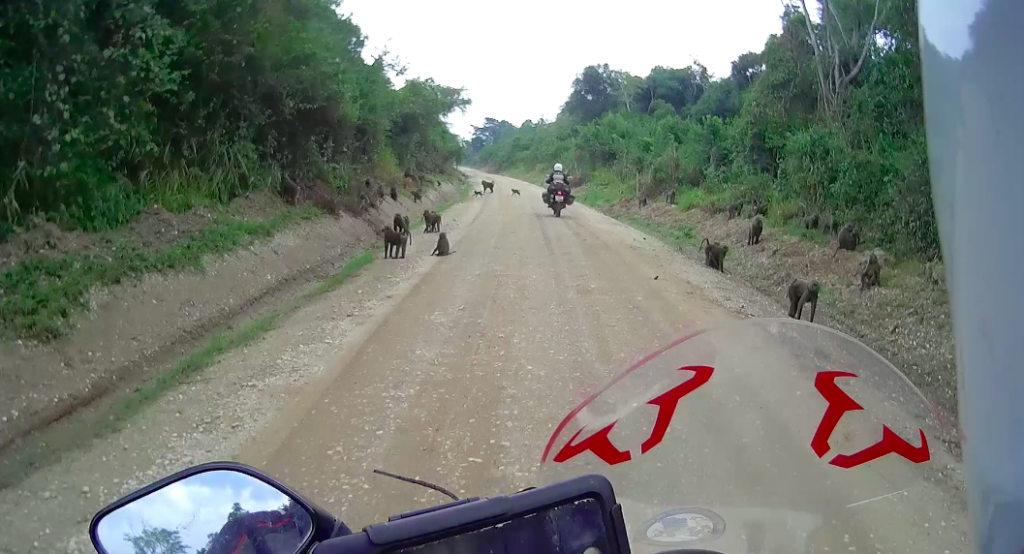
After all info we said thank you and keep continue to ride and see something. We saw far away lions, some elephants and buffalos. We stopped before a couple of times but after we saw them we decided to don’t stop just keep continue because we didn’t know what can jump in front of our wheels. 🙂
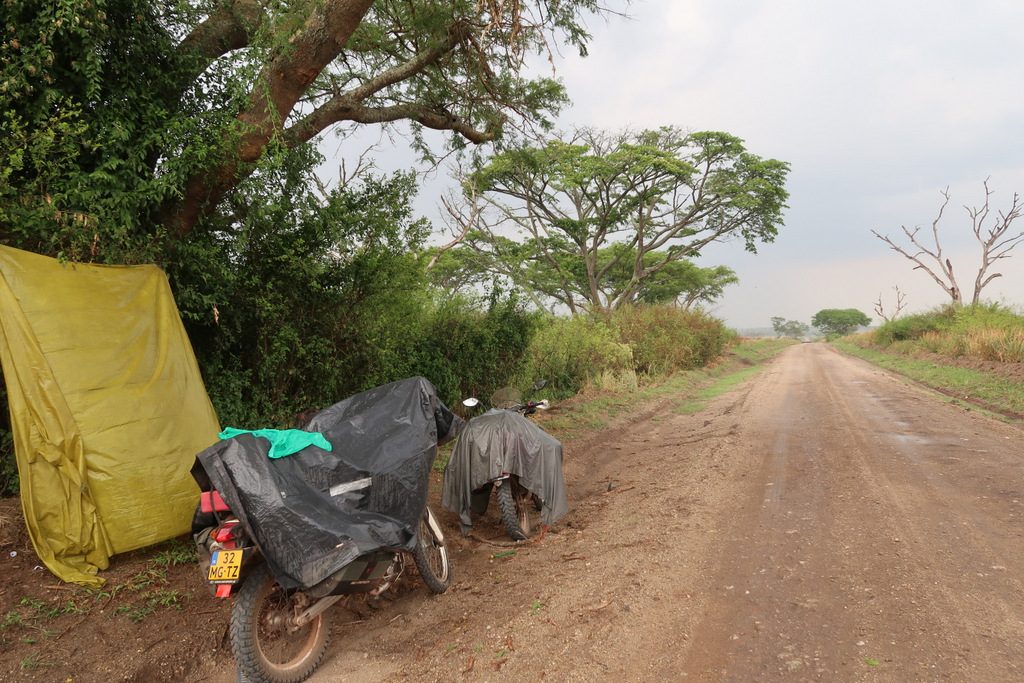
We saw very dark clouds were coming. (It means heavy rain) And we saw buffalos were passing our road. We didn’t want to get close to them because we didn’t know their behavior if we keep continue to ride. And the rain started to go crazy, no option to sit on the motorcycle and wait them to pass.
We jumped from motorcycle and covered our bags with one of the footprints. With the other footprint we covered our self. We were looking behind it and thinking if lion pass here now or come face to face what we could do. We can’t run away or jump motorcycles.
We have no idea what happened to us because we are not scared anymore from wildlife we are more scared from human if they want to attack us (Maybe you remember how they attack us middle of the street in Namibia 🙁 ) We slept next to hippos, elephants also came face to face with rhinos. Some times we heard lions in the night or here something walking next to our tent in the night but wildlife/animals don’t attack directly. They are warning you if you respect them they respect you. It is unbelievable.
Anyway, we stayed there almost one hour to wait for the rain to pass and buffalos of course. They didn’t move so fast from the road because after the rain started the potholes had water on the road, so they were enjoying drinking water. 🙂
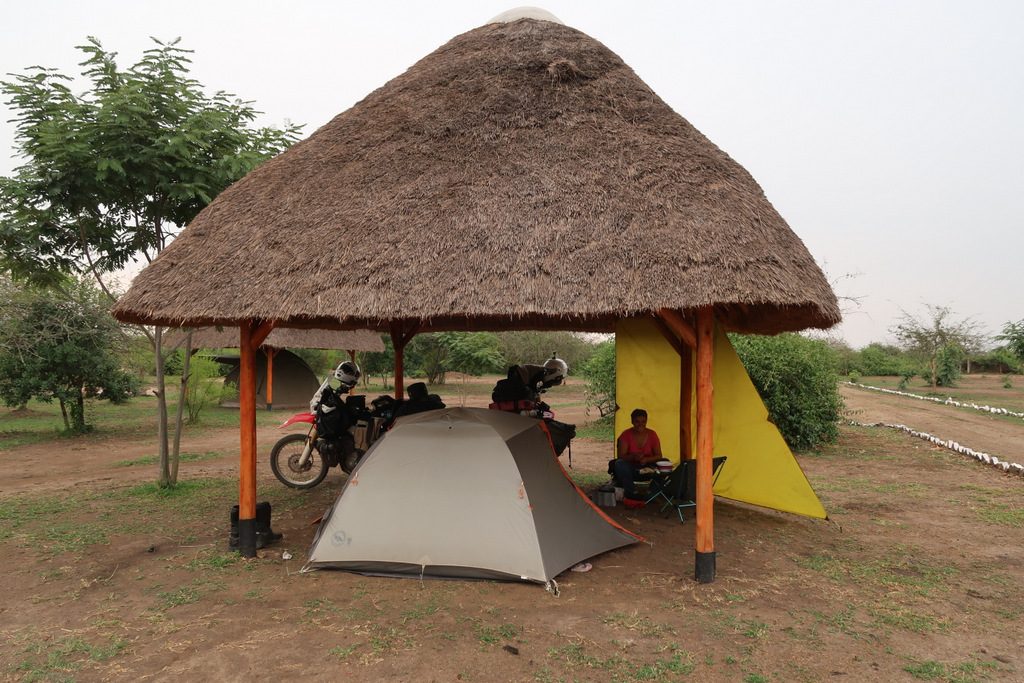
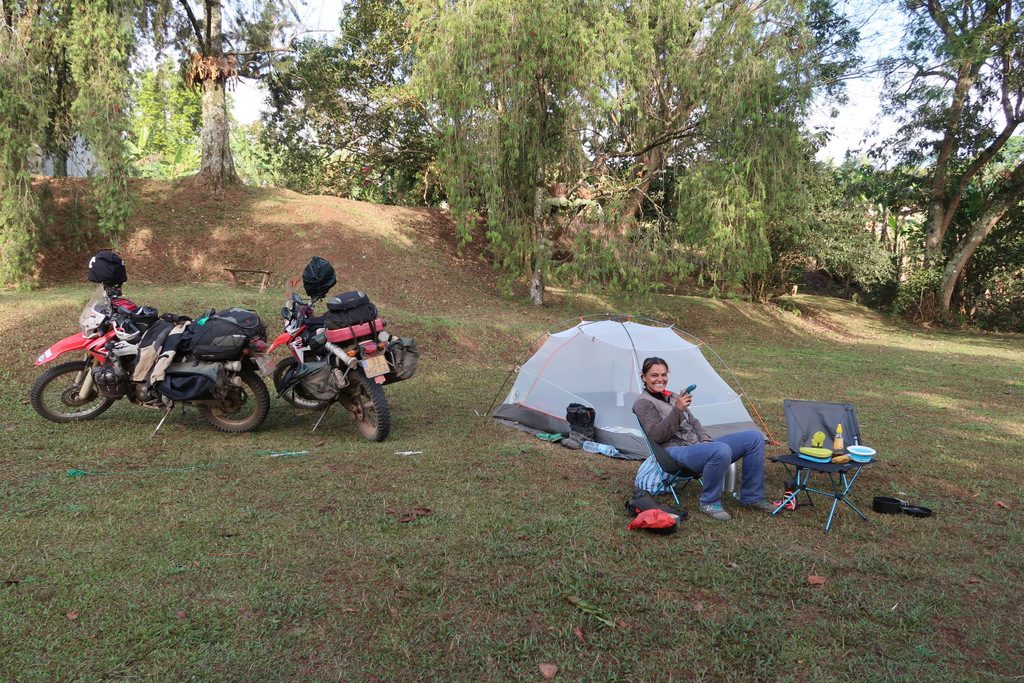
We started to ride 10 am in the morning and arrived to Katunguru just before sunset. It was only 117 km but it took us 8 hours. So, you can imagine how much we were enjoying riding and seeing animals on the road. 🙂 We went to one camping site there. They said 10 USD pppn but we paid 5 USD each. Nice thing was they have a roof, perfect for us if it rains we can collect everything next day morning dry.
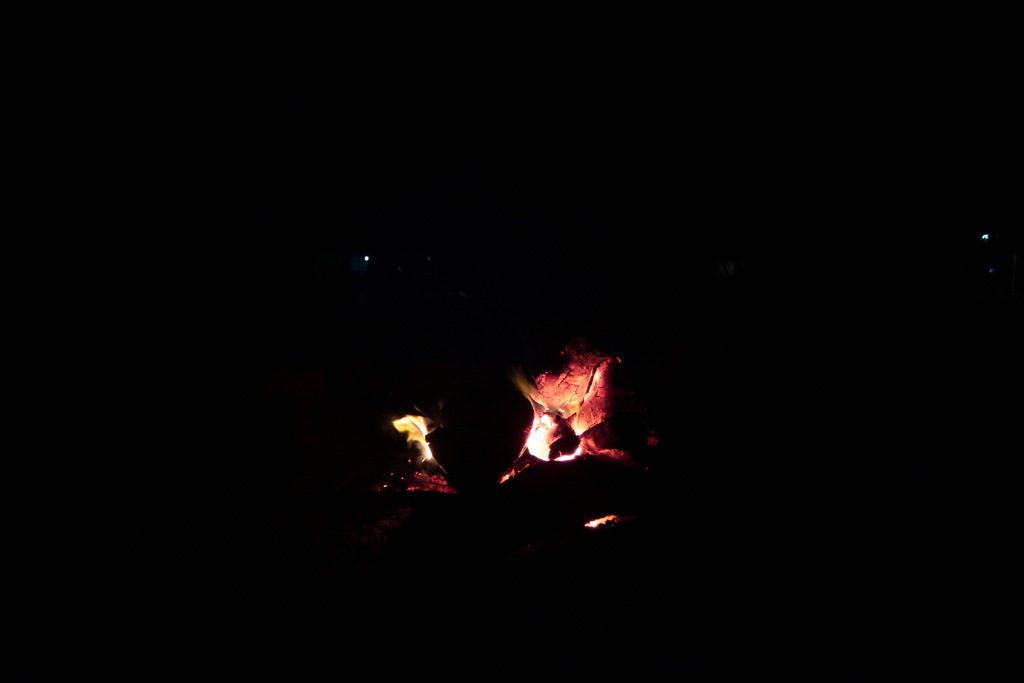
Before off the dark they made a fire. We didn’t understand why when it is so hot. They said that it is because of lions. How can we believe that? We are next to a village and people live with lions! On the other hand Queen Elizabeth NP doesn’t have a fence around so animals can be anywhere.
Hot or cold, campfire is always nice. I just sat next to it and was waiting him to come. I heard something from the bush and some animal run but I didn’t see well because of the dark. After that we heard to lions. They can be 100 meters far or 2 km. when they roar you can hear it like you are next to them. I was screaming to him “ Please carry pepper spray when you are coming to the campfire.” It wasn’t comfortable to sit there so long with all sounds and you can’t figure out what they have behind the bush. When we were in the tent I heard something middle of the night but I didn’t want to go out, of course. In the morning we saw elephant shit close to the tent. It is just wildlife right!
Plans can change anytime on the road!
Our plan was go to Murchison Falls NP after that Sipi falls, ride motorcycle around Mount Elgon and than pass Kenya from the Suam border. But we didn’t because of rain season. It was rain almost every afternoon. One of our dreams is to see the Low Omo Valley in Africa. We can visit there until middle of March. Therefore we skipped a lot of things in Uganda. But we didn’t go to Murchison Falls National Park also for another reason. Because of the national park fee for us, motorcycles and we didn’t see what we could see. It was a lot of money for us. We were fine with our experience in Queen Elizabeth.
We left from Katunguru and went to Fort Portal. We found a camping site middle of the city, which was so peaceful and quite. That moment we were sitting and watching some cows after wildlife. 🙂 After a little search we decided to go Jinja where we can see the source of the Nile River from there we can enter Kenya.
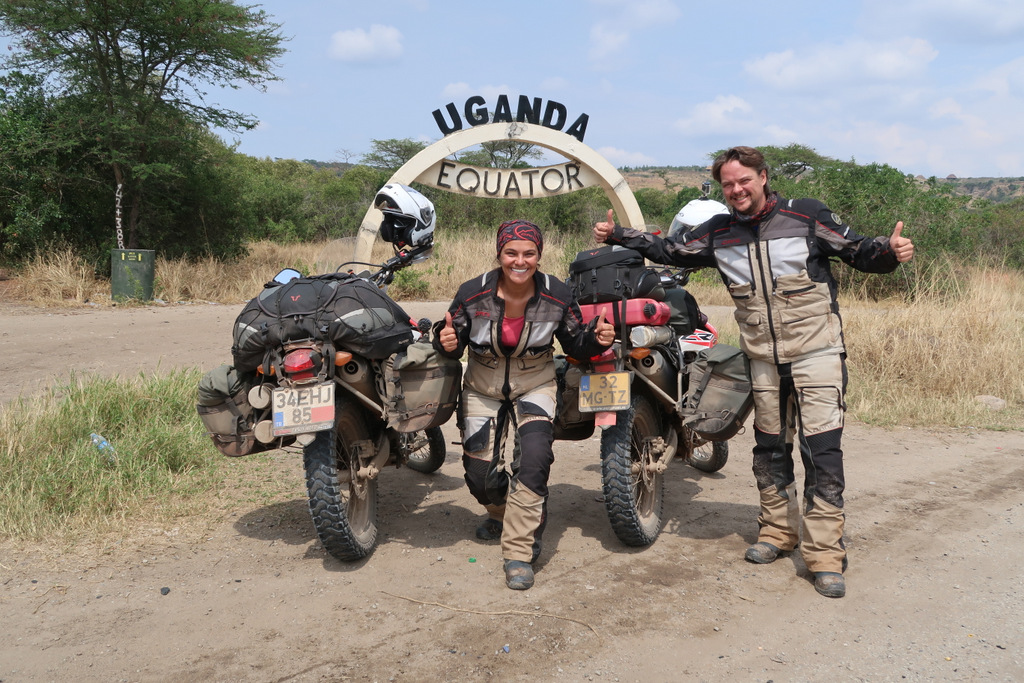
Next day early morning we were on the road to Kampala. And we passed equator line. It means we enter again winter season. 🙂 We made 280 km and we were just looking around to find a hotel before Kampala because we don’t like capital cities with all the traffic.
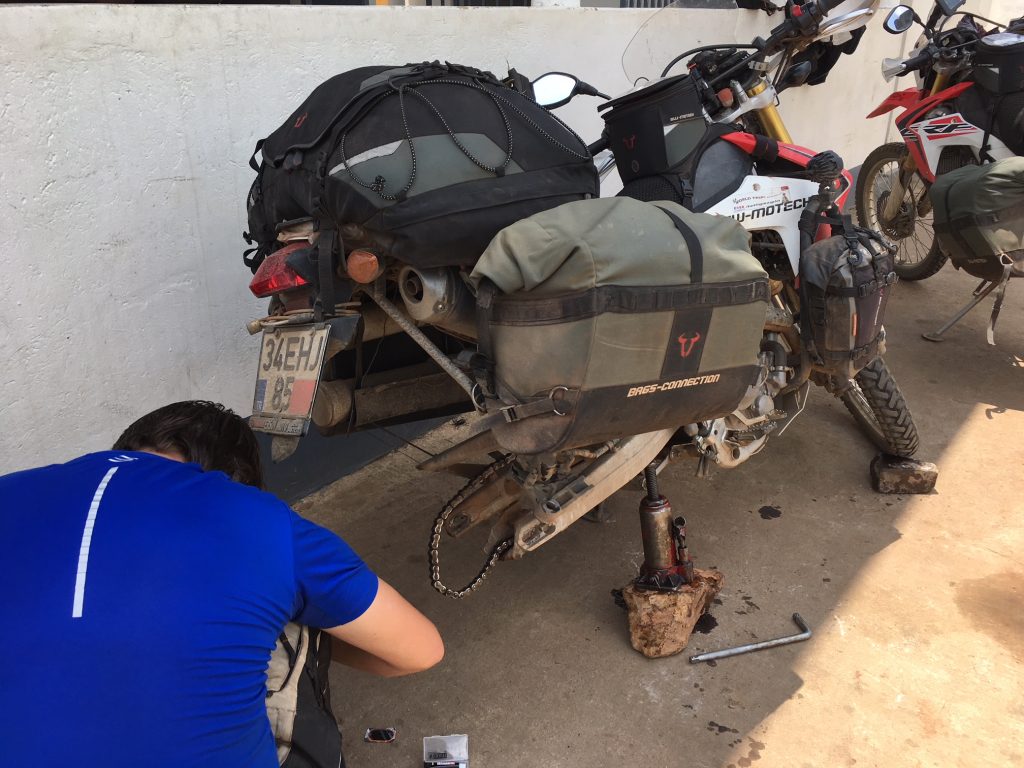
At the same time we were so tired because I had flat tire, it was first time for me in Africa to i had it. So, it could be so much for us to stuck in the traffic. We were lucky to find a nice hotel with nice food and it was 20 USD for a room with terrace and living room, of course include breakfast. 🙂
They stole our tent bag from a very secure camping site in Jinja!
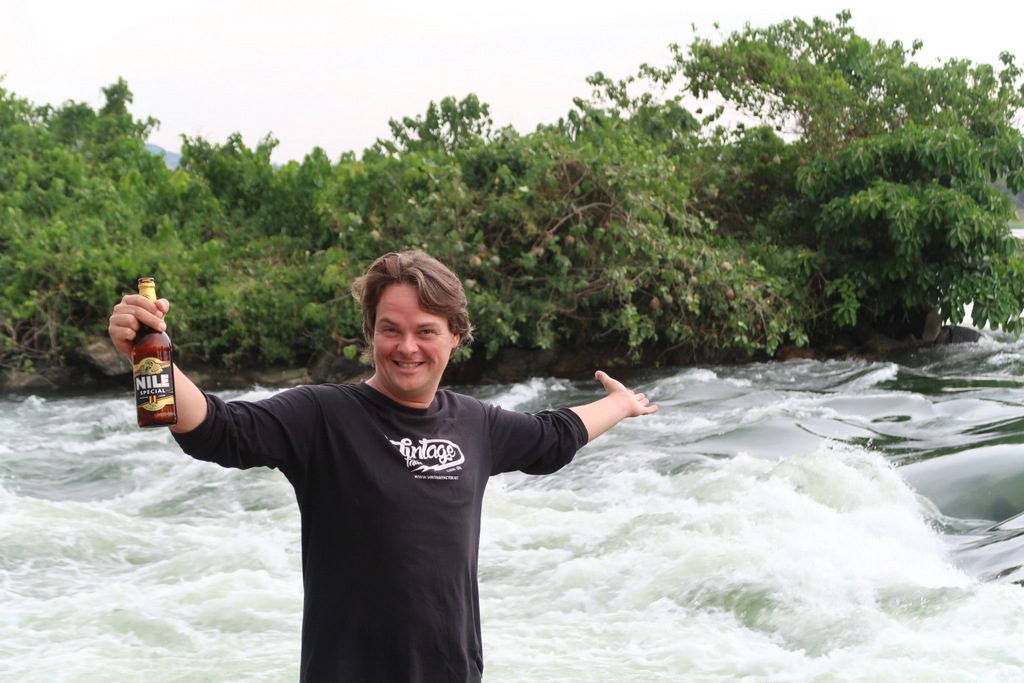
We went to Jinja to stay at a beautiful campsite right at the source of the river Nile the place was very nice and had amazing views; we ended up staying 2 nights.
When we wanted to leave early in the morning we figured our 1 of our bags was missing. We looked everywhere but nowhere to find. The campsite had security 24/7 and they where actually pretty close to where we put up our tent. we have no clue who stole our bag but we never see it back.
Now we don’t have our tent bag anymore, luckily this is the smallest bag we carry and we can still put our tent somewhere else but we are missing a few things as well, especially our 6 liter water bag we needed that for the hot in Ethiopia, Sudan and Egypt. We will now carry bottles again. 🙁
After a late departure to try and find the bag, leave our details at the campsite we left and continued our road to Kenya.
Is it safe to travel to africa? before start to write about travel safety tips we would like to say one thing; it can happened anything any time anywhere in the world when traveling our just next to your home.
Travel around the world by motorcycle, sleep in the tent, go to bush / wild camp most of the time, stop middle of nowhere…etc. try protect yourself from wildlife or people is not easy but might be necessary. We are not carrying a gun; even if we want to carry we don’t know how we can use it. 🙂 We don’t know karate, judo or something else to protect ourself. (To be honest, it can be good idea to learn a little if we have time). But still we have something to protect ourself or some plan for it. We didn’t have something when we were traveling in Europe but we had in Africa. We ride motorcycle around Africa in 1,5 years and passed 33 countries. Of course we had some problems but we handled it. If you have questions in your mind “is it safe to travel Africa right now?” it is so hard to tell because a little up to you as well. Where are you going? When are you going?…etc. This is our travel safety tips;
How can we protect ourself? What do we carry for our safety?
We have pepper spray with us. When we ride motorcycle it is hang on next to hand bar we can get it. When we walk it is always in our pocket. When we sleep just next to us as well.
We have mosquito spray, which we use to spray tent before go to sleep. it is always next to tent and can use easily like a pepper spray.
Our small hammer is always next to us as well when go to sleep in the tent.
We don’t go out in the night if it is not necessary or our friends need to pick up us to go out. We always ask first for the area is it safe or not, we can take any taxi or we need to call somewhere. Some countries in Africa use uber taxi and we used them as well.
We never carry our passport with us when we go out just have copy. If police ask and has to see we tell them to go back to the hotel, camping site…etc to show them.
Never carry all our important paper, cards or a lot of money with us. Because if somebody steals it we never lose all of them.
If we go to bazaar or walk around we don’t carry our normal phones. We have one old phone, it is always with us to look for directions and roads because we don’t want to show a good phone in our hands all the time.
When we need shopping one of us always next to the motorcycles the other one goes to shop. Depend on the area who wait next to motorcycles.
We need a break sometimes when we ride motorcycle. Of course people can come next to us to talk. We always try to put motorcycle between us when we talk. Some kind of safety for us as well because they can catch you in a second.
If we don’t know people we don’t shake hands so often and especially in Kenya after we hear some stories. They have something in their hand when we shake hand we can lose some kind of our memories.
When we go to the bar we just drink beer because they always open next to us and easy to close top so nobody can put anything. We know a lot of stories about it in Africa and Brazil.
When we leave from tent or motorcycle we carry all important stuff with us never leave it behind. Or if we are in a hotel, camping site… we can put safe box(if they have) or give reception.
We had one of bad experience in Africa. 8 people attack us middle of the street. After that we talk a lot about our safety and decided some important rules.
If anybody try to enter our tent again or take something on the motorcycle “Do not run behind it!” we never know if his friends waiting on the corner and attacked.
If people attacked us to steel something “Do not fight with them!” because they can use their gun or knife and we could get injured there or worse.
If our petrol finish or break motorcycle like nowhere or one person need help because of a injury…etc “We never leave each other nowhere alone there!” we will find a solution together and leave the area together.
If the motorcycle breaks and we need to fix with somebody “Only one person will focus to work on it!” other person needs to take care motorcycle and our stuff.
I think one of the other important thing is how to prevent yourself from malaria in Africa.
We made a short video for our Africa journey, roads, life… We hope that you like to watch :
How to prevent diseases when you are traveling especially from malaria in Africa?
This is one thing that comes together, there are still millions of people dying from Malaria all over the world but most of them in Africa. Of course we have to deal with that as well, we are now on total 20 months in Africa and in most of the countries there is a serious threat of malaria. So how do we prevent against malaria?
We are so long in the malaria risk areas and there is no vaccination against malaria. But there are medicines who protect you against malaria like malarone, chloroquine and doxycline. Again there is a but, they are not protecting you for a 100% and for long term use they can seriously damage you body and some of them can have side effects. I’m not a doctor so cannot explain all the medicines in detail, so I’m not going to try that.
We decided to not use anything against malaria, but that doesn’t mean we don’t take care of not getting it. This is what we do and are on our opinion the most important things to do.
– Socks, the mosquitos love your ankles.
– Long sleeve shirt and pants, now most of your body is covered. We know that it is not easy to wear them when the temperature around 30-40 degrees especially after ride motorcycle all day under the sun. But it is the way protect ourself from malaria.
– Mosquito spray with deet, we even put this on our clothes to protect. We have been using 70% deet on it. This doesn’t protect you only from mosquitos and malaria it is one of the thing carry with you and help how to prevent diseases because we have more fly or animals can bite on the nature.
– Eat garlic, this is not a proven method but garlic is working like a antibiotic.
– If we camp in a place with a lot of mosquitos we spray our inside tent before go to sleep.
This is the most you can do and it works for us, we didn’t get malaria.( still we have three more countries in Africa 🙂 ) We have been traveling with people using medicine and still got malaria. You just cannot protect yourself 100% so it’s a matter of luck, you can just prepare yourself against it. We do carry malarone with us as we can use it as a anti malaria medicine if we do get malaria, this way we can get to a place to treat us against it.
If we feel sick and our temperature is high we test ourselves, you can do this everywhere in Africa for a small price.
Important note! If you do get malaria in Africa or elsewhere in the world, treat yourself against it in the country where you are, don’t fly to your home country as they might not know what to do.
We arrived Rusumo falls, Rwanda-Tanzania, border. We were thinking enter Rwanda is free in 2018, no visa fee any more because we read some news about it. Also we looked to their page but it wasn’t very clear. We figured out on the border that Rwanda changed visa rules 2018 for only visa for arrival therefore we paid and enter Rwanda (visa detail on the arrival) Please remember that Rwanda is also in EATV visa.
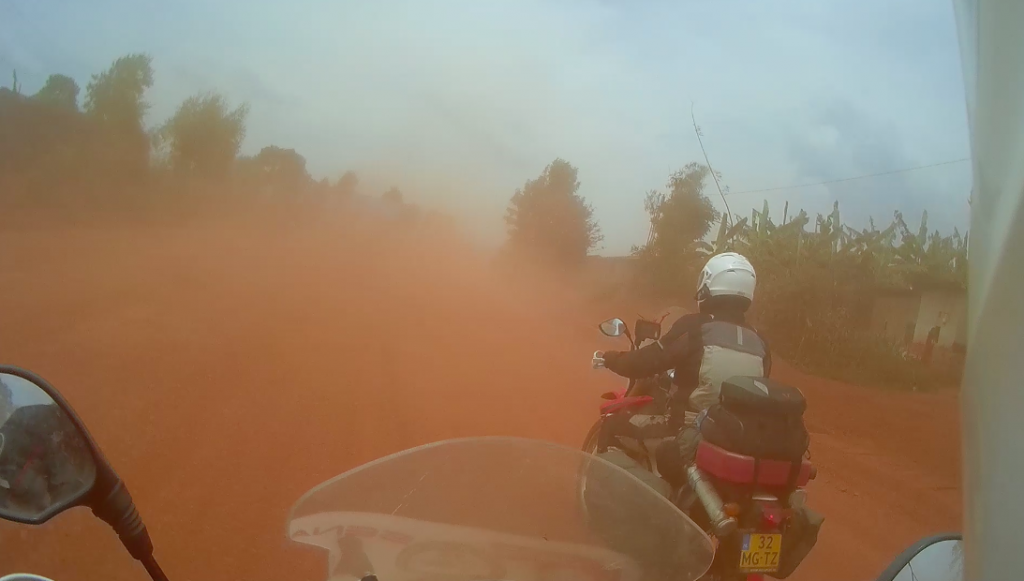
We were thinking, we would be riding a good tar road and arrive at the capital city, Kigali so fast. We ride dirt road first 100 km. fully dust than we arrived Kigali.
The capital city was look like so organize and clean. Because the country doesn’t use plastic bags and they always clean everywhere. Also, Rwanda has one rule for ride motorcycles we haven’t seen any of other African countries, expect Namibia and South Africa. Not only motorcycle taxi drivers has to use helmet, customer has to use a helmet as well and they can’t carry more than one customer. 🙂
We just stayed one night in Kigali and next day we arrived Gisenyi which town is next to Goma, DRC. Why were we riding so fast in Rwanda? Because, we booked our Gorillas adventure and climb Nyiragongo Lava Lake in Virunga Park, DRC.
We so much enjoyed riding between Kigali and Gisenyi because of the mountain roads where amazing with corners and altitude to go up and down. People were also so nice as well. They were so interest and curios to talk with us. We visited some villages on the road and also went to a bazaar to buy fruits.
When we were in Kigali we were thinking everything is really expensive in Rwanda because of supermarket prices. But buy something on the street or village bazaar wasn’t like that. Of course water is a little expensive because I suppose only tourist want to buy it. 🙂
After stay 3 days in DRC we turn back Rwanda and stayed in Gisenyi one day more. Lake Kivu is very famous in Rwanda, which they called holiday beach in Rwanda. We couldn’t enjoy that much because of rain season, we had most of time dark clouds and rain.
We are not lucky on the east cost of Africa because we didn’t come on correct season, just wet season started. Therefore we didn’t want to spend so much time in Rwanda. But of course before leave from the country we decided to go a little inland and leave from main road. So, we saw the amazing face of Rwanda, landscape and dirt mountain road was wonderful. We end up the day in Byumba. We found a little local motel, which was 10 USD and enjoyed with cheap local food.
Next day we were on the Katunga border to pass Uganda. We stayed in Rwanda only 5 days. We can tell that if you stay touristic area hotels and food will be expensive. If you have your own vehicle just leave main roads and enjoy with Rwandan landscape and local food.






 And than who support him when he jumps to the bulls. They paint their face. After that the bull-jumping boy gets totally naked and they pray together before the jump.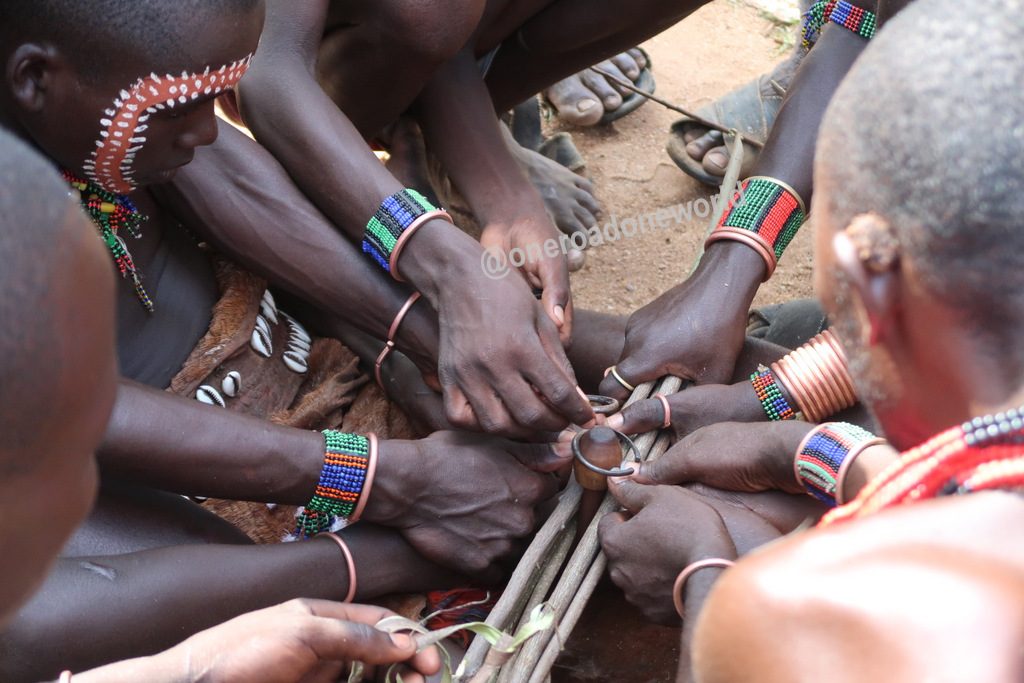










 We found a nice place next to the lake. Negotiate started for camping 10 USD, 8 USD, 7 USD…etc we paid 5 USD pppn. J The lake is so big and has a lot of little islands in it. We went on boat tour but if you want to see how beautiful the lake is you need to go up the hill to the see landscape. We don’t know if Lake Bunyonyi is best lake in Africa but it is really amazing.
 The road condition is not good for the rain therefore we started to look a hotel to spend the night in Kanungu but we couldn’t find anything with secure parking. We were just following the signs to find something one motorcycle was behind me and trying to stop me. I didn’t want to because I had no idea who he was. He passed me and blocked my road. That moment Ferry was already around the corner so no option to see me what was happening. I told him from intercom “Don’t go so far, somebody blocking my road.” And than I saw he has a uniform, which was look like military uniform. After that I saw his motorcycle, which was writing ‘police’. I told him “Don’t panic, he is a police.”

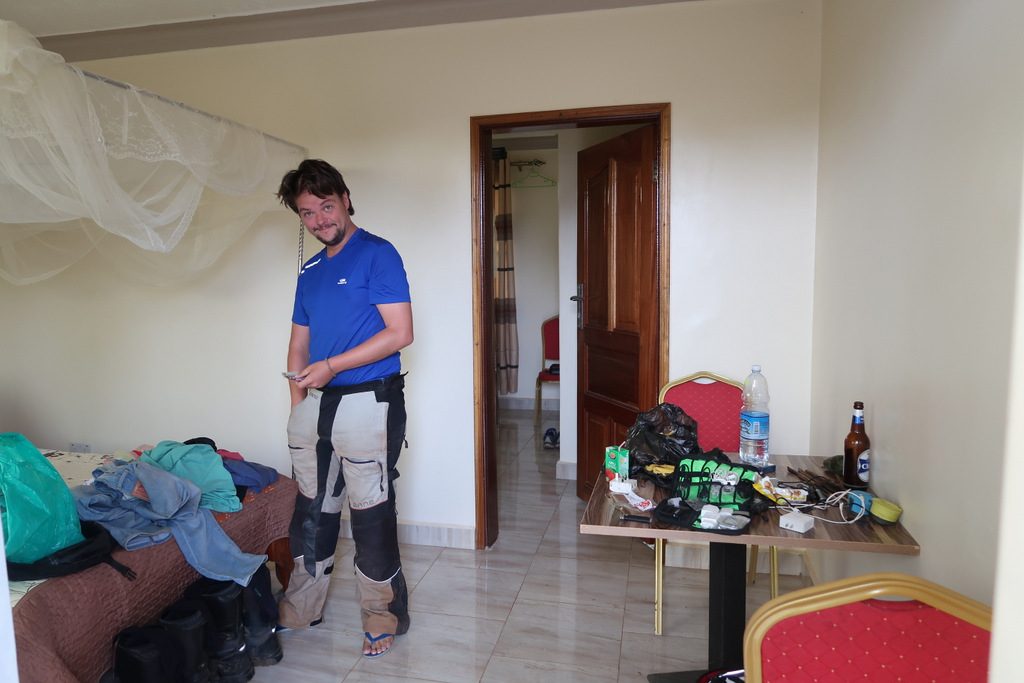 When they were leaving we asked them here is safe to walk around because it was only far 15 km from DRC border.

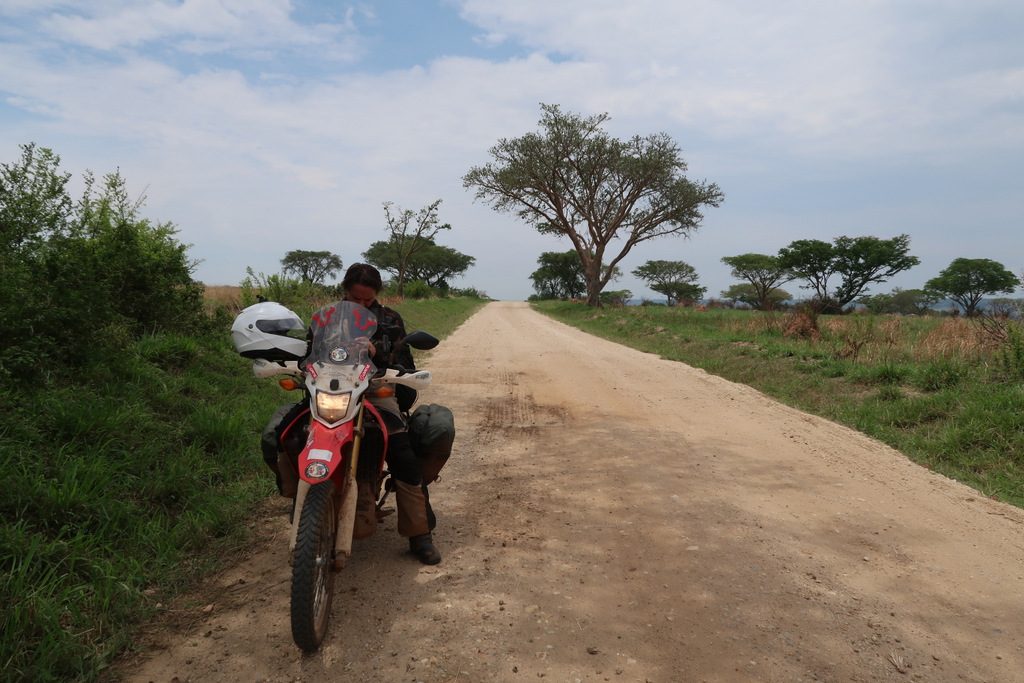 So, we kept continue and started to see some deer’s, warthogs, impala’s. We came a door on our left hand. We went to talk with the rangers. They told that we are on the main road and it is the only road to Katunguru. So we don’t need to pay for it. If we want to go next to Lake Edward we must pay enter fee.
 They told us be careful because they have animals everywhere. We heard before Ishasha is very famous for tree climb lions. The ranger said that lions climb to fig trees where next to the lake but if it is so hot and no rain. He just went there but didn’t see any lions. It means they move more up and could be anywhere.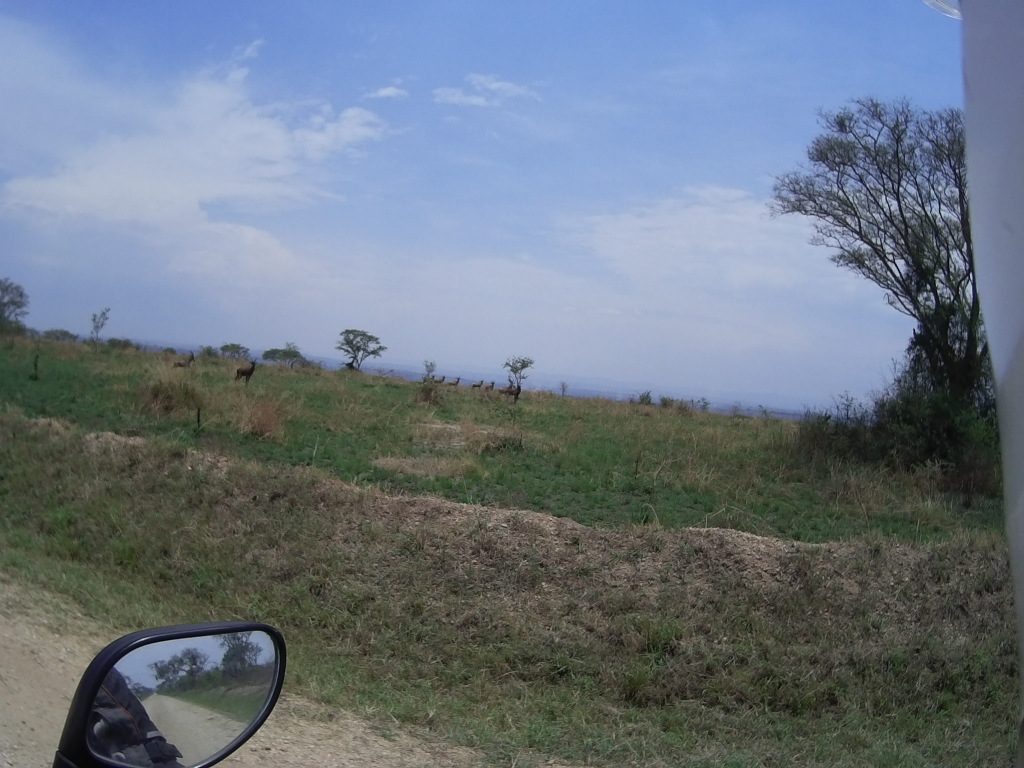
 We saw very dark clouds were coming. (It means heavy rain) And we saw buffalos were passing our road. We didn’t want to get close to them because we didn’t know their behavior if we keep continue to ride. And the rain started to go crazy, no option to sit on the motorcycle and wait them to pass.
 We jumped from motorcycle and covered our bags with one of the footprints. With the other footprint we covered our self. We were looking behind it and thinking if lion pass here now or come face to face what we could do. We can’t run away or jump motorcycles.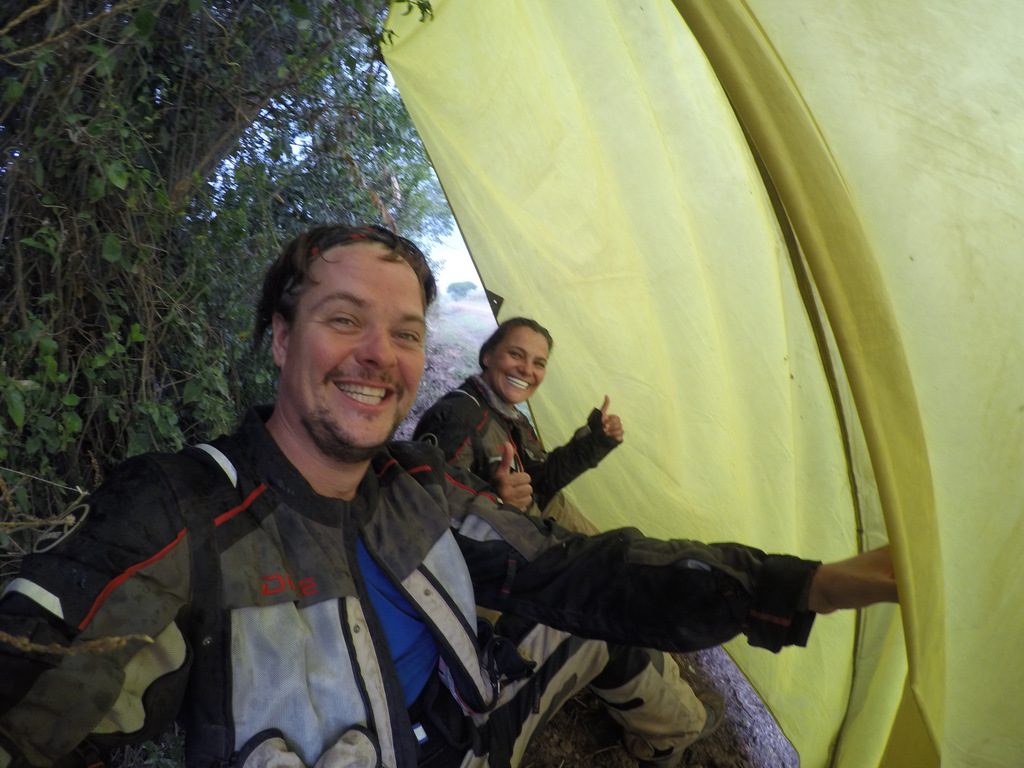


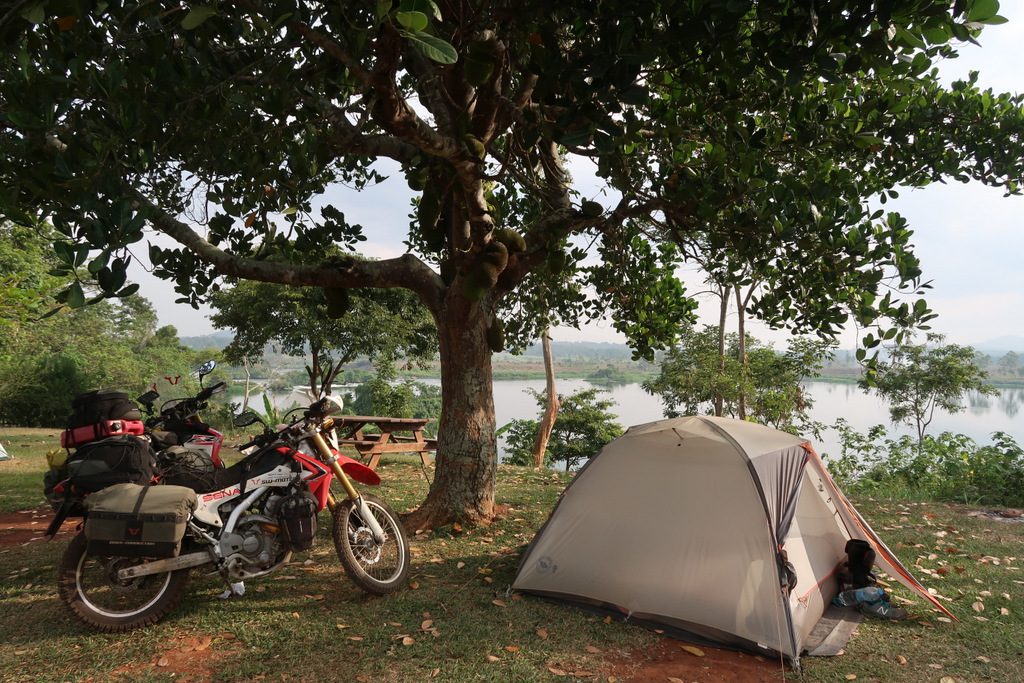 Now we don’t have our tent bag anymore, luckily this is the smallest bag we carry and we can still put our tent somewhere else but we are missing a few things as well, especially our 6 liter water bag we needed that for the hot in Ethiopia, Sudan and Egypt. We will now carry bottles again. 🙁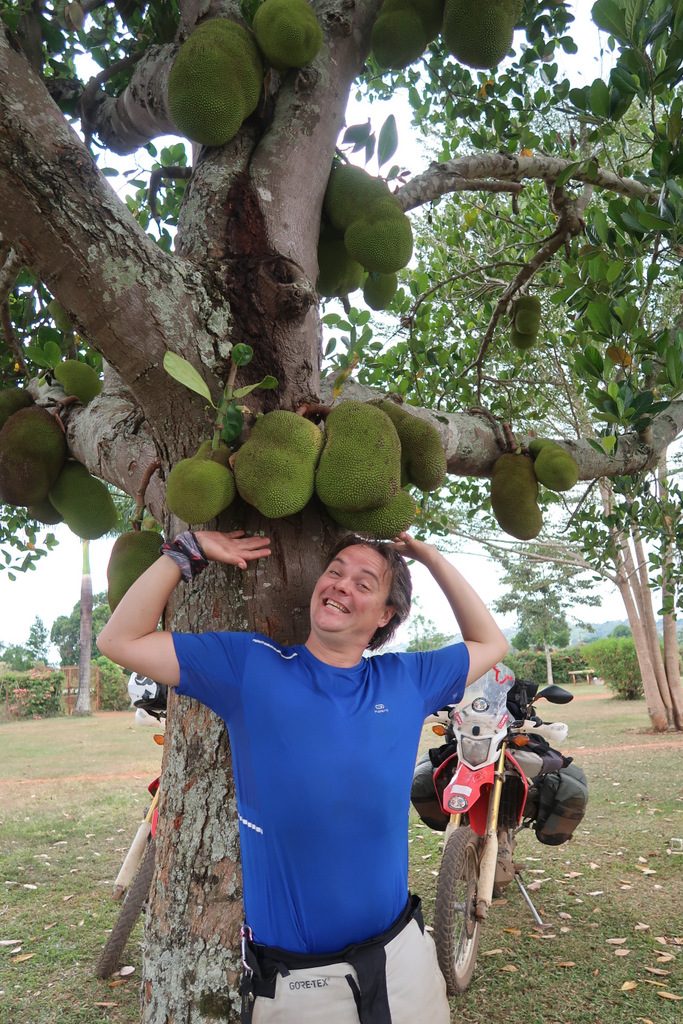

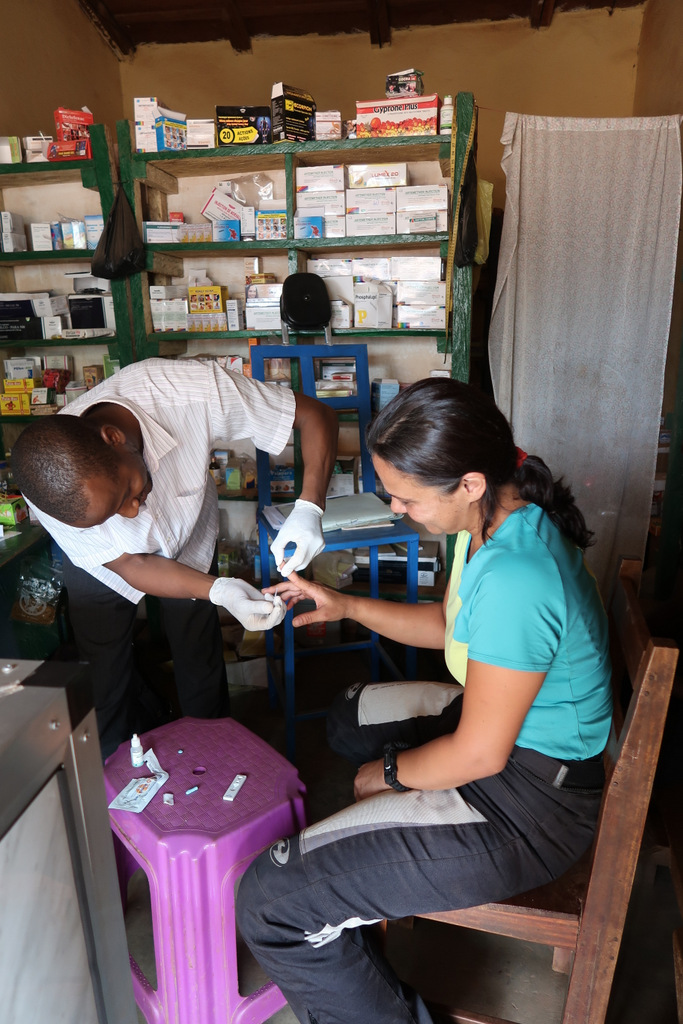
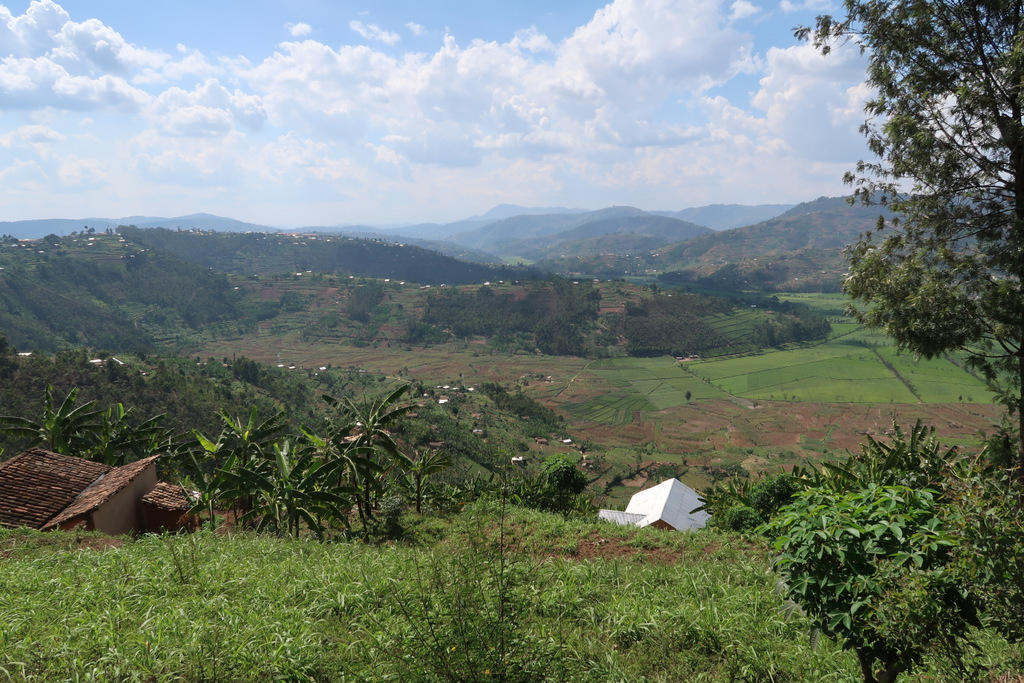


 When we were in Kigali we were thinking everything is really expensive in Rwanda because of supermarket prices. But buy something on the street or village bazaar wasn’t like that. Of course water is a little expensive because I suppose only tourist want to buy it. 🙂

